Sunday, November 20, 2022

Ernest Belfort Bax - The Peasants War in Germany

This is the second volume of E. Belfort Bax's three volume history of the social side of the German Reformation. I've already reviewed the first volume on German Society at the Close of the Middle Ages, and in that review I noted Bax's misogynist views that stood him outside the socialist movement on many questions of his time. Volume two suffers from some of the problems of the first book - it is dated in information and style, Bax writes long, occasionally pompous, sentences and meanders about his subject. That said, the book is actually a straight forward account based on German sources of the Peasant War and remains a good general introduction to the subject.

At the same time as reading Bax's book I was also reading Peter Blickle's much more recent account The Revolution of 1525, which I will review shortly. Bax, like Blickle, identifies the origins of the Peasant War in the great crises of the early 16th century, and the ongoing oppression of the peasantry. Bax reproduces the famous Twelve Articles produced by the peasantry, an extraordinary series of demands which were in several cases accepted either in whole or in part by the lords and town councils whom the revolutionary masses presented them too. 

The Articles essentially turned the world of 16th century Germany upside-down, abolishing serfdom, demanding the ending of various oppressive acts by lords and calling for a much more communal social and economic life. Bax however sees them as "moderate" and "exclusively agrarian in character" dealing with the "grievances of the peasant against his lord, lay or ecclesiastic, but had nothing to say on the social problems and the ideas of political reconstruction agitating the mind of the landless proletarian or the impoverished handicraftsman within the walls of the towns."

In contrast we might look at Blicke's argument. Blicke is no socialist, but he understands the revolutionary nature of the Twelve Articles in contrast to Bax's crude dismissal. Blick writes: 
the Twelve Articles collected and focused the grievances of individual Upper Swabian villages, and multiple reprintings made the crisis of the agrarian order clear top peasants of the whole empire. To understand the articles in terms of the local economic, social and political background is actually to lay bare the basic causes of the revolution of the common man.... By basing their demands on the Bible, the Twelve Articles constructed an alternate framework and thus pointed a way out of the late medieval crisis, which had become a social and political crisis as well as an agrarian one.
For Blicke, the "common man's revolution" was against the old order and for a "godly order" based on mutual solidarity and common ownership. By contrast Bax sees the movement as being (following Lasalle) "in the main reactionary, harking back as it did to the old village community with its primitive communistic basis, an institution which was destined to pass away in the natural course of economic development... necessarily doomed to be gradually superseded by those individualistic rights of property that form the essential condition of the modern capitalist world." 

Bax's position seems to me to be a crude application of the Marxist understanding of history. Bax believes that the feudal society would inevitably be replaced by a capitalist society, a process which would see the "old village community" disappear. Anyone appearing to defend this, was inevitably reactionary. But this is to misunderstand what was happening in 1525 and the Marxist method itself. Engels himself, writing on the Peasant War emphasised how for the Peasants to win "the movement could have been brought to a successful conclusion only by an alliance of all the opposition parties, mainly the nobility and the peasants." 

In this context we cannot simply see the peasant's movement in terms of the peasants alone, but Bax judges the peasants' demands in isolation. This said, Bax also makes the mistake in assuming that the peasant demands are reactionary, and look backward. Blicke, in contrast, emphasises the transformative society that they encapsulated, but it is a society that cannot be realised because it is in direct contradiction to the interests of the existing ruling class. 

Some Marxist writers have noted how Marx and Engels speculated that communal Russian peasant society in the 19th century might form the basis for a transition to socialism. No doubt had the German peasantry been able to win, such ideas might have been discussed by Marxists about them. Instead Bax views the peasants' radical demands in a wholly negative light, dismissing their utopia as reactionary. 

Bax is on much stronger ground when he describes the battles of the peasantry, looking in turn at how these played out during the Peasant War in different parts of Germany. His sympathies are with the struggles of the peasantry and is horrified by the counter-revolutionary slaughter, writing that the violence of the peasantry should not "blind us in any way to the intrinsic righteousness of the popular demands". 

Blicke has noted that the struggles did lead in a number of cases, to some radical success, with  German serfdom nopt surviving the uprising. Bax however argues that the war "with some exceptions" saw a "riveting of the peasant's chains and an increase of his burdens". He returns at the end to his earlier them to argue that "the peasant programme was out of the line of natural social progress and that the war itself was carried on from the beginning in a manner that rendered success well-nigh impossible". As such Bax misses the wider social and economic implications of the revolutionary movement.

While Bax's book has its interesting points and, in particular, his account of the peasant struggles remains valid, his analysis is too crude and undialectical to offer a real understanding of the social and economic process of the Peasant War. Future readers should take this in account and combine a reading of Bax's book with other engagements with the subject.

Related Reviews

Friday, November 18, 2022

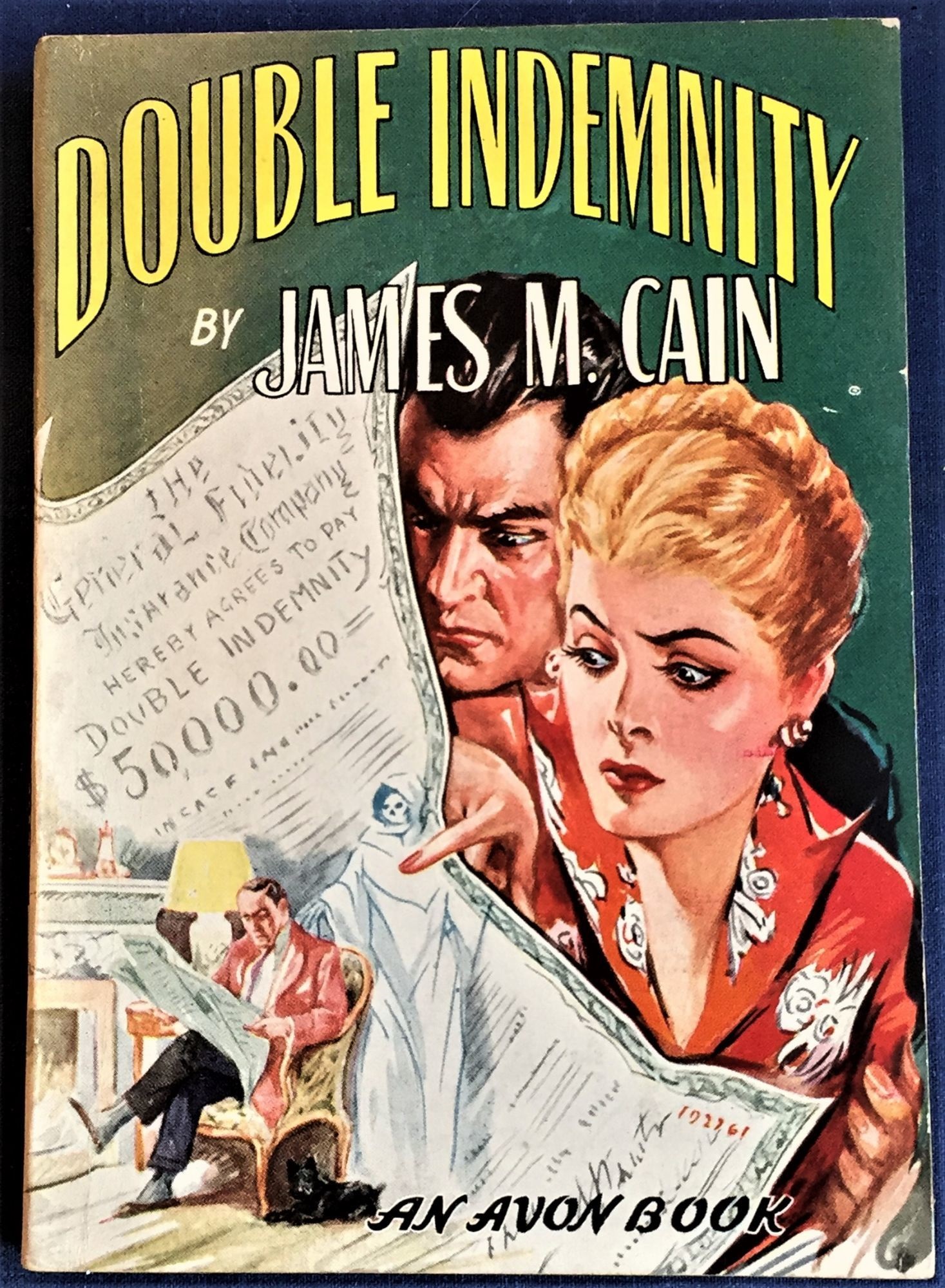
James M. Cain - Double Indemnity

***Spoilers***

There is, in many ways, very little that can be said about James M. Cain's Double Indemnity that I didn't already say about his The Postman Always Rings Twice. Both are tight novels, language and description parred back to the raw basics, leaving the reader feeling like they've been dragged through the story. It is no surprise that both novels made for famous films, they feel ready made for the scripts.

But both books also have a similar story, seeing a relatively straight male figure brought to their knees by a femme fatale. In Postman Frank Chambers brings it on himself, his desire for Cora, a married woman, meaning he is willing to commit the ultimate crime. In Double Indemnity Walter Huff throws his settled life and successful career away after being seduced by the beautiful Phyllis Nirdlinger. Unlike Cora, Phyllis is a serial schemer, confident that she can manipulate Walter to commit a crime that she can benefit. Walter puts together the perfect crime and is only foiled because his friend smells a rat immediately.

Like Postman, Double Indemnity's title has a dual meaning. In this case it refers to both the insurance scam that Walter and Phyllis are hoping to pull off, and the double cross that Walter experiences. Unlike Postman though the characters in Double Indemnity experience a kind of redemption, as they realise that their plans have come undone and they cannot escape. The ending is, however, different to the film but, after reading it twice, I found it more satisfactory. 

Most people will know Double Indemnity for Barbara Stanwyck's famous depiction of Phyllis. I'd encourage fans of the film to pick up this tight little thriller. It is well worth the read.

Related Reviews

Cain - The Postman Always Rings Twice

Sunday, November 13, 2022

Robert Jordan - The Great Hunt (Wheel of Time 2)

In reviewing the first Wheel of Time book I dismissed it as a warmed up version of Lord of the Rings. Book two, The Great Hunt, demonstrates Robert Jordan's attempt to break free of the genre. Here he fleshes out many of the characters and gives two groups of heroes - women and men - separate story arcs. It is refreshing because it means that the women are not simply cyphers and have their own struggles, and the men aren't the only heroes. Unfortunately both groups constantly moan the fact the others are missing and constantly fail to understand the bigger picture (tm).

The bigger picture is a big theme in The Great Hunt. The reader has it, and so do some of the Aes Sedai, the powerful magical women whose organisation is one of the great powers in Jordon's fantasy world. In book one our band of plucky heroes (tm) were guided from their backwater village to the heart of the world by one of the Aes Sedai - Moiraine Damodred. By book two we can begin to understand that Moiraine is a good magical person. She is one of the few with the bigger picture and uses this to manipulate characters towards various goals. Unfortunately she is loathe to explain the bigger picture to any of those who might be on her side if she told them what the hell was going on.

As such, the reader knows that Rand al'Thor is likely the Dragon Reborn (don't ask) but Rand al'Thor doesn't really know what that means, even when he is given a massive banner with The Dragon Reborn written on it. Rand blunders through things, not understanding his magical powers and trying to spend quiet time with his lover from the small village, who is being trained to be a magical person.

Despairing of it all Moiraine sends Rand on a quest to find a horn. If the horn is blown it will make volume three happen, and Rand sets out with excitement and quickly finds the horn, but then leaves it in his bedroom while pinning after a beautiful woman. Rand's ability to have his face turned by a pretty face is one of the most infuriating things about his character, though it is decidedly unusual for the fantasy genre. Normally heroes are really loyal. But as in volume one Rand, and his companions, repeatedly fail to ask anyone what the hell is going on. So they make mistakes, blunder into traps and loose magical horns.

There are various people trying to hamper things, enemies of Moiraine who might be termed bad magical persons and a Dark Lord that torments Rand's dreams and challenges him to a duel. Luckily, by the end, Rand's band of heroes have found the horn and its is blown in time to scare off the Dark Lord and ensure volume three is published. Rand wakes, at the end of the book, denying what everyone knows is true - that he is the hero - and finds many of his companions have gone off questing. Rand is upset by this because he is the hero and no one else should have motivation or quests other than him. But the beautiful woman appears again while Rand's is asleep and makes it clear that others have to look after Rand until he gets over himself.

Look. The book is a collection of fantasy tropes that I should have read when I was fourteen and would have loved it. However it remains compelling and made for a good read while I was on an rather long return journey. I bet I read the following volumes because they are there and I now have the bigger picture

Related Reviews

Jordan - Eye of the World (volume one)

John Dickson Carr - The Hollow Man

I discovered John Dickson Carr's The Hollow Man quite by chance on a random bookshelf in a completely disorganised second hand bookshop. I am very glad I did. Carr's work is that of classic detective stories, updated for the 20th century, but with an occasional remarkably unique spin. 

The Hollow Man is known for being on the of the great locked room mysteries. The main character, an eccentric academic Professor Charles Grimaud, is approached by a stranger who warns him about his dangerous brother. Grimaud seems to shrub off the threat, but then commits a number of strange acts - buying and displaying a strange painting and waiting for the killer in his room. Grimaud is murdered in a literal locked room and there are no signs of his killers' escape. Another murder ten takes place in the middle of a street, the undisturbed snow seeming to prove that the killer cannot even have been there.

The police and Carr's hero, Dr. Fell, arrive at the scene of the first crime within minutes - yet only Fell appears not to be baffled. Fell is an intriguing character in himself. Clearly modelled on Sherlock Holmes, he is a polyglot who keeps his private life private. Yet he is also unusually described - a massively overweight character, with a gift for making witnesses talk, and an infuriating way (at least to the police) of not explaining anything he thinks as they career from place to place investigating and finding evidence.

But The Hollow Man will stand out not for this mystery - which is extremely fun and satisfyingly complex - but for its exposition of the whole theory of locked rooms mysteries. Chapter seventeen is nothing less than a lecture by Fell on the theory of locked rooms mysteries. "I will not lecture on the general mechanics and development of the situation which is known in detective fiction as the 'hermetically sealed chamber'." Fell tells his fellow investigators... and to ensure the reader knows exactly what is happening Fell tells his audience that this must be done because "we're in a detective story, and we don't fool the reader by pretending we're not". Having smashed the fourth wall, Fell continues by telling us (and his other fictional characters) all his theories of how such crimes can be committed and then solving the one that he is a character in. 

Locked room mysteries are, like magic tricks, inherently disappointing. When you understand them, they immediately lose something. Fell tells the reader exactly this, "the effect is so magical that we somehow expect the cause to be magical also. When we see that it isn't wizardry, we call it tomfoolery." But the genius of this tale is that the reader doesn't feel fooled or tricked. The solution is, of course, simultaneously obvious and fantastically complex. There are plenty of red herrings littering the landscape to through the reader off as well.

In short, this is a brilliant piece of crime fiction that turns the tropes on their head, places the reader in the story in a very unusual way, and serves up a complex locked room mystery with a rather neat solution. I must admit to being rather taken by both John Dickson Carr and his Dr. Fell. I look forward to others in this numerous series.

Thursday, November 03, 2022

Malcolm Brown & Patricia Meehan - Scapa Flow

Scapa Flow is at the heart of Orkney, an enormous natural harbour today curiously devoid of ships. Yet in both World Wars it was the base of Britain's main naval fleet - the location from where many ships set out to fight the German Navy at Jutland in 1916 and the home base for ships that fought the Bismark and escorted the Russia convoys. Most importantly it was home to tens of thousands of servicemen and women in both World Wars, troops from the navy, airforce and army who looked after the guns, fuelled the aircraft and above all crewed and maintained hundreds of ships.

Malcolm Brown & Patricia Meehan's brilliant oral history of Scapa Flow tells their story. It arose out of a strange set of circumstances - the BBC made a programme about Scapa Flow, introduced by Ludovic Kennedy who served there. The authors placed an ad in the Radio Times asking for reminiscences and were inundated with replies. Realising they had too much material for one programme, they used much of the remainder in writing this book.

So the history here is told mostly in the voices of the women and men who served in this lonely part of Orkney. Some of the stories are horrible - the accounts of the tragedies of HMS Vanguard in World War One and HMS Royal Oak in the second - are awful. Hundreds of lives lost in a moment. One gets a real sense of how these tragedies shocked those who witnessed them or those who cleared up afterward. One sailor remembered how a diver had seen the bodies of dead men still in their bunks after the sinking of the Royal Oak. Other tragedies such as the sinking of HMS Hampshire and the death of hundreds of sailors, plus the unlamented Lord Kitchener (architect of much slaughter) are also closely associated with Scapa Flow.

The Flow today is filled with wrecks and a favourite location for divers. Many of these are German ships, whose crews took them there for surrender after World War One. The scuttling of the ships was a memorable and shocking event, but I was struck by the accounts here that tell of how badly the German sailors were treated by the British authorities - lacking food, entertainment or much else. It was interesting to hear of a passing reference to a Sailors' Council in the German fleet at Orkney - not least because the crews had been part of the mutiny that began the German Revolution in Kiel and Wilhelmshaven. Sadly this did not spread to the British!

But actually one thing you get from these accounts is how dull and monotonous life in Scapa was. Not a few correspondents bemoan that they are not on active service, but standing guard in appalling weather waiting for action, that by and large never came. It is interesting that in both wars caution on the part of the British Naval command essentially left many warships and their crews languishing in Scapa Flow. Boredom, games, drink and loneliness characterise many accounts. Some of these are tragic, like the men who killed themselves from depression. Others are sad, such as the two guardsmen left for weeks alone who desperately tried to stretch out the weekly visits by the men who brought them supplies.

There is no doubt, with hindsight, that those in Orkney during both wars had a relatively good deal - they would probably survive. But the boredom brought with it its own difficulties and while the correspondents often remember the islands and their people fondly, they mostly remember how dull it was. Readers looking for exciting accounts of battle will not find it here. What readers will find is an insight into the war away from the frontlines, boredom and loneliness, with occasional moments of terror and tragedy. As such this excellent oral history is probably of much greater interest that you might expect.

Related Reviews

Terkel - 'The Good War': An Oral History of World War Two
Lund and Ludlam – Trawlers Go to War
Lund & Ludlam - PQ17: Convoy to Hell
Wickham-Jones - Orkney: A Historical Guide

Saturday, October 29, 2022

Jeff Sparrow - Provocations: New and Selected Writings

In the introduction to this volume of his selected writings, Australian socialist Jeff Sparrow quotes the bushranger Ned Kelly. Kelly had written an 8000 word statement justifying his actions, and as he handed it over he said "This is a little bit of my life; I will give it to you". As Sparrow points out, every writer knows what he meant. This collection certainly showcases the breadth of Sparrow's work. Sparrow is one of the foremost Australian radical writers, and I have reviewed several of his books elsewhere on his blog. But perhaps he is best know for this regular articles, published in a wide range of journals and websites, that discuss politics, history and current events with a distinctly Australian flavour.

Sparrow explains that he is one of a "handful" of socialists that gets to regularly write in the mainstream media. While some of these essays are explicitly political, others show how the best radical writers can  draw out deeper political insights whatever the subject they are dissecting. 

The opening essay tells the story of the Pacific Islanders who were kidnapped ("blackbirded") into indentured slavery on Queensland's sugar plantations. While they weren't slaves in the sense of those Africans forcible moved to the Americas, they were nevertheless brutally treated. Sparrow shows that rather than this being an aberration for Australia's past, the contemporary debates around the issue highlighted some uncomfortable facts about Australia's colonial regime. When the US Civil War broke out, "many Europeans in Australia sympathised with the Confederates" and some expected war between the US and Australia. Sparrow explains, "Queenslanders dreamed of building a 'second Louisiana'. They could, they thought, capitalise on the disruption of the international cotton and sugar trades, if only the could establish a viable local crop."

Getting a viable crop meant getting a workforce and the English workers who arrived wouldn't work in the hot and unpleasant conditions. So "blackbirding" began and between 1863 and 1904 "62,000 South Sea Islanders were transported to Australia. The capitalists who drove this process did so by relying on the "techniques and personnel" of slavery. Yet, as Sparrow explains, they were simultaneously quick to declare their hostility to slavery to "legitimate a generalised racism, which they then presented as a foundation of a new state". The story of the Pacific Islanders in Queensland and their forcible relocation back to their Islands when the practice was banned, once again underlies the racist roots of the current Australian state.

The second essay in the collection explores another aspect of Australian culture - the bushranger, and again deconstructs the traditional accounts. In this case Sparrow explores how "Captain Moonlite", the bushranger Andrew George Scott may well have been in a gay relationship with James Nesbit, one of his gang. Scott hoped that after his execution his body would be buried alongside Nesbit's. This did not happen until an extended campaign by locals to get the body reinterred. We can never know if Scott and Nesbit were gay in the sense we mean today. But as Sparrow points out that is not the point - they exhibited a closeness and friendship that goes against the traditional masculinity normally associated with men of the outback, hinting at a different historical story that challenges contemporary cultural depictions of bushrangers.

Some of the essays here take up contemporary politics. For instance, the brutal treatment of refugees and asylum seekers by the Australian government and the resistance against this. Other essays explore culture and change on a much more general level. I was fascinated by Sparrow's articles exploring children's books, particular Enid Blyton and Captain W.E. Jones. I hadn't realised that I craved a socialist exploration of the Biggles stories as much as I did.

Sparrow writes regularly about environmental and ecological issues. Several essays here take up these themes, again with a distinctly Australian angle. There's a fascinating discussion on the nature of extinction where Sparrow looks at the obsession that there is with finding a "thylacine" an extinct carnivorous marsupial, which ends up being as much and exploration of the people who hope to find one alive, as it does with the tragic loss of the animal itself. 

Sparrow is particularly good at getting people to open up. In the case of the "Queer Bushranger" he discusses LGBT+ issues with one of the local women who campaigned to have Scott reinterred. It's fair to say she doesn't share much of Sparrow's left politics, but he gets her to open up a little about the reality of small town life and what that might mean for gay people. Another example is the man who takes part in war re-enactments, arguing that these are more popular as people seek meaning in "atomised and fractured" neoliberal states.

Reviewing in detail the breadth of essays here would take far to long and would spoil them for other readers. But as a taster I can tell you there are chapters on socialist cycling clubs, the immigrant experience and racism, the strange trend of rewriting classic novels as Zombie horror stories, and gun control. Some of these are deeply serious essays, but they are all shaped by Sparrow's deeply human politics - and on occasion his ready wit.

The essay I wanted to finally mention though was one that moved and shocked me a great deal. It was the story of the tragedy of the 1628 wreck of the Batavia, a horrific incident that saw hundreds of shipwrecked mariners and merchants descend into barbaric behaviour as they ran short of food and rations. I was ignorant of the affair, and Sparrow tells the story through a report of modern archaeology and places it in the context of early capitalism. Sparrow concludes by saying that the story from 400 years ago "illuminated the stories we tell about ourselves today". It is also a comment that is true of all the essays in this book - I encourage you to read it.

Related Reviews

Tuesday, October 25, 2022

James D. Fisher - The Enclosure of Knowledge: Books, Power & Agrarian Capitalism in Britain, 1660-1800

A really interesting study of how the development of capitalism saw the consolidation and enclosure of knowledge as well as land as a fundamental part of the process of transformation of power relations in the countryside. Fisher explores this by studying how knowledge became concentrated in the hands of the rising capitalist class in the form of books. Despite its price, this is a accessible book which sheds new light on the process whereby the English peasantry was destroyed in the name of agrarian capitalism.

I reviewed this book for the International Socialism Journal. You can read my review here.

Article on the book by the author.

Monday, October 24, 2022

James M. Cain - Postman Always Rings Twice

*** Spoilers ***
Apparently James M. Cain hated that his novel was described as "hard-boiled", yet it is difficult to come up with a better adjective. When published in 1934 it caused outrage for its sex and brutal violence, and today it feels no less raw, though we lack the outrage. 

Frank Chambers, a young drifter, arrives at a gas station and diner, where he tries to scam the owner out of a meal. The owner, a Greek immigrant called Nick Papadakis runs the place with is beautiful wife Cora. Nick gives Frank a job, and quickly Frank and Cora begin an affair. The pair plan to murder Nick and take over the diner, but Nick survives the attempt without any memories of it taking place. A second attempt is successful and Cora is put on trial for murder. A clever lawyer manages to get the pair off, by playing the insurance companies off against the judge but in the aftermath Cora and Frank fall out. A reconciliation after Cora discovers she is pregnant is abruptly ended as Frank crashes his car, killing Cora and putting Frank on trial for murder. The coincidences have piled up, and the innocent (in this case) Frank is eventually executed - the text of the novel forming his final thoughts before his death.

The novel hits the reader hard. Cain's clipped prose encourages the tension. With the exception of the innocent, and naive, Nick, most of the characters are grotesque - from the murderers to the prosecutors, and the lawyer everyone is out to grab a bigger slice of the pie. Frank and Cora's lawyer is particularly neatly drawn in this regard - he refuses a huge payment as he knows that the case itself has made his career. The ending too is shocking, by depicting the execution of Frank for a crime he didn't commit the reader is tempted to feel he is absolved of his crimes. But he is not, in anyway, an innocent.

The Postman Always Rings Twice is very much about fate. Everyone has two chances here - Nick survives a murder, only to be killed a few weeks later. Frank and Cora avoid the execution block, blackmail but then get their comeuppance. Even the legal system gets its chance for a second try,

The Postman Always Rings Twice is perhaps watched more than it is read. This is a shame as the novel is powerful and the work is itself a lesson in how writers can put a lot into a few words. You can see why the film industry adored it.

Friday, October 21, 2022

Ernest Belfort Bax - German Society at the Close of the Middle Ages

Belfort Bax was perhaps one of the most unusual people that British socialism produced. Today he is mostly remembered (if at all) for being an early "men's rights advocate" campaigning for the "legal rights of men" and opposing women's rights. He wrote The Legal Subjection of Men in 1908 and The Fraud of Feminism in 1913 which tells you all you need to know. 

At the end of the 19th century though Bax wrote a trilogy of books about Germany during the Reformation, an attempt to understand the trajectory of German history between then end of feudalism and the rise of capitalism. This first volume is very much a scene setter, describing German society at the time and detailing various events around the time of the early Reformation. 

Whatever Bax's faults, he had a detailed knowledge of German history, events and culture. For instance there are several detailed chapters on social and religious revolts and literature of the Reformation. In these he details some relatively unknown events, books and people for an English speaking audience. Of these the revolts section is perhaps most useful, as Bax shows how the Peasant War (which he deals with in a separate volume) arose out of a ferment of rebellion. While some of the events and things he discusses are interesting, Bax's analysis tends to be very dated. He writes, for instance, of the famous peasants' symbol the Bundschuh, an image of a typical peasant's leather that was often placed on banners, that this showed, "The strange and almost totemistic superstition that the mediaeval mind attached to symbolism". 

A sense of Bax's overbearing writing style is given by the rest of this sentence, "The strange and almost totemistic superstition that the mediaeval mind attached to symbolism is here evincd by the paramount importance acquired by the question of banner." At times I found myself reading and re-reading sentences in an attempt to grasp the core argument. 

Bax rightly argues that a "great man" theory of history cannot explain the Reformation. So he tends to underplay Martin Luther's contribution, placing the Reformation in the context of a period of revolt and religious upheaval. Instead he tends to portray the Reformation more as an economic revolt against the Catholic Church. Indeed he argues that the "end of the Middle Ages" was marked by a enormous decline in the economic conditions of the lower peasantry which contributed to their discontent and revolt. Oddly, at times, Bax comes across almost as an apologist for the old feudal order, writing of how well off the peasantry were. In the second half of the fifteenth century when, Bax says, the "Duke of Saxony wore grey hats which cost him four groschen", a day labourer in the Northern Rhineland could "in addition to his keep earn in a week a quarter of rye, ten pounds of pork, six large cans of milk and two bundles of firewood" and "in the course of five weeks be able to buy six ells of linen, a pair of shoes and a bag for his tools".  Perhaps a day labourer could earn this, but was this really true of the whole peasantry and working classes?

Bax argues that the opening of the world market transformed the mediaeval town and "began that evolution of the town whose ultimate outcome was to entirely change the central idea on which the urban organisation was based". For an alleged socialist it seems odd that Bax seems wary of using phrases like "capitalist relations" and he over emphasises the importance of state relations in the town - laws and taxes and so on - rather than the changing system of production as drivers of economic change. Bax sees the period from the end of feudalism to the 18th century in Germany as a "transitional Europe", "slowly but surely [giving] place to the newer order". 

Ultimately this is a very old book. First published in 1894 few readers today would take it as the definitive academic history that Bax was writing. His excursions into seemingly unrelated cultural accounts or the in-depth retelling of German folklore tales are characteristic of a very different style of writing. 

Nonetheless I found it useful as Bax highlighted some interesting events and revolts that aren't already known. His writing style can be frustrating, but the book itself is relatively light. I'll read the remaining two books for completeness and for his pointers to other events. But I'd be wary of basing any historical conclusions on any of Bax's assertions.

Related Reviews

Roper - Martin Luther: Renegade and Prophet
Hawes - The Shortest History of Germany
Vuillard - The War of the Poor
Engels - The Peasant War in Germany
Cohn - The Pursuit of the Millennium

Thursday, October 20, 2022

Brian Aldiss - Earthworks

Unfortunately this is not one of Brian Aldiss' stronger writings. Earthworks begins with an interesting concept, Knowle Noland, is captain of a giant nuclear powered freighter moving sand from the coast of Africa to replace the eroded, unfertile, earth of the rest of the world. Africa is now a global power and the rest of the world overpopulated and fallen into ecological mess. These themes will be familiar to readers of science fiction in the 1960s and 1970s as the genre related to the dominant environmental ideas and tried to extrapolate to the future. Harry Harrison's Make Room, Make Room being a more famous example.

But where Harrison's tale was a gripping "noir" detective style commentary on the political argument, Earthworks fails to hold the reader. There are some interesting ideas, Noland's ship encounters a dead body on a gravity harness floating away from the coastline. Searching the body Noland discovers some love letters and becomes infatuated with their female author. He reflects on his time in a punishment work camp, and how he went to live with the travellers, nomadic people who have slipped through society's cracks.

In revenge against the leader who imprisoned then released him, Noland runs the ship aground. It's rather an inexplicable action, as it has to be said, are most of what he does in the rest of the novel. There follows a convoluted series of battles, chases and arguments between various characters until Noland finds, and promptly falls in love with, the author of the love letters. He then becomes entangled in her revolutionary movement. 

Little of it makes sense. None of it is worth reading. Earthworks is a footnote to Aldiss' far better work. Read that instead.

Related Reviews

Aldiss - Billion Year Spree
Aldiss - The Interpreter
Aldiss - Non-Stop
Aldiss - Greybeard

Friday, October 14, 2022

John Barton - A History of the Bible: The book and its faiths

Reviewing a history of the Bible might seem strange on a blog written by a Marxist, a historical materialist and thus an atheist. But John Barton's History of the Bible is a remarkable work. I was drawn to it because I am studying the Reformation and wanted to understand better how the Bible, as a work that is central to the Christian and Jewish faiths, came to be what it is. In particular I wanted to understand how figures like Martin Luther could spend so much time dissecting and constructing the Bible. 

Barton's book dwells on these subjects, but it does much more too. It places the Bible in its historical context, both in terms of the origins of different sections and the way it has been built through the centuries into the form(s) that it is known today. Barton writes in his introduction that the "Bible is... already the record of a dialogue among authors and transmitters of tradition, and contains commentary in many of its books on many others.

Barton says that his book is an attempt to "describe the present consensus [on the Bible] where there is one, to discuss reasonable options in areas of dispute, and to indicate those where we might try harder." But he cautions that the book
also makes an argument: that the Bible does not 'map' directly onto religious faith and practice, whether Jewish or Christian. I will propose that though the Bible - seen as a collection of religious texts - is irreplaceable for many reasons, Christianity is not in essence a scriptural religion, focused on a book seen as a single, holy work. Judaism, similarly, though it greatly reveres the Hebrew Bible, is also not so Bible-centred as is widely thought... [The Bible] is a mêlée of materials, few of which directly address the question of what is to be believed. The history of the Bible is thus the story of the interplay between the religion and the book  neither mapping exactly onto the other.
For a religious person like Barton (an Anglican Priest as well as an eminent biblical scholar) its a remarkably honest statement that challenges those who assert the Bible is a single work that contains everything required by the Christian religion.

Barton shows how the book originates in a particular time and place, he shows how it relates to the actual history of the areas covered by the early chapters of the Old Testament (not very accurately to be honest). He says, "where [the Bible] tells a historical story, it is not always accurate - partly because it contains legends, and partly because its account of history is governed by a commitments to various interests." Later he continues:
The [historical books] are important as a way of establishing the identity of the people of [ancient] Israel, rather than as archival material: they are national literature. The historical books often contribute to our understanding of the history of the nation through the insight they give into how events and social movements were understood in the time when they were written, rather than by providing reliable information about the history of the time they purport to describe.
Writing about the New Testament he shows how different sections have been added, changed and developed from each other and how the NT refers and relates to the OT. He discusses how the Bible has changed over time with different sections being emphasised, removed or added and why it is such a mix of poetry, history and biography. He also discusses how translation has changed and developed what we understand as the Bible today and where different interests have shaped what has been emphasised and discarded. For the believer it might be a difficult read - Barton is not afraid if highlighting inconsistencies. For the non-believer interested in history and culture it is fascinating.

In the hands of a less talented writer this could all be very dull, but Barton's style is engaging and his willingness to be honest about the contents of the Bible are refreshing. This is no polemic and nor is it an attempt at religious conversion. On the contrary, at times it feels like Barton is emphasising inconsistency to put the reader of religious interpretation. For instance he describes "textual variation", the existence of multiple differing versions of the same text in the oldest source materials. This, he says, shows is that the Bible cannot be a definitive source for religious argument, "What the existence of textual variation rules out, it seems to me, is appeal to the exact wording of biblical sayings as if they were legal rulings, since for that a precise text would be essential".

The use of the Bible has always been shaped by the interests of the time. The New Testament can only, according to Barton, "be seen through successive, and different lenses". The construction of the "rule of faith" meant selecting specific aspects of the story of Jesus (such as the bodily ascension of Jesus) and emphasising these, over other aspects of Jesus's story. Why did the ascension of Jesus, which is only mentioned twice in the New Testament, become considered more important than other aspects of Jesus' story that are referred to much more frequently in the gospels? Barton argues that it is because these were "issues for the second-century Church, which therefore read the New Testament in their light". So the NT "becomes an answer to questions that are not exactly those its authors originally raised".

For Barton the importance of the Reformation is that it was about individuals being "free to make anything they chose of the text". The Reformation, he argues, did not arise solely with Luther, but had its precursors in various earlier movements. But once it took place the Reformation 
introduced a new idea into the interpretation of the Bible: the possibility of criticizing the Church's teaching in the light of what the Bible appeared to be saying - and, in Luther's case, even of criticizing parts of the Bible itself in the light of what he took to be its overall drift. This was a revolutionary idea, which would feed into the premium on independent though that would come to characterize the European Enlightenment. For the first time it opened up a gap between the Bible and the faith which hermeneutical ingenuity could not bridge.
This is no doubt true and the final section of Barton's book extends this discussion into modern times, looking at how the Bible has faired in post-Enlightenment times.

It does, however, hint at what I felt was missing from the book. This takes the form of two related issues. Firstly Barton does not address what seems to me to be a key fundamental point - why do people believe? Perhaps more specifically, why did they chose to change their beliefs? What was happening two thousand years ago that meant people broke with the Jewish faith (and Roman religions) and developed Christianity. This also applies in later periods. Why did the Reformation happen when it did? What was it about society in Germany in the early 1500s that provided fertile ground for radical critiques of the Bible? This matters not just for the ideas in Luther's head, but to explain why these ideas were then taken up by tens of thousands of people.

Perhaps it is unfair to critique Barton for not placing his biblical history on materialist grounds. But it seems to me that you cannot fully explain the Bible without to the way that ideas change when material circumstances change. Developing political, social and economic contexts needed new ways of understanding the world - sometimes this meant the rise of new religious ideas and other times the  reformation of religion. Marx argued that religion was the "heart" in the "heartless world" and the "opium of the people". The "heart" was, for Marx, the ability of religion to explain the world and sometimes inspire people to change it. Approaching religion with this framework helps explain why much of what Barton details in his book, took place.

Nevertheless, John Barton's book is a remarkably interesting, accessible and fascinating book about the Bible which - however much us Marxists might be frustrated - remains incredibly important to millions of people. Surprisingly perhaps, I highly recommend it.

Related Reviews

Sunday, October 09, 2022

Melissa Harrison - At Hawthorn Time

Melissa Harrison's All Among the Barley was one of my great reads of 2019. She carefully inverted the fantasy of a the rural idyll, showing that the place that many people nostalgically long for never existed except in the fevered imaginations of some deeply unpleasant people. At Hawthorn Time is about how the countryside is today, for those that live in it and those who aspire to live there - especially those who buy into the fantasy during their urban lives.

At Hawthorn Time is also about change, in particular the way that the agricultural economy is changing.  Change is, of course, inevitable and one of the dangers about writing about the countryside is there can be a tendency to suggest that change is recent, and the countryside was exactly the same until very recently. Yet what the book is really about is how the British countryside and its agriculture has been destroyed by external forces, leaving its population high and dry.

At times it reminded me of Alun Howkins' book The Death of Rural England which details how the late 20th and 21st centuries have seen the rural economy squeezed by the overlapping interests of capital and British towns and cities. Harrison's novel is linked together by the story of Jack, a former environmental campaigner who has protested nuclear weapons and road building, but now finds himself tramping along the forgotten (and sometimes vanished) paths and highways of the countryside. Frequently arrested for trespassing he is often dismissed as "mad" or a criminal, yet he is the last of a breed of rural workers whose labour held together the seasonal harvests, ploughing and planting. Without those like him, who knew the land and walked from place to place, agriculture would not have survived. He has been replaced by cheap labour from Eastern Europe, ironically something else about to vanish from the countryside. Jack is very much the essence of the working countryside - but also those part of the countryside that strove to protect and defend it from simply being tied into the profit machine.

Jack's walking brings him to Lodeshill, a place where he has worked over many years, and knows some of its darker history. Lodeshill is where Howard and Kitty live, retirement refugees from the city. Kitty fulfilling a lives ambition, and Howard dragged there against his better judgement. For both of them the countryside forms a backdrop to the final collapse of their marriage, and for both of them its a refuge of sorts - Kitty through her art and Howard through is cynical abstention from village life. The two of them also represent the change coming to Lodeshill as the older economy vanishes. Second homes, the price of land and high rents combine to squeeze out older communities and local labour all but vanishes as young people look to the bright urban life. 

The best rural novels are those that reject a bucolic fantasy and place their story in the context of the real countryside. Unemployment, poverty, hard work and class struggle are not alien to the countryside, but just as in towns and cities, they are part of everyday life. What Harrison's novel does however is to make these realities the story itself, the strands of the book drawing different aspects of this reality together through the stories of individual characters.

In Stella Gibbons' dark comedy Cold Comfort Farm she hints at the darkness below the surface of the countryside with her brief mention of "something nasty in the woodshed". Harrison's novel is very different. It wears the darkness openly - we know the unpleasant way the book will end from the first page. But the real darkness addressed by At Hawthorn Time is less what happens to Jack and all the other inhabitants of Lodeshill as individuals. They are all victims of faceless economic change, which they are powerless to resist. The darkness comes from that uncertainty and from what is lost. 

When Jack encounters the elderly James, a former ploughman who is now suffering from dementia and has wandered away from home, he reflects on the old man's life, a "unique landscape of memories, parts of it sunlit and open, parts shadowy and unvisited, all of which would soon be... lost". The countryside has always changed, communities, agricultural practices, buildings and crops are never permanent. What Melissa Harrison's wonderful novel does is to remind us of how much has been destroyed and what happens to those who are left behind.

Related Reviews

Harrison - All Among the Barley
Chester - On Gallows Down
Gibbons - Cold Comfort Farm

Sunday, October 02, 2022

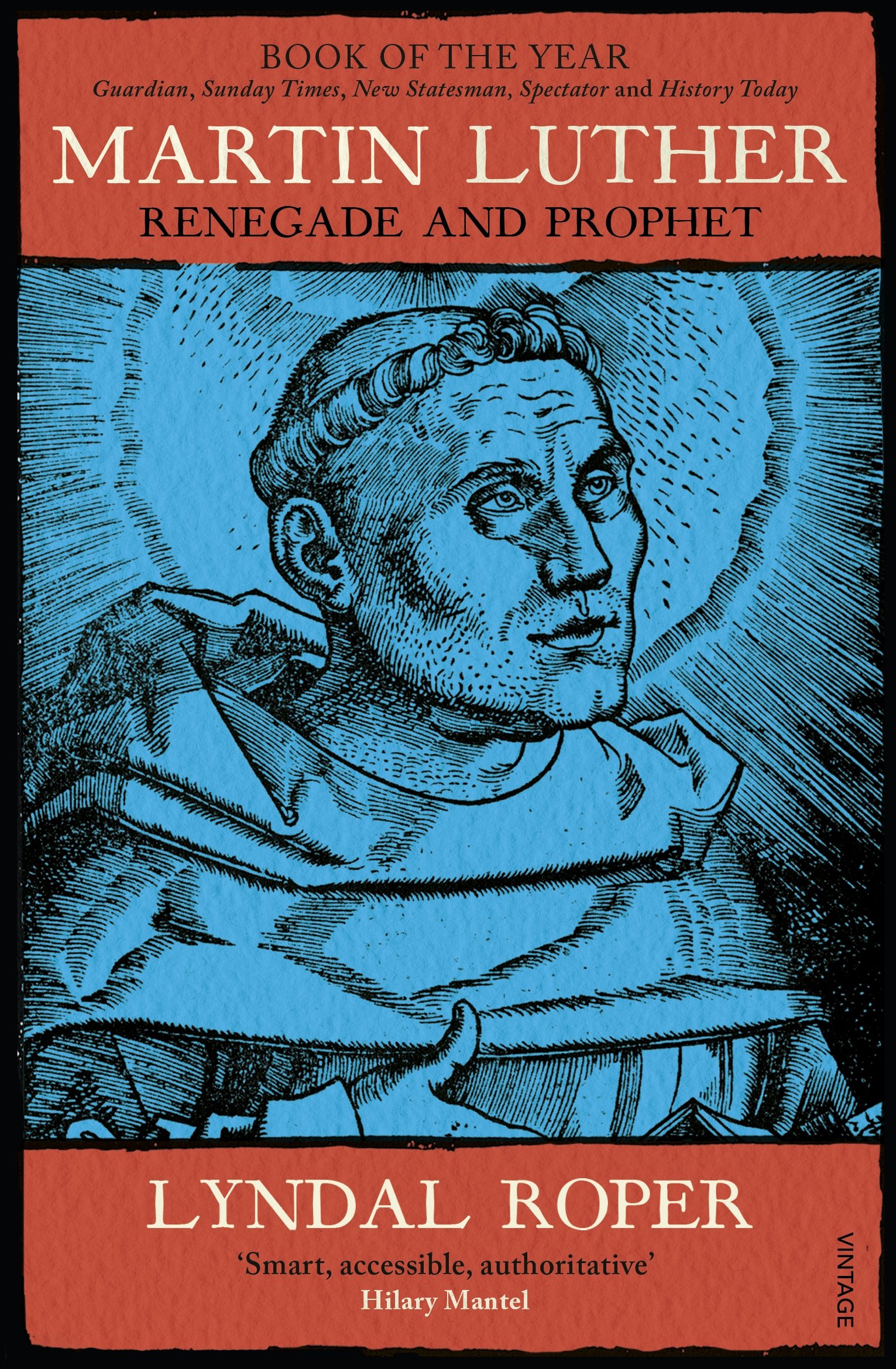
Lyndal Roper - Martin Luther: Renegade and Prophet

On October 31 1517 Martin Luther nailed a piece of paper to a church door in Wittenberg, Germany. The 95 statements on that piece of paper, we are told, kickstarted the Protestant Reformation. Or so we are told. Whether Luther actually nailed anything to the door, or whether that was a latter legend created by his followers to complete a carefully managed image we will likely never know. But the story works because it seems to be very much in character for Luther, a man whom we know a great deal about. 

Lyndal Roper's biography is a detailed study of Luther's life and personal motivations. She explains that "the wealth of material that has survived on Luther is so great that we probably know more about his inner life than about that of any other sixteenth-century individual". This shouldn't be surprising. Luther was a devout man whose religious life was very much a personal experience. He found himself in contradiction to the established Church in part because of his personal experiences. So its no surprise that his own writings, recollections and those of contemporaries were filled with personal experiences. Luther's legacy however was also carefully managed - his biography written in part to continue to battles of the Reformation itself.

But Roper wants to go further than understanding Luther's inner turmoil. She wants to explain how his "theology sprang from his character", and she uses a psychoanalytic approach to do this. The first step in Luther's rebellion, argues Roper, was "rebellion against his father". Fatherhood was important to Luther, both in the religious sense whereby Luther "emphasised the whole gamut of the fatherly aspects of God's nature" to the material one where "Luther's notions of manhood and fathers were forged by the rough world of Mansfeld as well as his relationship with his father".

Roper places her stall out early. Luther's rebellion, she argues, arose very much out of a personal crisis, which Luther's father in a central role, but she also admits that this process is not clear:
It is difficult to know exactly what role the conflict with his father might have played in these struggles, but it does seem that his spiritual troubles stemmed from the relationship he was forging with a paternal God. All the crises cluster around the terror of being confronted directly with God, the Father, who is also God the judge, without any intermediary; whereas the whole purpose of the monastic life as Luther experienced it was to create a security net where the intercessions of Mary, prayers said on one's behalf and exercises to subdue the flesh all cushioned him against God' transcendent power. So if Luther's entry into the monastery was a retreat into a matriarchal world, that retreat was raising spiritual problems of its own.
What this long quote shows is the way that Roper sees Luther buffeted by experiences and striving to make sense of the world through his study of the world. But is it enough? There's no doubt that Luther had a complex relationship with his father, breaking with the families plan for him to become a lawyer in the service of their mining company, undergoing revelation and entering a monastery to the dismay of his parents. But as Roper herself notes, Luther was also "radicalised by the opposition he encountered" to the 95 theses. 

Because whatever the process that pushed Luther on a particular road, the Reformation itself did not spring fully formed out of his head. Nor was it entirely the result of Luther's own thinking, actions or Biblical readings. Luther's ideas feel on receptive ground, soil that was already in turmoil as a result of wider economic and political changes. In fact Luther was surrounded by contradiction. His Reformation was a challenge to the established order, but it was also shaped by Luther's personal politics that saw rigid hierarchy on Earth as natural itself. Writing of Luther in Wittenberg, Roper says:
Luther would have been familiar with this arrangement, for it was what he had grown up with in Mansfeld. He naturally expected power to descend from above, not legitimacy to be conferred from below. This helps explain why his Reformation would be so different from that which would emerge in the south, and why his theology of power appears so reactionary. He simply had no experience of the more democratic values of southern German communes... As conservative as Luther's politics might have been, they were also in tune with the newly emerging political realities of the time; for it was the large territories of the princes that became the mainstays of the Reformation, while the civic communes of southern Germany were entering the twilight of their power.
So Roper understands that whatever the motivation of Luther the Reformation, as a process, took place on much wider political and economic ground. To be fair to Roper, she makes it clear she is not writing a history of the German Reformation, but a biography of Luther. But the two, in many ways, are inseparable and understanding Luther helps to understand the Reformation, as well as vice-versa. That said, Luther's personal character shapes specific events during the Reformation which have far reaching implications. Roper makes the point that when Luther was confronted with the authorities he "would in the end always align himself with the authorities". Luther was not revolutionary in a political sense. In fact he was deeply conservative in this regard. This can be mostly clear seen in Luther's reaction to the 1524/5 Peasant War, an uprising during the Reformation that saw thousands of peasants challenge the princes and the regional hierarchy over a number of demands relating to property, communal ownership and wealth. Luther violently opposed the peasants, despite having set in motion some of the processes that inspired them. His sermons against the peasants were violent and he urged a swift response. Despite his condemnation of the authorities at times, there is almost a shock in how Luther responds to the rebellion. Roper writes:
Yet there was nothing surprising in his stand. It was already prefigured in his conflict with Karlstaft [a figure of the radical Reformation] from the moment that Luther decided to defeat the Wittenberg movement and support the Elector's attempt to make peace with the Diet by slowing the pace of evangelical reform. Luther had already rejected the communal Reformation, powered by popular pressure, which inspired Karlstaft. This was the Reformation that was also popular among the lower townsfolk in Allstedt, Muhlhausen and Frankenhausen, where [revolutionary] Müntzer had his most loyal and zealous supporters.  
So rather than seeing the Peasant War as a continuation of his belief, or even his beliefs taken too far, too fast, Luther saw the Peasant rising as being the "triumph of the Devil" [Roper's words]. 

Roper shows how these events pushed Luther down a particular road. Partly personal - he responded by getting married, in direct defiance of the Church, an act of rebellion and an "affirmation of his 'courage and joy'," according to Roper. But they also shaped Luther's own Reformation in a way that meant not upsetting the political applecart too much. After 1525 it seems to me that Luther is much more conservative, more willing to compromise and keen to ingratiate himself with powerful forces that can help him push his agenda while not frightening established wealth and power. The brave Luther of the first half of the book is replaced by a more conservative figure in the second.

But problems with Luther's belief don't just stem from his conservatism. He was also a virulent antisemite, and Roper powerfully attacks this aspect of Luther's beliefs. His antisemitism: 
was not a medieval relic but a development of it. Even more disturbingly, it was not incidental to his theology, a lamentable prejudice taken over from contemporary attitudes. Rather, it was integral to his though; his insistence that the true Christians - that is, the evangelicals - had become the chosen people and had displaced the Jews would become fundamental to Protest identify. It was the central plank of his understanding of the Lutherans' providential role in history, and to secure it the Jews had to be pushed aside, discredited and, if necessary, eliminated. 
I began Lyndal Roper's biography prepared to be frustrated by her insistence one psychoanalysing Luther's life. I finished it however extremely impressed. The Martin Luther she describes is a complicated figure buffeted by circumstance and inner conflict, brave enough to stand out against the established Church, but unwilling to go too far for fear of revolutionary change. Because this is a biography of Luther I was unsatisfied by Roper's explanation of the Reformation itself. Constantly I wanted to understand what motivated people to follow Luther, what was it about their circumstances that made Luther's radical critique so invited to so many people. Indeed why were some prepared to take the Reformation into their own hands and risk to their own lives. Here I think we need a more detailed look at what was changing in European society, and in particularly in Germany. Roper doesn't offer that because she remains focused on her main subject - but read together with other histories of the period her book is a brilliant account of Martin Luther's life. 

To this praise should be added a brief note that Roper's book is lavishly, indeed beautifully, illustrated and her command of the source material, her insights into Luther and his contemporary and her commentary of material such as the use of Luther's image is fascinating. There is much her for readers even if one doesn't agree entirely with her approach.

Related Reviews

Chinua Achebe - Things Fall Apart

In many ways Chinua Achebe's Things Fall Apart is one of the most insightful novels about colonialism in Africa I've ever read. It's subtly lies in the seemingly innocuous way the process takes place - a thriving African community is brilliantly described mainly from the point of view of Okonkwo, a great warrior and wrestler, whose renown and wealth is undone by the accidently killing of a clansman. His punishment, banishment for seven years, means that he learns of the undoing of the village from afar.

In his absence white missionaries arrive, tempting some of the villagers away from their traditional practises and beliefs, alongside this the serpent voices of the missionaries are further undone by the trading post, that offers new wealth by tying the community into wider capitalist networks. The "lunatic religion" is reinforced by money "flowing into Umuofia" and with this money comes a growing feeling that there might be "method in the overwhelming madness". 

But behind the money there's a new white government and with that state comes violence. Government and justice are removed from the hands of the village elders and placed in the hands of people who know nothing of events, an abstract law replacing the complex rules that manage behaviour. When they protest the community and its village elders are collectively punished. 

Returning to this transformed world, which has seen his personal hopes and dreams destroyed, and the old order "fall apart", Okonkwo is at first disappointed that his was not the long imagined triumphant return, but this is soon replaced by anger and humiliation at what has happened to his people. His response, in many ways, is a personal redemption even if it is a hopeless gesture against the colonial powers who literarily treat it as a footnote of history.

Achebe's book is not one of violent resistance or retribution, it tells the story of how colonialism was a destructive force - both explicitly through guns and soldiers, and usurped state power, but also through the networks of commerce and religion that shattered the old order in the name of "progress".

Things Fall Apart is not a cheerful novel, nor is it patronising to the pre-colonial communities. These are portrayed as very different to European "society", but with their own internal logic, rationalities, rules and contradictions. This is not a pre-colonial utopia, but nor is it a society that sees systematic oppression and exploitation - that took the arrival of capitalism. This is one of the great novels that explores that transformation.

Related Reviews

Ousmane - God's Bits of Wood

Wednesday, September 28, 2022

Monisha Rajesh - Around the World in 80 Trains

Monisha Rajesh's Around the World in 80 Trains promises the reader an account of a 45,000 mile "adventure". Her journey certainly must have been a personal adventure, crossing Canada and the United States and Russia, travelling through South East Asia, exploring China and even taking the train in North Korea and to Tibet. But sadly there's no thrill of a journey for the reader, and unfortunately Rajesh seems to spend most of the time sneering at the trains she and her partner travel on, and the people they meet.

It is hard to put into words exactly why I disliked this book so much. In part it is the framing of the book. Refreshingly Rajesh doesn't pretend to be something she isn't - she criticises those who claim not to be tourists by donning the "traveller" mantel.  She rightly points out that once you travel you are a tourist. She also celebrates the randomness of travelling by train, where "no matter how many journeys I took, or how awful the train, each one brought an element of surprise or wonder". But she has strange ideas about why other people travel, "driven by the weather, the prospect of sex or dwindling funds". 

Despite being aware of her "privilege" as a relatively well off traveller in some of the poorest parts of the world, she also displays a strange failure to understand the people around here. Writing about a fellow traveller arrested in Bangkok, she comments "the idea of wilfully committing any kind of crime in Southeast Asia never failed to baffle me". The choices made by people who commit crimes are rarely the ones they'd like to make, being closely tied to wealth and poverty. Rajesh just doesn't seem to get it and comes across as tone deaf.

At times Rajesh has interesting insights, at others she comes across as the sort of traveller that she claims she isn't - "Leaving my job, my home and my possessions had quietened the noise in my head. My immediate concerns were were to eat and where to sleep. The less I carried, the less I worried". Must be nice.

At the end I was frustrated and disappointed by this book. I didn't enjoy the authors' attitudes to most of the people she met and her commentary on the places, trains and cultures she saw seemed superficial. Unusually this travel book didn't make me want to travel. Not recommended.

Related Reviews

Theroux – The Old Patagonian Express
Theroux - Riding the Iron Rooster - By Train through China
Theroux - Dark Star Safari

Theroux - The Great Railway Bazaar

Monday, September 26, 2022

Terry Pratchett - Snuff

I had the pleasure of reading Snuff for the second time while recuperating from Covid-19. Reading my first review I felt I couldn't really add much to it. But I was surprised by how political it was. The struggle of the goblins for their freedom was a key theme, but I was also impressed by how he treated class relations. Both those of the countryside, with surly "peasants" bowing down to Vimes, while maintaining a strong sense of community and dislike of their rulers, and at the same time the mutual hatred between Vimes and the actual aristocracy. There are plenty of satisfying class based comeuppances, revenge and retribution. Snuff is I think one of the best Discworld novels and a perfect read for those trying to recover from a nasty disease.

Saturday, September 24, 2022

Ulrich Mohr - Atlantis

This is an interesting, and unusual account of the war against shipping in World War Two, for two reasons. Firstly it is, unusually, from the German point of view and secondly because the voyage described was in itself unusual. The ship at the heart of the tale is the Atlantis, a surface raider along the lines of many similar craft from the First War, that distinguished itself by disguise and manipulation to sink Allied merchant vessels.

There are some great oddities - not least the ship itself. The captain brought about a load of prams so crew could dress as women pushing children about and lull the enemy into a false sense of security. But suddenly the flags would rise, the hidden batteries open and if the enemy used their wireless to warn the admiralty then gunfire would silence them. Atlantis was very successful in what she did. and at least according to the contributions from enemy captains and prisoners, she was almost unique in that she looked after captured merchant sailors.

Ulrich Mohr, his captain Admiral Bernhard Rogge and others are keen to distance themselves from any link to the Nazi regime. Quite the contrary. Mohr argues that they were sailors first and foremost with little allegiance to the fascists. Me thinks the writers protest too much - they would like to portray their adventure as a purely military event, but there's no doubt they were pleased with their successes and their rewards. At the end Mohr points to the reality of Nazi Germany - with industrialists raking in profits and "party member" getting the wives of the sailors. Yet even the condemnation of industrialists smacks of Nazi propaganda rather than genuine, left, class anger.

That said, this is a startling voyage. Atlantis and her crew were ruthlessly efficient and good at what they did, and there are some fascinating insights. Their over-Winter on the remote, Antarctic, Kerguelen Islands is fascinating. As is their "German" viewpoints on war news. I was struck by a couple of references to discipline, including the punishment of sailors for "homosexual" activity. Of great interest were the German's own fascinating with the colonial sailors on the British ships - Indian and Chinese men - who were swiftly brought into working in the kitchens for the Germans. There's some fascinating commentary on British colonialism here for those that would like to look for it. There certainly is far more mention of the reliance of the British naval effort in World War Two and crews from the colonies in this by the "enemy" than you might find in most similar accounts by British authors.

Overall though this book offers insights into a particularly vicious sea battle whose tactics will not be seen again - though take the authors' political claims with scepticism.

Related Reviews

Rayner - Escort
Woodman - The Real Cruel Sea: The Merchant Navy in the Battle of the Atlantic 1939-1943
Lund & Ludlam - PQ17: Convoy to Hell

Friday, September 16, 2022

Justine Firnhaber-Baker & Dirk Schoenaers - The Routledge History Handbook of Medieval Revolt

The Routledge History Handbook of Medieval Revolt is an important tool for everyone interested in "revolt" in the Middle Ages and more generally. I deliberately put revolt in quotes here because what the word means is quite different to how contemporaries might have understood it. Conditioned as we are by modern capitalism we tend to see revolt as being "from below", a challenge to the political status quo, or the state through diverse mechanisms. 

This doesn't quite fit in the Medieval era, as revolt took on different meanings. In her introduction editor Justine Firnhaber-Baker points out that revolts "might not have been construed as such by contemporaries" and taking up a theme that several of the contributions discuss, she points out that "violence is key, for it served not only strategic goals but also as a means of communication in this highly gestural society". In the Medieval era revolts had a number of different aspects that this volume draws out through a study of numerous different periods, events and places. 

Revolts, however they were construed, terrified the Medieval ruling classes. That's one reason why they feature in numerous contemporary accounts - as dire warnings to potential rebellious group and to the lords and kings who might provoke uprisings through misgovernance. But as Firnhaber-Baker explains  studies of revolts only really began systematically with the "Age of Revolution" drawing parallels between historic events and contemporary revolutions. Similarly more recent studies have tended to follow contemporary radical events and she says that more recent "popular movements" from the anti-capitalist movements to the Arab Spring have galvanised renewed interest. As such she argues that the book "embodies a particular historiographical moment" which should provoke interest far beyond the academic authors and audiences of the book.

Consisting as it does of eighteen essays, excluding the opening and closing chapters, it would be difficult to review this book in any detail. Some of the articles cover topics with which I am familiar such as the English Rising of 1381, others cover more general topics such as Samuel Cohn's fascinating study of Women in revolt in medieval and early modern Europe. Still others cover subjects which were entirely new too me such as Hipólito Rafael Oliva Herrer's article on the War of the Communities of Castile. All of them are however readable to the non expert, even if we are likely to miss nuance.

Many of the essays grapple with problems of language, historical distance and how to use sources. Myles Lavan's article on revolt in the early Roman Empire explores how to understand the very meaning of rebellion, as well as its scale, when often all historians have about events are "10 to 20 words in one or two texts". He does so by taking apart the meanings of Latin vocabulary, and how the contemporary texts wrote about revolts. It is fascinating even for those of us who have no Latin at all! He makes a point that those of us studying revolution today will find all to familiar. Writings about rebellions are always shaped by a political framework that wants to demonise events and participants. As Lavan says, "the distortions of elitist discourse on peasant revolt... include not just the obvious rhetoric of barbarism, criminality, and immorality, which deny legitimacy to the rebels, but also more subtle tropes, such as spontaneity or hysteria, which deny them agency and rationality". Reading contemporary accounts of the 2011 London Riots would easily find you similar examples, and at least one nameless recent book on the Russian Revolution I read invariably describes the Bolsheviks as "incendiary", "brutal" or "fanatical".

Several of the articles explore deeper themes about Medieval life and the origins of social revolt. In his  piece on the 1381 English Rising Andrew Prescott makes a point that the rebellion was both broader in geographical scope and much more "multi layered" in content than is often credited. He argues that a focus on London has distorted how people understand 1381. I myself had understood the "rising" as much more widespread than London, but Prescott's article shows that it was even more geographically broad than I appreciated. He describes rebel bands criss-crossing the country, and "a concerted attempt to spread the rebellion as far as possible". All of this points to a much more complex understanding of revolt in 1381 than we might expect, as Prescott says, "Just as the structures of political power were more complex and dispersed in the Middle Ages than in modern societies, so likewise the dynamics of conflict and protest were different... and do not accord with modern assumptions." He chastises those historians who see 1381 too simply in terms of events around the capital, neglecting events in the regions. He argues that only by seeing the complexity and scale of events outside of the capital can we really understand the uprising itself. This is undoubtedly true - if we only focus on the capital, we can miss how literarily thousands of groups of rebels tried to redress injustice, challenge their local rulers and take part in mass politics. But we also have to be wary of throwing away the baby alongside the bathwater. London as the centre of state power and wealth was attractive to the rebels in the south-east because it was there they could win fundamental change. Events in London mattered for how the rebellion would play out, even if a narrow focus on London means we can miss learning much more about how the rebels saw the society they lived in. 

Justine Firnhaber-Baker draws out some further details from the economic base when writing on similar issues in her article on the Jacquerie. She discusses the meaning of the nobility and their position in society:
The reason nobles lived in fortresses was because they could physically coerce the peasants into handing over their surplus.. and the reason they could do that was because they were a warrior aristocracy who lived in fortress. This is an oversimplification of the complex and changing situation of the late medieval French nobility, but this nexus of economic, political and military privilege inherent in noblesse seems nonetheless to have been at the heart of the Jacquerie for its rank and file participants.
It was impossible for both classes to escape the reality of their situation. So when revolt did break out, whether it was the "peasants from below", groups of disaffected nobles and lords, or some combination of the two, there invariably was violence. 

This violence was considered part of the political framework of society and thus more accepted as a tool of rebellion. Several writers explore this. In particular Vincent Challet in his piece on Violence as a Political Language in French and English rebellions. Here we see examples of popular violence on many levels, "legal violence" in court, or mass protest involving "shouting and screaming" against officials. I was particularly taken by an example from Lavaur in 1357, where the populares protested by taking up arms and patrolling the streets at night and then "stood in front of the houses of the wealthiest townsmen shouting: 'Where are those damn traitors and wreckers of this place?'" The threat of violence, in this case, leading to victory for the people. That's not to say that actual violence didn't take place - many essays refer to murders, lynching, and even pitched battle - but Challet makes the point that the boundaries between the two were often blurred. 
Physical violence of the sort that might seem more objectionable to us - like murder, arson or even post-mortem mutilation - was perceived as a regular way of speaking, not only for rebels, but also for the elites and government. This may be because these violent actions were, in fact, imitations of judicial procedures: cutting royal officers' bodies into pieces was nothing more than the execution of 'traitors'... burning castles was not so far from the legal abattis demaison which is attested in the urban statues...
In other words, violent action must be understood in a social context not just in terms of the violence itself.

Before I finish I want to highlight a few other essays in passing. Some of the essays take up subjects often ignored or downplayed in histories of the period. I have already mentioned one essay specifically on the role of women, and several essays touch on this further. It is worth noting a fine essay comparing revolt in late medieval European and Islamic societies. Such societies aren't discussed often enough when we consider the period. A couple of essays bridge the period before and after the Medieval era, Phillip Haberkern looking forward to urban revolt in the Reformation, and several of the essays also discuss the complex question of elite participation in revolts from below. Interestingly, one of the great strengths of this collection is how many of the authors try to break out of the very narrow confines of particular specialities and draw links between regions, places and times.

While the book is not aimed at the casual reader, and some of the academic language is challenging, I do highly recommend it. It will, naturally, appeal first and foremost to students of Medieval revolts themselves. For this it will likely remain a gold standard for many years to come. But there is also much here for those trying to understand the politics of social movements more broadly - how they change over time and how they are shaped by their social and economic context. I might not entirely agree with Andrew Prescott's conclusions from his foray into the Arab Spring while discussing the English Rising, but it is important that some scholars are taking this approach. For all these reasons, and more, I hope that many readers will be able to get a copy of this important book and explore these diverse and fascinating essays.

Related Reviews