Monday, February 02, 2009

Thomas M. Disch - The Word of God


Organised religion certainly needs the fun poked at it, and Thomas Disch certainly does that here. Now any book that contains the line "Jesus loved creme brulee" would be a sure fire hit with this avowed atheist, but Disch's book is so much more than that. It pokes fun at the concept of religion and God, by being the word of God himself. In this case, the God (there are many) is the author himself. Self declared as such, Disch argues his particular world view, proves his point with a few minor miracles, and tells the improbable story of his origin.

Along the way, we meet a few famous characters in history, many of whom are tangled up in a complex plot of Satan's to destroy Thomas Disch's parents liason, and thus prevent God occuring. One of the side effects of this, is that Germany and Japan will win World War II. The chief instrument of Satan's scheme is the resurrected Phillip K. Dick. For the purpose of this novel (and perhaps in reality) Phillip K. Dick holds an almightly grudge against Disch, carried with him down into the bowels of hell after his death.

It's all quite fun - very little of it means anything particularly deep, though we have the occasional nugget of philosophical thought, ruminations of opera and art, and snippets of favourite books and poems (some of which are even real I trust) but mostly this should be read for the cynical humour and barbed jokes.

It is a clever book, worth reading, if only to annoy and amuse someone more religious than me.

Friday, January 30, 2009

Frank Henderson - Life on the Track; Memoirs of a socialist worker


Since I heard it was going to be published, I've desperately be waiting for Frank Henderson's auto-biography to be published. For those who've never met him, or heard him speak, Frank is a retiring character - for someone whose life has been as full as his, he doesn't seem to be someone who has spent his life in struggle.

Born in 1925 to a Trade Union family in the West Midlands, Frank was old enough to serve in the later days of the Second World War, and be part of the British forces that put down rebellion in Greece and Palestine in the war's aftermath. But for most of his life, Frank was a socialist militant working in the car industry "on the track". Much of this time was spent working in the Longbridge plant. That giant car factory that dominated so much of working class life for the people of Birmingham for many years. Frank describes a time when Trade Union organisation was so powerful it seems almost impossible today.

Working in car industry in the 1960s, a period of boom for the UK companies, Trade Unionists had effectively controlled production. If the workers didn't like something, the profits stopped until management had solved the problem. Even before and during the war the union movement had great power. Frank describes being 15 and being asked to do the job of a 16 year old. Despite his manager wanting this done, the union Branch Committee had to make a ruling. Their ruling was that Frank could do the work, but only if management paid him the adult rate - twice what he was on. Management accepted the decision.

Trade Union politics for much of Frank's life were dominated by the politics of the Communist Party. Frank never joined the CP - instead his political life followed the ups and downs of the British Trotskyist movement, though eventually he joined the International Socialists, forerunners of the current Socialist Workers Party in the UK.

Frank sees being in a socialist organisation as crucial to his activity. Describing the aftermath of the Birmingham Pub Bombings at Longbridge he says he had "never been so scared in his life". In the anti-Irish lynch mob atmosphere that followed the IRA attacks, Frank had to speak out.

"I said the people responsible for the bombing were the people responsible for all the trouble in Northern Ireland and that was the British imperialists."

While the meeting voted to go on a planned protest march, Frank thinks that he made a small different to the atmosphere.

"I noticed, possibly as a result of what I'd said, that a lot of banners saying "Sack all the Irish bastards", "Kill the Irish Bastards", and slogans like that were chucked on the floor and people were walking over them. From the end where I'd spoke people were carrying banners saying, "Bring our boys home". Now, "Bring our boys home" is a long way from a slogan like "Troops out now", but it's a bigger distance from "Hang all Irish bastards".

Frank doesn't think that he could have done what he did without being a member of the IS, "giving him a bit of backbone when things are tough." I think he is right to feel proud when he goes on to say;

"I felt, possibly for the first time in my life, a little pride in myself for doing something. It was a lesson in the value of being a party member that has stuck with me ever since."

Frank saw it all. From the Battle of Satley Gates and the miners strikes that destroyed the Tory governments of the early 1970s, to the 1984 miners strike, Thatcher's victory and the defeat of the Trade Union movement. His thoughts on the role of rank and file movements to give confidence to genuine shop stewards networks, the role of the Communist Party in undermining the left, as well as militancy in a time of economic downturn are particularly interesting and relevant.

If you're interested in Oral history and the working class movement of the last 60 years, this is an excellent read. It finishes with a afterword by Marxist historian Matt Perry who goes through some of the detail of the period, in particular the reasons behind the decline of British manufacturing industry.

Bookmarks have done a great service to a new generation of political activists by bringing out this book. It will help them understand the importance of workplace organisation and socialist politics. There could be no greater tribute to the life of a socialist than being able to learn the lessons from him or her and Frank Henderson certainly has much to teach us.

Tuesday, January 13, 2009

Iain M. Banks - Matter


The sheer scale of Iain M Banks' Science Fiction always excites me. His ability to blend far reaching ideas with a galactic scale, without ever loosing sight of the minutae that make up society gives his fiction a real depth. His latest SF outing, Matter, doesn't disappoint, not least in the scale of the printed book. Weighing in with 550 plus pages, a glossary of characters and ship names, you know as you pick it up, that you are in for a detailed read.

At it's most basic, this is a classic story of revenge. In fact, the basic tale of a murdered King's son seeking justice as well as a route to the throne in the context of a changing Feudalistic society is one that has been done many times in the fantasy genre. What is clever about this take, is that the Fuedal society we read about in Matter is actually located on a "Shell World". Not only is it bottom of the league in terms of technological development, it is actually physically underneath many other layers of this artifical planet.

In Iain M. Banks' universe, such constructs are not unusual, though no one really knows their point. In this novel they serve as a metaphor for social and technological power. Leaving aside the technical details of how such worlds work (something the author doesn't do, I should add), as you rise through the strated societies, each alien grouping tends, in the simplest explanation, to control, or at least influence the weaker societies below.

The stage is of course set for a clever interaction of different societies and different cultural understandings. Central to this is the journey of Prince Ferbin out into the external galaxy to search for his sister. As he encounters other races, societies and cultures his own conceptions of the status quo break down. His sister has gone through a similar process. Most interesting though, is the Prince's relationship with his servant - someone whose understanding of how society really works is much more critical than his Prince would dare suspect.

With this novel, Banks' has made his imaginary universe a much more real and deep place. It isn't all good - when a more powerful society intervenes in the internal workings of a weaker one - things don't often turn out well for the majority of people in the weaker place. (You might want to think about foreign intervention in the Middle East or Africa while you read the book, as, I am sure the author would have wanted you too).

Alongside most of Iain Banks' more recent SF, this novel is one to read and re-read. Unfortunately, his recent non-SF fiction tends to be more plodding and shallow. Perhaps this is pro-SF prejudice on my part, but I think sometimes political polemic works better in a novel when its slightly below the surface, rather than thrown at the reader.

If you want to know more about the book, you might like to read the interview that Iain M. Banks gave to Socialist Review when it was first published, it gives more information on the ideas behind its development. SR's own review is here.

Monday, January 05, 2009

Raymond Chandler - The Little Sister


The Little Sister is not one of Raymond Chandlers better known novels. It is however one of the classic Phillip Marlowe novels and has all the hall marks of the better known stories like "The Long Goodbye" and "The Lady in the Lake".

It begins with Marlowe, bored in his office, chasing the flies that are annoying him. His boredom is disturbed when the oddly named Orfamy Quest visits, looking for a private detective to help her find her missing brother. Orfamy comes from a tiny town in Kansas and holds all the prejudices that you might imagine for someone visiting the big city, with all its vices, for the first time.

The plot itself matters little - Chandler's novels should be read for their atmosphere and description, rather than the complex tales of intrigue and betrayal. This is the sort of story that you just join up to for the ride. On this trip, we follow Marlowe as he meets sex-starved movie starlets, murder victims with ice-picks in their necks and corrupt policemen, as well as nasty gangsters. In some ways, all the cliches are here, in others it's a fabulous example of the detective genre.

Chandler is an amazing writer, whose cynicism towards the inhabitants of the big city will bring many a dry smile to the modern reader. Worth digging this one out from the library.

Related Review

Chandler - The Long Goodbye

Tuesday, December 30, 2008

Graham Greene – Brighton Rock


The classic story of the low level gangster trying to break through into the big time has been told many times. Rarely though, has it been told with such a biting cynicism for the human condition. Nor has it been related with such a bleak outlook on a whole town.

The Brighton of the 1930s, so well described in Graham Greene’s classic novel, is a city slowly being swamped by the dreams of those who visit. From the London Day Trippers we meant in the opening chapter – desperately seeking respite from the big city and their dull, boring lives, searching for alcohol, entertainment and love – to those who circle around the visitors on race-day, hoping to make a few pounds to keep their own heads above water, these are by and large a people without hope, with repetitive lives, whose only hope of something better is a lucky break.

The novel has a lot of luck in it – Hale, the unlucky, doomed victim we meet in the opening paragraphs of the book, makes a living from leaving messages in public places on behalf of his newspaper. If he is challenged, his finder wins a prize, as do those who find his message cards. His editor likes him to be found, but occasionally go undiscovered, to save on a few pounds. Sadly, Hales pride in his ability to o the job properly doesn’t allow him to escape his own luck and destiny. He knows, as the opening lines put it, “that they meant to murder him”.

The killers – a small time Brighton mob outfit – have their own dealings with luck. A few coincidences and their ability to get away with the crime will fall apart. Instead, their leader, Pinkie, has to pile crime upon crime, upon murder in a desperate attempt to escape the law. Of course, his own self-belief, means that those around him suffer, and more and more innocents are pulled into this growing circle of bad luck, until the only hope in this ever darker story is a single woman, who herself only met Hale through chance, refusing to belief the official story of his death.

The tragedy of the story is not the individual crimes. Pinkies’ self belief loads the stakes so high that few can escape the final collapse of his plans. The innocent girl he drags into the mess as the story continues escapes almost totally from what has happened. Indeed the reader is led to believe that she has actually, unlike almost everyone else in Greene’s Brighton broken free of the restraints upon her, restraints imposed by class, family and poverty.

The final lines then, “the worst horror of all” aren’t then about her personal pain, nor those of all the victims along the way- it is the crushing of her dreams and the realisation that there is no hope at all, something few of us could really survive.

Monday, December 22, 2008

Tony Cliff - Trotsky; Towards October 1879 - 1917


This first volume of Tony Cliff's biography of Leon Trotsky is a compelling read. Unfortunately, it isn't the best introduction to the politics and ideas of Trotsky - reading it requires a certain knowledge of events leading up to the Russian Revolution of October 1917. That said, it doesn't require the deepest historical understanding - with this work Tony Cliff was trying to reassert the importance of Leon Trotsky's ideas to a new audience.

You cannot however understand Trotsky without knowing a great deal about Lenin. This might at first seem strange - the two revolutionaries had a political falling out early on in their careers - over a seemingly trivial decision about the nature of the socialist organisation they were trying to create. During this period (Trotsky called them his "wasted years") the two men, who were to go on to lead the Russian Revolution, frequently exchanged polemical attacks on each others ideas and methods.

However Trotsky's brilliance was his ability to develop and understand events in Russia, he developed the theory of Permanent Revolution, which Lenin later came to support - this was the idea that even a backwards, effectively feudal country like Russia, with an underdeveloped working class could lead a working class revolution. This theory was, of course, to underpin the reality of the Russia Revolution and simultaneously to make both Lenin and Trotsky internationalists. The backward Russian working class could seize power, but without international revolution, their state would soon become isolated and distorted.

Cliff's biography comes alive when the events of 1917 are described. The 1905 revolution which Trotsky helped lead is fascinating, primarily because it shows Trotsky as a leader who can handle defence and withdrawal in the face of a stronger opposition. When Trotsky is re-elected to the leadership of the Petrograd Soviet in 1917, the balance of power rests much more on the side of the revolutionary workers and Trotsky's brilliant organising and strategising demonstrates the "art" that is insurrection.

Despite Trotsky's heroic life, this isn't a biography that hides Trotsky's failings. The writers who, as part of the International Socialist tradition, rediscovered the genuine revolutionary tradition for a new generation of socialists, were never afraid to criticise Trotsky's mistakes, in order to learn the lessons of History. In particular, Cliff repeatedly underlines the error that Trotsky made in distancing himself from Lenin's Bolshevik party. To be fair to Trotsky though, this was something that he himself wasn't afraid to acknowledge.

Shining through this volume of the work, is Trotsky's brilliance. As a polemicist, a theoretician and a writer. He is also a man of humour and emotion. But most of all he is someone who dedicated his life to making a revolution happen, defending its gains and constantly trying to organise those who had the power to change the world. Learning from his life is part of learning how we can challenge the existing system in the future.

Related Reviews

Cliff - Trotsky; Sword of the Revolution 1917 - 1923
Hallas - Trotsky's Marxism
Choonara - A Rebels' Guide to Trotsky
Trotsky - An Appeal to the Toiling, Oppressed and Exhausted Peoples of Europe

Sunday, December 07, 2008

Richard Overy - Russia's War


Despite what you learn from a childhood watching British war films, or even the potted history of the war you can pick up from The History Channel, World War II wasn't won by the British and Americans invading France - despite the importance of that conflict. Hitler's German was military defeated by enormous sacrifices from the ordinary people of the Soviet Union.

Some of these sacrifices were, to be frank, unnecessary. Joseph Stalin's supreme self confidence led him to underestimate the likelihood of an attack and the country was ill prepared. More of his decisions were suicidal for the people involved - Germany's war machine was to powerful to be even hindered by small group of lightly armed militia. However the method of fighting the war changed, and it is this transformation that is so well documented in Overy's book on the Eastern Front.

Terrified of being challenged in his position, Stalin was initially reluctant to allow the freedom of movement and imagination to his generals. This led to a monolithic response to the German invasion - one that refused to adapt to changing German tactics. In later years, Stalin was prepared to devolve much more control to his generals, and these, in particular Zhukov, proved brilliant at defeating German armies in gigantic set piece battles.

This is a short book, so it is necessarily lacking in details. But it is intended to be a sweeping history of the period, so it doesn't bring out all the terrible defeats. The 900 day siege of Leningrad is dealt with in a short chapter, as is the unbelievable ferocious conflict at Stalingrad. This isn't a problem though, it is a fascinating read - those particular battles are dealt with in great detail in other excellent works.

Overy uses the recently opened Soviet Archives to illuminate his accounts, and challenge other ideas and myths. He argues for instance, that the British and US aid sent to the USSR, was far more important in victory than has hitherto been thought.

Despite the immense victory that the people of the USSR inflicted on Nazi Germany, we shouldn't let this close our eyes to the nature of the dictatorship that led the war effort. Overy documents the torture, murder, massacre and violence at the heart of Russian society. Those of us who have long argued that Russia wasn't a socialist society will not be unaware of this, but for a generation after the war, Russia's victory was further evidence of the socialist nature of its society. That said, no one, least of all the Germans expected Russia to triumph. Overy quotes the American Secretary of War as predicting that "Germany will be thoroughly occupied in beating Russia for a minimum of a month and possible maximum of three months."

The true cost of Russia's war cannot really be comprehended. The figures are almost incomprehensible - here are a few to illustrate the point. "Stalingrad cost the lives of 470,000 soldiers and airmen. The battle of Kursk was won at a cost of only 70,000 dead." Kursk was the largest tank battle of the war - 600 German tanks faced 850 Soviet ones. Half a million Soviet civilians died from bombing raids during the war - ten times the number that died in the London Blitz. In probably the worst siege of the war, that of Leningrad, Overy estimates that over a third - more than a million people - of the pre-war population died.

While this is an excellent history of the war, it is essentially a military history - the background chapters were Overy deals with the Russian Revolution and civil war are much weaker, particularly his peculiar way of examining Trotsky simply as a military hero, who simply "lost interest" in military matters once the civil war was won. This isn't surprising. Trotsky was a revolutionary leader, not a military general. His leadership of the Red Army was based on the need to defend the revolution, rather than a particular desire for military glory. These small criticisms aside, read this book to understand where the cold war came from and to try and comprehend the cost of the greatest military clash of history.

Saturday, November 29, 2008

Fred Pearce - When the Rivers Run Dry - What happens when our water runs out?


There is a great irony that we live on a planet which is two thirds covered in water, yet millions of people around the globe live in areas of water shortage, or areas where the water isn't safe to drink.

New Scientist writer Fred Pearce looks at the reasons why water has become such a limited resource - there are many reasons - climate change has played its part, but more often than not, human changes have caused the problems. In many areas of the world - in particular places in the Middle East, though the US and China are great culprits to, people are using ancient underground acquifiers. These fossil reservoirs of water take thousands of years to fill, but are being emptied at a rate far faster then they are replenished.

Pearce demonstrates how sometimes our irrational use of water - to keep the fountains running in desert cities for instance - leads to these shortages. But he also illustrates how attempts to store water have often led to problems. He describes the mania for dams to produce hydro-power and store water for future use, has surprisingly caused more problems then they have solved, being the source of flooding, pollution and destruction of ecological areas. There is the insanity of huge reservoirs in the desert, water evaporating into the air while downstream people die of thirst.

This isn't a cheerful book. Pearce offers us a glimpse of a future were millions of people suffer from drought and water shortages. But he does show how a different approach could solve many problems. He challenges the idea of big engineering problems as the solution, and shows how localised projects across the world could solve many of the problems associated with wate - in this sense the book is a hopeful one that does also offer a glimpse of a much better society - where human society is much more in balance with the rhythms and cycles of the natural world, in this case, the very ebb and flow of the rivers, streams and seas.

Sunday, November 23, 2008

Peter Biskind - Easy Riders, Raging Bulls


The 1970s was an important era of transition for Hollywood. It marked the time when the blockbuster summer film came to the for, making the major film companies rich beyond anyone's imagination. It marked a brief time, when film directors were gods, commanding huge amounts of cash and ruling, dictatorially over actors, film crew and even the movie companies themselves.

Inspired in part by the radical years of the late 1960s, but more often, inspired by great European film makers whose own radical ideas led them to challenge film convention, a new breed of US director shook up the industry. This was a period when great films stunned viewers - Raging Bull, Apocalypse Now, The Godfather, American Graffiti and the first of the blockbusters, Jaws and Star Wars.

The men who made them, garnered fabulous wealth and Peter Biskind here looks at those directors. They are all larger than life, many of them seem to have severe character defects (or at least eccentricities), Biskind lets us eavesdrop on the gossip and stories of the time, tells us just how cocaine was the fuel for the entire industry, and shows how alcoholism was part and parcel of a film maker's life.

Women do feature, though usually as the abused, ignored and hated spouses of these men. With the power and wealth of the directors came lots of sexual encounters - the myriad of affairs destroying many a Hollywood marriage.

If you like film, you'll probably love this book. Though the book has little on the films themselves, concentrating more on the processes that allowed their creation - the deals, the characters and the traumas (as well as the occasional over-budget disaster), it is an easy read and will probably mean you watching the movies with a slightly, perhaps more jaundiced eye.

Related Reviews

Biskind - Seeing is Believing
Frankel - High Noon

Wednesday, November 05, 2008

Dalton Trumbo - Johnny Got His Gun


Few novels can be as responsible for fundamentally changing the outlook of its readers as Dalton Trumbo's classic anti-war story, "Johnny Got His Gun". It is ironic that as fervent a reader as myself, with over 7 years of anti-war campaigning in the Stop the War Coalition here in the UK has never read it.

Written in 1938 as the clouds of war loomed above the world again, it's centred on young US soldier drafted to fight in the trenches of the First World War. The horrific reality of Joe Bonham's situation becomes clear as the story begins, he awakes to find himself without a face, arms or legs - though with perfect clarity of thought and feeling in the remaining parts of his body.

Joe begins years of a loneliness that we can hardly imagine. His carers don't know that he can think or understand his surroundings, so they clean and change him as regular as clockwork, while all Joe can do is remember his past, isolated from everything around him. No one even knows his name, so no friends or family visit, though Joe reflects that his lack of a face wouldn't be much to look upon anyway.

Time is measured by the hospital routine, Joe begins to have a purpose as he works out his surroundings by the vibrations of the bed and the touch of the different nurses, but a truely poignant and painful moment is when Joe learns to tell the dawn from the temperature on his skin... "if I never have anything else I will always have dawn and morning sunlight".

But inside him, rage at the world that has left him to suffer like this grows. In the introduction Trumbo tells us that a retired military man claimed that the work was a "pacifist" novel. This isn't true. The seering rage and anger at the heart of the story, the blood spitting angry climax is nothing less than a call to revolution, to turn the gun onto those who would make war, and send young men to die and suffer.

By a strange coincidence I read this through the night as most of the world waited to see whether Barack Obama would win the US election. When I heard that he was the new president, my first thought was that I hoped he had read this novel as he prepared to take over US foreign policy. Even if he has, its time a new generation of people read it - just in case.

Sunday, October 26, 2008

Marcus Rediker - The Slave Ship – A Human History


Marcus Rediker is one of two historians of the “Revolutionary Atlantic”. Along with Peter Linebaugh, he co-authored one of the best accounts of emergent capitalism in the countries that surrounded that ocean. His latest work, is a study of the Slave Trade, examined through the historical records and accounts of the people who built, crewed, and lived aboard the slave ships, as well as those who were transported, tortured and killed on them.

The Slave Trade was a moment in human history that is almost unparalleled in suffering. In his introduction, Rediker explains that over the “four hundred years of the slave trade, from the late fifteenth to the late nineteenth century, 12.4 million souls were loaded onto slave hips….. along the dreadful way, 1.8 million of them died, their bodies cast overboard to the sharks that followed the ships. Most of the 10.6 million who survived were thrown into the bloody maw of a killing plantation system.”

Rediker points out that this figures underestimate those who died and suffered as many more people died as they were forcibly marched from inside Africa to the slave ships waiting on the ocean. He quotes a conservative estimate of a further 5 million men, women and children dying before they reached the sea.

This blood-bath existed only to feed the profits made from the sugar plantations in the Caribbean and the United States. But this is not a history of that aspect of slavery, rather it is an account of the brutalities that made up the actual transportation. This illuminates two things – firstly the immense profits available from the actual trade were worth huge investments by European and American traders, despite the real dangers that could threaten the success of a slave voyage. Secondly, at every stage of the voyage, the enslaved resisted what was happening to them. Rediker recounts many tales of insurrection and resistance, from hunger strikes to murder, and he also makes the painful point, that once your own body is the property of someone else, suicide is not just an escape from imprisonment, it is also an act of rebellion.

The last chapter of this book looks at the slave trade from the point of view of those who struggled to expose its horrors and end it. From those who had experienced the pain and suffering to those whose moral beliefs made them stand up and be counted we learn how the nature of the slave ships themselves became the strongest weapon against the trade. The infamous drawing of the slave ship Brooks, showing its human cargo packed in below decks was printed over and over again to display the barbarity. Rediker’s emphasis on the slaves own rebellion makes it clear that it wasn’t simply action by Europeans that brought the trade to an end, but the groundswell of anti-slavery action in Europe and the US played its role in abolition.

Rediker places the slave trade firmly in its context – in the needs of an emergent capitalist mode of production, that wanted (or even needed) the super-profits available. Its an interesting point that viewed from this point, the victims of the trade weren’t just the African peoples, but also those who were dehumanised and destroyed by the conditions on the ships. Almost 22% of sailors on slave ships died as a result of the poor conditions, appalling food and brutality of the officers. This isn’t to paint the sailors as innocents in the slave trade, rather to put them in their class position, people to be exploited by the ship owners and officers to ensure the maximum profits from a voyage. That these sailors took part in the brutalisation of the captives is of course part of their own complex story, one that also included mutiny and rebellion (like the great Liverpool uprising that targeted those who were central to the slave trade).

The end of the book is a discussion about justice – Rediker ends with a discussion on how to “redress a monstrous historical injustice”. His conclusion isn’t simply one of apologies or financial compensation, rather he imagines a “social movement for justice” led by the descendants of those who suffered, which could come up with proper redress. It’s a laudable idea and one that will stand firmly in the traditions of rebellion and resistance that so marked those who were the victims of this terrible moment in our history.

Related Reviews

Rediker - The Amistad Rebellion
Rediker - The Slave Ship
Rediker - Between the Devil and the Deep Blue Sea
Rediker & Linebaugh - The Many Headed Hydra 

Friday, October 17, 2008

Mary Beard - Pompeii, The Life of A Roman Town


There is a danger with books of archaeology, particularly those that are about sites like Pompeii, where we know alot about the day to day lives of the inhabitants. The danger is that the author and the reader becomes obsessed with the minutiae of the historical people. We end up trying to imagine how our lives are similar, or how "they" did they things that "we" do now.

In and of itself there is nothing wrong with this - though I remember once my mother pointing out to me, while I did some history homework, that when I looked at the past, I should remember that people like us were the people who grew the crops, rather than those that lived in the castles. We can learn alot by imagining how people ate, bathed, travelled and all the rest of those crucial things - but if that's all we do, then we can seriously limit the lessons that history can teach us.

Now Mary Beard's latest book doesn't fall into this trap. There is much here for the casual reader to enjoy, and much to make sure the visitor to Pompeii gets a more fulfilling understanding of what happened in a Roman town. But this book has so much more to offer.

Firstly, Mary takes on those, like the guides on the site, who encourage us to imagine Pompeii as a typical Roman town, suddenly interrupted and deserted. Preserved like a fly in amber, at its moment of death. Of course this is partly true - we have found "loaves of bread found in the oven, abandoned as they baked; the team of painters who scarpered in the middle of redecorating a room, leaving behind their pots of paint".

But those who lived in Pompeii knew what might have been coming, they had after all the experience of an earlier eruption - indeed much of the repair work going on may have been left over from the damage that that caused. Those who remained were likely to be only a small proportion of those who considered the city their home.

Mary Beard brings us the latest in theories and discoveries from the city's remains. Interesting, she often tells us what "some" historians think, and what "others" believe, but refuses to come down on either side, siting lack of evidence, or other plausible theories. The archaeological world that she describes is often one where lack of evidence hasn't stopped someone coming up with a theory to explain something. Of course we also learn how much we don't know. How did the participants react to animal sacrifice, who paid for it, what happened to the carcases afterwards?

Something that comes across strongly from Mary's writings is the class element to Roman society. In some ways, this aspect is obvious - school children learn that Roman had an emperor and slaves, and all the different strata's between. What Mary brings to life is the reality of what this meant for people in Rome.

Here she writes about Roman sex life, comparing it to the way they ate their food.

"... all Roman men married. Sexual fidelity to a wife was not prized or even particularly admired. In the search for pleasure, the wives, daughters and sons of other elite men were off-limits ... The bodies of slaves and, up to a point, of social inferiors, both men and women, were there for the taking. It was not simply that no one minded if a man slept with his slave. That was, in part at least, what slaves were for. Poorer citizens, with a less-ready supply of servile sexual labour, would no-doubt use prostitutes instead. As with dining, the rich provided for themselves 'in-house', while the poor looked outside."


Slave had little or nothing in Roman society, the poorest had little more, and their dwellings rarely had a kitchen or dining area as we know it. Consequently the poor ate out all the time, the rich could entertain and dine at home.

So writ large, in terms of sexual relationships and cooking we have the structure of Roman society and for me, this is far more illuminating than all the guesses about how people might have lived.

Mary Beard's book is a fascinating work on Pompeii. I wish I had had the chance to read it before my only visit. I am inspired to go again, and I will definitely take it with me when I do.

Monday, October 06, 2008

Iain Banks - The Steep Approach to Garbadale


The complex relationships at the heart of big business have been a theme in earlier works by Iain Banks, though in "The Steep Approach to Garbadale" the author looks at the much more difficult business relationships caused by a large family run organisation.

The Wopulds run an immensely successful company that made its initial fortune manufacturing the Empire board game around the world. The game itself seems to be a more complex version of Risk - since it's invention, further success and profits have been made as the game has expanded into the world of arcades, consoles and PCs.

The story focuses on Alban McGill (amusingly nicknamed All Bran by his more working class friends) whose difficult relationship with his family centres on his mother suicide (graphically described early in the novel) and his love affair with his cousin Sophie. Alban is constantly on the metaphorical run, suffering the consequences of his traumatic childhood and the pressure inherent in being a liberal leftie, part of a rich, profit motivated family (at one point he is told off by the family matriarch for expressing his displeasure at her toast 'free trade not fair trade')

All this comes to a head as the Wopulds face being bought out by a giant American games corporation who desperately want to use the Empire! name to consolidate their power. The run-up to the Emergency General Meeting where this is thrashed out forms the backdrop to Alban confronting his difficult past and finally understanding some of the reality behind a carefully constructed facade.

All well and good. It's an enjoyable read, though the "twist" was fairly obvious long before it was spelled out in the books final pages. But I was left with the feeling that it had all been done before - Nasty Multinational Company? See "The Business". Complex family relationships on remote Scottish estate? See "The Crow Road", liberal central character facing personal angst and danger? See "Dead Air" or just about every other Banks' work.

That's not to say that "The Steep Approach to Garbadale" isn't a good novel, there are a few moments of pure writing genius (The suicide scene being a genuinely dark moment, and the tension as the former lovers, Alban and Sophie find their fishing boat breaks down, is palpable) but these seem to stand out in amongst a story that feels a like it has all been done before.

Sunday, September 28, 2008

Tony Cliff & Donny Gluckstein - Marxism and Trade Union Struggle, The General Strike of 1926


The events of the 1926 British General Strike aren’t an issue for abstract historical discussion; they are, more importantly, an example of one of the most intense periods of industrial trade union militancy on these isles.

As the authors of this examination of the “Days of Hope” put it, “The key question for Marxists is how to relate to the working class. In countries where the workers are organisd in unions, this question then takes the form of how should Marxists approach trade unionists and their struggles”.

Rather than concentrate simply on the events of the strike, Tony Cliff and Donny Gluckstein start by examining both the Marxist approach to trade unions and the political forces in Britain in the first quarter of the last century.

Their starting point is how limited the Marxist understanding of developed trade unions was at that time. The leading revolutionary thinkers were concentrated in Russia at the time, and there, the slow development of the working class and the illegality of much of its organisations meant that trade unions had little impact on the revolutionary struggle. This in turn meant that leading thinkers in the revolutionary international badly underestimated aspects of trade unionism, leading to many militants in Britain over estimating their influence in the working class, or putting hope in left-wing trade union leaders.

The role of the trade union leaders was to prove crucial in the 1926 strike. At the time, the “triple alliance” of unions in transport and mining were a major industrial force. They’d had the government over a barrel in the near-revolutionary period after the first world war, yet, during the nine days of strike, many of them did their best to limit the strike to their best ability.

The authors examine how trade union bureaucrats form a separate class, the “bureaucracy balances between the two main classes in capitalist society – the employers and the workers.” Since they belong to neither camp, the bureaucracy has a “vital interest not to push the collaborations with employers and state to a point where it makes the unions completely impotent”.

Vacilating between the bosses and the workers, the union fulltimers, both leftwing and rightwing end up desperate to avoid breaking the status quo, even if it means selling the struggles of their members out.

During the general strike, millions of workers took enthusiastic action in support of the strike, yet the union leaders did everything they could to avoid that action either spreading, or taking more militant forms. They encouraged church attendance rather than mass picketing, passivity and friendly relations with the police rather than attempting to stop the government’s organised scabbing operations. Before the strike they did little to prepare their members and during the strike they issued contradictory and confusing instructions.

Though the official histories of the events would tell us that the TUC though that the strikers were wavering, Cliff and Gluckstein show how, in fact more and more workers were preparing to take action and that in many cases the action was developing down more radical directions.

The eventual sell out of the strike lead directly to the isolation of the coal miners (who were locked out by their bosses) and the demoralisation of a trade union movement for twenty years. Here, there is an interesting parallel with the state of trade unionism since the Thatcher years.

The authors conclusion is two fold. The first is that an independent revolutionary socialist organisation is needed to help lead workers struggles, that isn’t confused by its links to either the trade union bureaucracy or the Labour Party. The second is that this socialist party needs to have as one of its most important pre-occupations, the building of a strong rank and file movement of trade unionists, confident to follow the bureaucracy when they fight in the interests of the workers, but prepared to confront and side-step those bureaucrats when they are attempting to sell things out.

It’s a historic task, as important today as it was in the past. As the slogan says, “those who do not learn the lessons of history are doomed to repeat it.”

Unfortunately Cliff and Gluckstein's book is out of print, but a short pamphlet covering many of the ideas and the background outlined above is available from Bookmarks here.

Monday, September 15, 2008

Monthly Review - Ecology, Moment of Truth


I don’t normally carry reviews of journals that I read on this blog, as they don’t really fit the general theme of the site. However the July/August edition of the Monthly Review magazine is simply to important to not record here.

The general theme of this journal’s edition is “Ecology, moment of truth” and in a number of articles, the editors have put together a coherent argument about the centrality of capitalism to the current environmental crisis. There are a couple of general articles that do this, revisiting some of the work that John Bellamy Foster has examined in other books and articles. Several other articles look at more nuanced aspects of the debates – one examining the economics of biofuels (Fred Magdoff) and a fascinating article looking at the problems related to the degradation of Marine ecosystems (Brett Clark & Rebecca Clausen).

There is an excellent article refuting the arguments of the climate change deniers, written by John Farley in response to articles made by journalist Alexander Cockburn. This article is well worth reading, it concludes that while it is important that science is constantly scrutinised, “it is also important to recognize a truth when it has been established…. and to do something about [global warming], while there is still time.”

Other articles examine the “Politics of Large Dams” in India – some 40 million people have been forced from their homes since 1947 in that country and at least 36 “major” dams are planned, though they bring many problems, as well as offering few solutions.

John Bellamy Foster’s article on “Peak Oil and Energy Imperialism” locates the problems of the environment on the centrality of fossil fuels to capitalism and argues for an alternative to capitalism as a solution to long-term ecological problems.

In fact this is the theme of most of the articles – that on Marine eco-systems making some of the points excellently. The intensive production techniques used by modern industrial fishing doesn’t simply deplete whole species, but it impacts on fish that feed on these creatures and those that they feed on in turn. This destablises the whole oceanic eco-system.

Attempts to solve the problem by reducing the consumption of one or other fish, either lead to other animals being hunted to extinction or often, don’t solve the problem because of new imbalances in the eco-system. These problems then link in to other environmental concerns such as the damage to coral reefs by global warming.

Capitalism’s attempts to fix the problem only displace it. Factory farming of salmon for instance requires “four pounds of fishmeal to produce every one pound of salmon” – “aquaculture” thus shifts the problem of fishing onto other wild species elsewhere in the oceans.

While I might have some disagreements with slight nuances of the arguments presented here, I found that all the articles had something to offer Marxists and radicals grappling with the issues thrown up by the environmental crisis. You can read the articles online at Monthly Reviews website, or order the journal here if you want to support the journal.

Tuesday, September 02, 2008

Tim Butcher - Blood River


When I first looked at this book, I thought that it was a classic case of a journalist with a bit of knowledge about one part of the world, concocting an excuse to write a book about it. However, it does seem, that Tim Butcher's fascination with the Congo river and the country that surrounds it is absolutely genuine. As a journalist on the Daily Telegraph he takes the incredibly dangerous decision to follow in the footsteps of an earlier writer for that journal, Henry Stanley.

Stanley of course, famously found David Livingstone and made his fame bringing the story back to the world of the White European. Slightly less famously, Stanley then set in motion the processes that would allow many of those same white Europeans to take control of, and make fortunes from the people, country and mineral wealth of the Congo.

The Congo suffered greatly when the Europeans finally relinquished control. Butcher tells the story of the countries decline as it's initial post-colonial state was quickly consumed by coups, war and bloodletting. At the heart of much of this was the areas mineral wealth, desired by both superpowers. The Congo never really ceased to be anything but a pawn of outside interests, and the country that Butcher decides to cross is far from safe terrain for outsiders. In places the UN maintain a token presence, as do various NGOs, but this poor, internally divided country is difficult to travel in.

What I like about Tim Butcher's writing is that he starts from the fascinating history of the country and its people. He is openly honest when he views the relics of colonial rule and wonders how it is a country can regress so rapidly. He doesn't fall into the trap of thinking that Colonial rule was necessarily a better time, though he meets many who do think this.

But as he drives across former major roads and finds them little more than paths in the jungle, sees once mighty ships rusting on the shore, or sees railway stations were no train has arrived for years, he finds himself wondering why it is some former colonies threw off their masters and found fortune and others didn't. (I suspect that answer is that places like the Congo never really escaped the era of Colonial Rule and the Imperialism that followed it - the mineral wealth under the ground was too important, then and now).

He recognises though that the Congo had it worst;

"Those sniffy British Colonial types might not like to admit it but the Congo represents the quintessence of the entire continent's colonial experience. It might be extreme and it might be shocking, but what happened in the Congo is nothing but colonialism in its purest basest form."

His journey is full of fascinating people many of whom have little to give, but offer all the help they can. Often they do so with no thought of reward, though most of them clearly think he is insane for attempting the trek. His record of the history of the place, the damage done since independence and the exploitation taking place by major multinationals that leaves no wealth for the inhabitants today is an excellent introduction to this part of the world.

Related Reviews

Pakenham - The Scramble For Africa

Wednesday, August 27, 2008

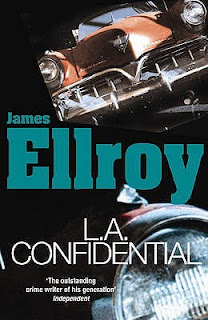
James Ellroy - L.A.Confidential

Something struck me towards the end of this classic crime novel - no one in James Ellroy's world is "good". Everyone has a flaw. There are no heroes, only victims. There are of course innocent bystanders, but you get the impression that the people killed in the mass murder at the Nite Owl café are probably guilty of something, if only the author had got around to telling us what it was exactly. This is perhaps fitting for this convoluted story which mixes murder, police brutality with a web of sex, pornography and political corruption.

The two main police characters, carry their personal flaws through into their police work - Bud White for instance carries a hatred of wife beaters - or indeed anyone who brutalises women. His police work often spills over into vigilante action against the perpetrators of such violence. Many of the other officers are prepared to bend or break the law to further their own careers - all of them hold racist ideas against the city's black community. How realistic this all this is difficult to say - certainly it is a far cry from many detective novels, with squeaky clean heroes and stereotypical baddies.

The complex plot reflects perhaps the reality of corruption - the web of intrigue that drags dozens of people into illegal activity. And their is a ring of truth to the nasty racial attitudes of the policemen. Apparently, some of the key moments in the book are based on historical events. In particular, this scene of police brutality, which shapes the novel at the very beginning. It is an enjoyable read, though not necessarily a pleasant one.

Related Reviews

Monday, August 25, 2008

Giles Tillotson – Taj Mahal


Early on in this new book on the Taj Mahal, the author makes the point that the building has reached a level of recognition in the popular consciousness, far beyond anything that those who original built it could have imagined. The building has been used in India itself to advertise everything from “tea to hotels”.

Internationally of course, the very silhouette of the building represents India incarnate which is why, as the author writes, there is “no town in midland Britain without at least one Taj Mahal takeaway”.

Surprisingly perhaps, the Taj Mahal doesn’t have that long a history, though the stories that have grown up around it would fill a book far longer than this one.

The one thing that most people know about the Taj, is that it is a tomb. Built in the 1630s by the Mughal Emperor Shah Jahan, the Taj Mahal’s huge dome covers the grave of his favourite wife, Mumtaz Mahal who died during the birth of the couple’s fourteenth child. Shah Jahan himself was buried next too her, unusually off-centre in this most symmetrical of buildings.

As Tillotson says - “The construction of the tomb… the effort, the cost and the splendid result have all been taken as further evidence of the power of Shah Jahan’s grief”. For many, these facts alone make the Taj Mahal the greatest monument to love – indeed it is why that arch-manipulator of the media, Princess Diana, could use it as a backdrop to send a message of loneliness on a visit to India with her then husband, Prince Charles.

For most readers in Britain the history of India will started with Britain’s involvement in that country, so Tillotson’s potted history of the Mughal emperors, Shah Jahan’s rise to power and his eventual house arrest by one of his sons, who assumed control of the throne, is informative and fascinating.

The wealth and power of the Mughal emperors is of course demonstrated by the Taj Mahal itself, but the design of the building came from a long tradition of Mughal architecture. This is often overlooked, and by the time of European involvement in the country, the building became the centre of a debate on it’s origin.

The somewhat racist attitudes of the white European colonials towards the Indian people meant that the Taj didn’t fit into either the Western sterotypes of backward India, nor to their ideas of art and architecture. The buildings very beauty became a problem for some of its visitors.

One of the earliest accounts by a Westerner, is from a French physician, Francois Bernier, who wrote from Dehli in 1663. For Bernier, the Taj Mahal doesn’t fit any established European tradition, though he is at pains to describe its layout and dimensions in terms of Parisian landmarks. While “liking Mughal architecture regardless”, Bernier comes away confused and worried that “I may have imbibed an Indian taste”.

Several similar accounts are described in the book – and we get a sense that many western colonials were disorientated by the Taj Mahal – it must have symbolished a different India – one that was at odds with the prevailing attitudes of the time.

Later on some learned architects went so far as to consider Mughal buldings to be of no value at all. Edwin Lutyens came to the country in 1912 to plan the new “Imperial City” for the colonial masters. He came away from a study tour of the country declaring that “I d not believe that there is any real Indian architecture”.

Perhaps it is this sort of view that has allowed many since the creation of the building to argue that there must have been European involvement in its design and erection. The author deals ably with these and other myths – his answers illuminating our own views of the building and the stories that have grown up with it.

The last chapters of the book deal with the historical and cultural legacy of the Taj Mahal. As a new wonder of the world, the building symbolises more that its collected history and culture – which is why there continue to be debates and argument over who should control it and how it should be looked after.

The building was originally designed to be self sufficient – raising funds from the fruits grown in its extensive and sumptuous gardens. Now, some eight thousand people a day visit the Taj Mahal – their cash is a major source of revenue, which no doubt creates its own problems and arguments.

Considering how famous the Taj Mahal is, few in the western world will have any idea of its real history. This history deserves to be told, not simply because it is fascinating, but really because the Taj Mahal doesn’t have a history of its own. The buildings history is intertwined with the history of the Mughal emperors as well as the rise and fall of the British Empire.

Its cultural imagery says much about the movement of millions of Indian people around the world, and their reception in places like the UK. The Taj’s image as a monument to love and a destination for honeymoon couples tells us much about ourselves and our own hopes, and the arguments that go on about it’s future give indications about the vested interests that arise around any famous place.

Giles Tillotson’s book is an excellent introduction to all of this, and it comes highly recommended.

Related Reviews (Other books in the Wonders of the World series)

Fenlon - Piazza San Marco
Goldhill - The Temple of Jerusalem
Gere - The Tomb of Agamemnon
Ray - The Rosetta Stone
Hopkins & Beard - The Colosseum

Saturday, August 16, 2008

Neil Faulkner - Rome: Empire of the Eagles

There is an oft quoted rhetorical question from Monty Python's Life of Brian, which goes something like "So, apart from the aqueduct, sanitation, roads, irrigation, medicine and education, what have the Roman's ever done for us?"

The view of the Roman Empire as an essentially benevolent force that brought stability, peace and prosperity to the areas of the globe it touched is one that pervades many accounts of the time. Neil Faulkner's new book is an attempt to redress that balance.

Faulkner points out that the Roman empire was rooted in violence. Essentially a top-heavy civilisation its capital and major cities were net consumers of wealth from every other area of the Empire. Millions of slaves, raw materials, crops and goods were needed by the Romans and regular military expansion was needed both to find new areas of surplus value, and protect those existing ones.

For Faulkner, the essential dynamic of the Roman period was a military one - he writes in his introduction that:
Rome was a dynamic system of military imperialism - of robbery with violence - and that its rise and fall, its conquests and defeats, its revolutions and civil wars can best be understood as manifestations of this.

Faulkner writes from a Marxist and anti-imperialist point of view. Though he explicitly points out that his position isn't a "orthodox" Marxist interpretation. However it is one that is fundamentally anti-imperialist and is coloured by his understanding that empires in the past and in their more contemporary clothes are never forces that operate in the interests of the people they seek to rule.

For me (and other reviewers - see this ISJ review) the problem is that if Faulkner's dynamic seems to fit events, it does so because it is quite superficial. I don't have an expert academic understanding of Rome, but Faulkner seems to ignore some key aspects of Roman social life - the centrality of the slave economy and the surplus value if creates is conspicuous by the lack of detail here, and I think this is a major error. Little is said about how much the artisans, labourers or the urban poor contributed to the creation of value for the Roman emperors and if continual expansion was so important for the Romans, why are their some periods where this wasn't Imperial strategy?

More worrying though is the way that Faulkner's analysis essentially leads to a history of Rome through the roles of important men. Particularly the Emperors. There is no doubt of course that the individual characters of certain Emperors did alter the external and internal priorities of Rome. But I think Faulkner goes too far.

Elsewhere I lauded Michael Parenti's book. Faulkner argues that Parenti comes down too much on the side of Caesar as a representative of the poor and dispossessed. Fualkner points out that Julius Caesar was as much of an imperialist, warmonger and brutal practitioner of genocide. This is true. But that doesn't stop Caesar being interested in the poor people of Rome, as a method of strengthening his position in the Roman ruling class and pushing his vision of the Roman empire.

For Marx, class struggle is the motor of history, yet in this book the motor is the military conquest. Surely we should be asking how does the military side of things allow the Roman rulers to continue to exploit those who create the wealth of Rome? All too often we are left with the view that the Roman army went somewhere, defeated a massive native army, stripped the country bare, established some Roman settlements and that was that. This doesn't feel too much like a rounded explanation to me.

This isn't to say that Faulkner's book isn't worth reading. The opening chapters that explain the development of Rome from town to city state are fascinating, as too is the general arc of the narrative, about how the internal economic dynamics of the Empire led to its weakening and eventual slow collapse. The detail of the last centuries of the Empire was new to me, and filled in a lot of gaps - particularly for instance, why the ruins we see are usually from the middle period of Rome's history, rather than the later days.

I'd recommend this for those who want a more in-depth understanding of the Roman dynamic, but read it with an open mind. The "interpretive narrative" that Faulkner offers needs debate, discussion and fleshing out, but all our understanding of this important period of history will be improved by that debate.

Related Reviews

Beard & Crawford - Rome in the Late Republic
Syme - The Roman Revolution
Harper - The Fate of Rome: Climate, Disease & the End of an Empire
Beard - SPQR

Sunday, August 10, 2008

Thomas Glavinic - NIght Work


How was it that Winston Churchill described the former Soviet Union? "A riddle wrapped up in an enigma". That is a very good description of this complex, yet strangely simple novel.

The plot follows that popular brand of apocalyptic science fiction that this reader is particularly partial too. In these books the hero of the novel awakes to find himself the last person alive on the planet. Civilisation has been decimated by plaque or some other holocaust and the plot follows the desperate attempts of the survivors to continue their lives. Often re-creating their former existence until the electricity fails or some other such stark metaphor for the end of civilisation.

Glavinic hasn't really written that sort of story though it does start out like so many of the others. Jonas wakes in Vienna. His normal routine is only interrupted by trivial matters - the radio fails to find any station, the newspaper hasn't been delivered. It's only while waiting for his bus to work that he realises that there is no traffic. No noise. No people.

Much of what the author describes is the desperate attempts by Jonas to come to terms with what has happened - his girlfriend away in Britain doesn't answer her telephone. But he regularly calls her anyway. His internet connection fails immediately, yet the electricity continues uninterrupted, so Jonas is able to explore the world that he might be normally excluded from without worrying about finding food or getting trapped in a lift.

There are some deeply chilling moments - mostly as you try to solve the puzzle over what has happened, but the most scary for me (at 2am!) was the reference to the old ghost story about the last man alive in the world who hears a knock on the door. What would you do when you know there is no one else in the world beside yourself and the telephone rings?!

Jonas gradually goes mad. I think this is a clear element to the plot line but is missed by many other reviews of this wonderful book. It's clear that he behaves rationally but his mind cannot cope with the huge transformation that he has gone through. He becomes obsessed with the reality of his situation. Does the world really exist when he isn't there? Does a 'phone ring when there is no one to hear it?

Installing video cameras around the city he watches himself and the empty streets. Disappointed to find that while the streets are there while he is absent nothing else changes. In his frustration he turns the cameras on his sleeping self and witnesses his alter-ego "The Sleeper" wake and move around, waving a knife, behaving oddly.

Now of course comes the crisis of self belief. Who is this other person? Which of course begs the follow up question - who are we really? On a long road trip to find his former girlfriend, "The Sleeper" spends the night reversing the long distances travelled leaving Jonas to repeat the trip over and over again in a struggle with himself.

The ending is, as many have pointed out, disappointing. But it is appropriate. This is not a novel with a plot line - rather it is a study of the self. The battle to understand might be lost, but Jonas wins his struggle to stay human.