Wednesday, February 22, 2012

Stephen King - The Waste Lands

Volume three of Stephen King's series, The Dark Tower, develops the story into a much more concrete and traditional form. I found the two earlier novels slightly esoteric. They were readable, but seemed a little indistinct. The Waste Lands brings together some of the earlier loose-ends and seems to be taking the series onwards quite well.

The hero of the books, Roland, the Last Gunslinger is now permanently joined by two companions who we met in the previous book. All the characters exhibit imperfections, though Roland represents less the fallen individual, but the last of a noble race, who has watched, perhaps for centuries, his world decline. This fallen world is the real star of the story. A once powerful technologically advanced society has collapsed. Cities are ruins, population collapse has left a few small groups of people, who have lost the art of repairing their old technologies. In places these have reverted to almost medieval societies. Elsewhere groups of violent thugs scavenge the surrounding country like something from Mad Max III.

Roland's quest for answers takes him and his companions onwards. As they travel we learn more about the world around them, and our heroes themselves. But as I said, the world is the real centrepiece of the story. It appears to have some sort of relationship to our own, a crashed aeroplane is marked by insignia that we would recognise for instance. What keeps the story ticking over, like a lot of King's writing, is the desire for an explanation of what is going on. Where are they? What is the Dark Tower? What are the links with Earth? Knowing King, no definitive answers will be forthcoming even after all the sequels have been read. But the beauty of King's writing is that the reader probably won't mind. The point IS the journey.

The Waste Lands ends mid flow. It is much faster paced than the earlier stories, though I found it more readable and enjoyable. The urge to read the sequel as soon as possible has not left me yet.

Related Reviews

King - The Gunslinger
King - The Drawing of the Three
King - Wizard and Glass

Monday, February 20, 2012

Chris Stringer - The Origin of Our Species

Trying to understand the development of the earliest humans is an extremely difficult task. What evidence there is, is limited to a  few fossilised bones from a handful of sites scattered across the world. Most of the other evidence comes from the DNA extracted from those bones, or a the stone tools that seem to have been produced in vast quantities by these early humans.

Chris Stringer's new book is probably one of the best introductions to the subject that I have read. His account is determindely materialistic. It is rooted in the evidence we have, and an understanding of the wider environmental conditions hundreds of thousands of years ago. It is also approachable, though I did find some of the sections on DNA needed re-reading at times, but they are rewarding if the reader perseveres. Rarely does a writer actually explain how the DNA is obtained and how it is studied.

Stringer has a long pedigree in terms of the academic study of ancient humans. He was one of the first scientists to argue for an Out of Africa hypothesis for modern humans. The idea that our species, Homo Sapiens, spread outwards from Africa, following earlier migrations by earlier species of humans. According to this theory, which it seems, is now fairly common currency the origin of Homo Sapiens was a fairly recent one and our immediate ancestors only left Africa around 100,000 years ago. Surprisingly it took some 65,000 more years before they reached Europe. Spreading initially eastwards, through the modern Middle East and into Asia.

Of course, with limited evidence controversry reigns. Stringer doesn't shy from giving both sides of a debate, though he never fails to give his point of view, backing it up with his own examples and evidence. Take the discussion about why the Neanderthals died out and were replaced by modern humans. Stringer cites the work of colleagues like Clive Finlayson, who argue that the Neanderthals were on a long decline and that their last homes, in Gibralter, were the last places they survived. The existence of their species ended by a changing climate to which they couldnt adapt.

Stringer's argument doesn't dismiss this, but builds on it. He argues that in some places modern humans may have pushed the Neanderthals out, in others the Neanderthals may have died out unable to adapt to a changing world. Modern humans may or may not have been present, but it seems unlikely that Neanderthals and Homo Sapiens were always in competition, particularly given evidence that they may have exchanged ideas and interbred. This seems to me a more realistic answer. Trying to reduce the end of a intelligent species like our human ancestors, simply to climatic changes doesn't feel right. A more complex interaction with a changing world, with different groups struggling to adapt and one being better than the other seems much more logical.

Stringer also touches on other debates and discussions. How did language develop? Where did geographical differences in human bodies come from and when? How did changes in our bodies relate to changes in our behaviour and brains and vice versa? Many of these questions have surprisinly detailed answers given the lack of archaeological data. Chris Stringer has produced an excellent introduction to the subject. It is an excellent starting point for the debates and discussions around early human evolution.

Related Reviews

Finlayson - The Humans Who Went Extinct: Why Neanderthals died out and we survived

Thursday, February 16, 2012

Robert Gildea - Marianne in Chains: Daily Life in the Heart of France During the German Occupation

Having read Angus Calder's wonderful book on the experience of ordinary people in Britain during World War II, I began to wonder if there was a similar work that examined the lives of people elsewhere during that conflict. Marianne in Chains was suggested to me as a book that might help bring to life the experience of the German Occupation of France.

Robert Gildea argues that the French experience of the Occupation is far from the simplified one that is usually portrayed. Far from the population being divided into those who resisted, and did so united together, and those who collaborated, he believes that reality was much more complex. In particular he argues that those who resisted were very much in a minority and that most people acted under a more complex code. For instance he considers the case of employers who committed their factories to producing materials, such as weapons, for the German war effort. Here he argues that the consensual view at the time was that "employers had no choice about working for the Germans and that jobs had to be preserved [or the factory might be relocated to Germany]. What was not acceptable was doing the German's bidding with too much enthusiasm and putting pressure on workers to go to Germany."

Later he continues "[a]s a rule of thumb, actions that undermined the family, community, or nation were illegitimate... To rip off the Germans by small-scale black marketing was just Gallic cunning, but large-scale dealing that deprived the community of scarce resources was not considered right. Socially, it was acceptable to drink with a German in a bar but not to invite him home" and so on.

Where resistance did occur, Gildea implies it was rarely the action of a whole town or community. He examines one important case, the assassination of a leading German soldier Colonel Hotz by a Communist, Gilbert Brustlein. After the war, the PCF argued that this action had helped trigger mass resistance in the west of France. For the people of Nantes however, the event was remembered as ushering in repression and the murder of dozens of people in revenge.

For Gildea any resistance that took place was likely to be much more muted. A defiant piece of graffiti or displaying the French flag, singing the Marseille or engaging in illegal dances. Here though the breaking of German rules is considered rarely an act of conscious resistance as opposed to an act of rebellion against rules.

However while Gildea is clearly right to argue that any resistance to the German Occupation rarely involved thousands of people taking up guns, in his enthusiasm to pursue this theme I think he misses far more fundamental questions. This becomes clearer when he examines the events that took place as the German's ordered Jews to be identified, then deprived of their social positions and eventually deported.

Gildea argues that when it came to the "Aryanization" of the French economy - depriving Jewish business owners and workers of their positions, the removal of Jewish company directors and so on, the "French public could be a good deal more anti-Semitic and mercenary than the French administration." He lists a number of heart-breaking examples of how business owners, like the owner of the Cafe de la Ville in Saumur, "saw the opportunity to deal with a rival by complaining to the sub prefect that 'the Jew Lazare Schnerb' had not yet put up a yellow sign on his Hotel-Bar."

Other examples include firms were directors turned on Jewish directors to save their investments. Lawyers who took on the "administration" of Jewish businesses then often took over those firms. Jewish businesses that were sold off were not short of buyers. Gildea concludes that:

"The details of the process of Aryanization provide hard evidence of the anti-Semitism of at least a portion of French people, including the wealthy and privileged, a conclusion that goes against the grain of some recent writing that tends to blame the Vichy regime while exculpating the people."

While this is undoubtedly true, Gildea concentrates on business examples. His only counter examples however are from a different section of the French population - the working class:

"The labor inspector of Maine-et-Loire, Lehlmann, refused to organise a census of Jewish employees in private firms, with a view to dismissing them, saying that his job was to protect workers."

While Gildea frequently discusses strikes and actions of working class organisations, particularly the Communist Party, he lacks any class framework. This leads I think, to a lack of clarity when he's trying to explain the dynamics of the occupation. The working class prior to the war had seen enormous rebellions, particularly during the Popular Front government. The lack of any major French fascist forces was in no small part due to the activities of the working class movement in the early 1930s. The demoralisation that followed, in part because of the limits of Third Period Stalinism, had led the PCF into a dead end. The fact that significant numbers of workers did strike, even if it was mostly over bread and butter issues, during the war, shows the reality of what resistance meant.

This is not to say that Gildea is wrong to argue that the reality of France during the occupation was not one of mass resistance. As he points out, many places never saw a German soldier and the occupying forces took a conscious decision that they were not doing to France what was being done in Poland and Eastern Europe. "The Germans are not the enemies of France, but their friends" stated one German military administrator to his French colleague as he prepared to leave following the Allied invasion.

Perhaps the strongest part of the book is Gildea's examination of the transition from occupation to the post-war world. He makes the point that most of those mayors and town bureaucrats who had continued in place during the years of Vichy and Occupation remained in their seats and were re-elected. Those who joined the resistance (or claimed membership) often did so late in the day or to avoid, what they saw as the potential for Communist rebellion in the wake of the war. Gildea looks at the way that the myth of the resistance was being created even as the German vehicles pulled out of the town squares, but that often this covered up the fact that for much of the war, many bureaucrats had collaborated with the fascists believing that they had no other choice.

Robert Gildea's book has provided much food for thought. I do not think it should be the last word on this subject though as it certainly left me feeling unsatisfied. I felt that there were insights but that Gildea hadn't quite got to grips with what was really happening. The book probably suffers because it concentrates on a particular region of mid-France rather than Paris or other larger cities. Nonetheless this is an interesting read, though I am told that Robert Paxton's book on Vichy France covers the subject far better.

Wednesday, February 08, 2012

Pierre Broué - The German Revolution 1917-1923

In the introduction to his own book on the German Revolution, the Marxist Chris Harman wrote that "Revolutions that are defeated are soon forgotten. They become lost from view; footnotes to history, glossed over by all but a few specialist historians." This is indeed true of the German Revolution, in part because the defeat of this revolution was the beginning of the "midnight of the century". Had the German Revolution been successful, it is likely that Hitler would never have come to power, the Holocaust been avoided together with the Second World War and the Russian Revolution would have lost its economic and political isolation. Stalin might not have seized power and the history of the second half of the twentieth century could have been very different.

Pierre Broué's book on the German Revolution is extremely important. Its detailed analysis and systematic use of the archives available at the time it was written mean that it is an important text of history itself. This is part serves to rescue some of the "Lost Revolution" for new generations. But Broué is no objective historian, he writes with the explicit intention of understanding the defeated revolution and the forces involved to better arm future socialists and revolutionaries. He concludes that "the history of the Communist Party of Germany during the early years of the Communist International ceases to be a history of lost illusions, and become the prehistory of a struggle which continues to this day."

Despite covering an event that lasted barely five years, the book is enormous in its scope. The Brill edition that I have read weighs in at almost 1000 pages (though rather extraordinarily and frustratingly it has no index, which for a book of this nature is a terrible omission). It would be a mistake for me to attempt to tell the actual narrative of the German Revolution in this review, instead I recommend both this book and other readings below.

Broué begins with the concrete forces on the ground, or the "battlefield" as the first chapter is called. Broué weighs up the isolation of the revolutionary left in Germany during the First World War, a few thousand individuals, with no common organisation or strategy. A few individuals such as Rosa Luxembourg and Karl Leibnickt remain prominent, both from their anti-war campaigning and their prestige from years in the German Social Democratic Party. The SPD had, at the outbreak of war, abandoned its traditions of revolutionary Marxism and supported its own national bourgeoisie. Millions of workers were demoralised and isolated by this, and many supported the war itself. But as the years passed, conditions worsened and the reality of modern warfare became apparent. The German Revolution exploded in November 1918, driven by a enormous mutiny of sailors who refused to take their ships to certain destruction. Within days the revolt had spread the length and breadth of the country and revolutionary organisations, councils representing workers, sailors and soldiers were elected. This was enough to force the abdication of the Kaiser and bring an end to World War One. The weakness of the movement was the lack of political clarity and the old SPD, reclaiming its socialist mantle was able to take the movement by the head and subdue the revolutionary impulse. With a new government in power, the counter-revolution began and many militants, including Luxemburg and Liebknecht, who had just formed the German Communist Party (KPD) were murdered.

The strength of Broué research though, is to put this into the context of the changing Germany. The story of World War One here, is not one simply of passive acceptance of the slaughter in the trenches, but also of heroic individuals who organised anti-war activities, who printed leaflets and distributed them on pain of death, who organised underground networks of workers and militants to strike and protest against food shortages and worsening conditions.

This approach to the history of the revolution continues throughout the book. Broué constantly attempts to get across what the situation was like on the ground. In part he does this by reporting the slogans and "political lines" of different left organisations, such as the KPD. But he also reports from the memoirs of individuals involved. This is a social history from the bottom up, but not one were individuals are examined in isolation. The role of the political parties is scrutinised deeply, particularly the KPD and its predecessors. Related to this, is the importance to which Broué places the role of the Communist International.

The Russian Revolution had a profound importance for the German Revolution and those who took part in it. Early photos of the street demonstrations of November 1918 show placards with "All Power to the Workers Councils" written on them, and Karl Liebknecht in his speech to the assembled masses in which he declared the Socialist Republic of Germany, extended greetings to the brothers in revolutionary Russia.

The Russian Revolutionaries, conscious of the need to spread the revolution, created the Communist International to assist with this, and the influence of the International was felt throughout the years covered by this book and beyond. This was in terms of financial aid, Broué comments on how the resources of the KPD during 1923, the year of extreme economic crisis were helped by the CI which:

"in 1923, the material help of the ECCI [Executive Committee of the Communist International] permitted the Party to maintain 27 daily papers, and to pay 200 full-time workers. With its own resources, the KPD could have maintained only four papers, and barely a dozen employees."

But the assistance was also personal, both in terms of individuals like Karl Radek who spent months at a time in Russia assisting and advising the German socialists, as well as reporting back to Moscow. Additionally, delegates from the German socialist parties would visit Russia for advice and discussions.

One of Broué's themes is that the revolutionaries were frequently unprepared for events. The spontaneity of the November revolution took even the most brilliant Marxists by surprise. Yet frequently the KPD were left bewildered by events. Take the Kapp Putsch, when a proto-fascist leader attempted to seize power, only to be prevented by mass strike action happened almost independently from the KPD leadership who initially denounced the strikes.

Part of the problem was that the KPD constantly looked to Russia for advice. While this was was understandable, the Bolsheviks had, after all, made their own revolution, the situation was very different. It also led to a certain lack of self-confidence from the Germans as well as a certain naivete. Broué quotes one German KPD leader, again in 1923, as arguing that;

"under no circumstances should we proclaim a general strike. The bourgeoisie would find out what we are planning and would destroy us before we start. On the contrary, let us soften down out spontaneous movements. Let us hold back our groups in the factories and the unemployed organisations so that the government will think that the danger is over. And then - after they are lulled into an illusion of complete safety - let us strike in one night, quickly and decisively, arrest the government, storm the Reichswehr barracks and ring the knell of the last battle."

Such simplistic notions of how class struggle can be carried out were extremely worrying, but in part they had be fostered by an International that had encouraged the German's to believe that they were on the verge of revolution. Despite the bravery of thousands of communists, the belief that revolutionary movements could be turned on and off like this had soured the organisation for several years. The faith in the CI as an instrument of revolution helped undermine the ability of the KPD to understand the mood inside the workplaces and on the streets. This is why the mass strikes that brought down the Cuno government in 1923 seemed to come out of the blue for the Communists and why, when the CI insisted that another revolutionary movement was on the cards in October 1923, the leaders of the KPD were unable to argue against them, or present a more realistic portrayal of the balance of forces.

This is not to say that the CI was a negative force. Without the CI the KPD would have indeed been short of resources, as mentioned above. But they would also have been without some brilliant leaders and ideas. The turn taken by the Communist International towards United Front work in the early 1920s as the revolutionary moment ebbed was crucial in Germany. It meant that the growing KPD would try and find common ground with the members of the SPD over concrete demands, and pull them towards revolutionary politics, out of the arms of reformist leadership of the SPD. As the fascists began to grow, and increasingly use murderous methods against the left, such united tactics would prove indispensable. Their abandonment in the Stalin era, post 1923 for a set of politics that deemed the SPD worse than Hitlers' movement, would lead directly to the destruction of the left.

The problem was that the KPD became a mass party in the midst of successive revolutionary periods, or at least periods of intense class conflict. This meant that at its core were very few revolutionaries who had been skilled in years of organising. The lack of self-confidence at crucial moments, betrays a lack of confidence in their own organisation and ideas and that in turn, is a consequence of lack of experience.

This problem begins with the death of Rosa Luxemburg and Karl Liebknecht. Their murder removed the best leaders of the revolution, individuals who, had they survived would have developed and learnt from the different stages of the revolution. Certainly, it is hard to imagine Rosa Luxemburg who had, over the decades, engaged in fraternal debates and polemics with Lenin and Trotsky, accepting the ideas of the CI automatically.

A third key individual, was the revolutionary Paul Levi. Broué's book in some ways is an attempt to rescue Levi and his legacy from the mud that has been thrown at him over the years. For a period in the immediate aftermath of the deaths of Luxemburg and Liebknecht he was the KPD leadership. His instincts were cautious and balanced the ultra-leftist tendancies of the young organisation, but mixed with this caution was a genuine gift for understanding the balance of forces. His critique of the KPD in calling the March Action in 1921, an attempt to physically kick-start the revolution, was entirely accurate, yet his breach of discipline was severe enough for him to be expelled. Sadly Levi refused to attempt to work for conciliation and he became another lost leader, in a time when his experience and links to the pre-war socialist movement would have been invaluable.

Broué finishes the book with an analysis of the CI itself. It is clear that the author puts much importance to this body, indeed he wrote a history of the Third International that has yet to appear in English. For Broué the CI was a brilliant tool, but a flawed one. He quotes Lenin, arguing that many of the motions passed by the CI were "too Russian", i.e. that they were based too much on the Russian experience, with all the differences that existed between that country and those of Western Europe. As one chapter title has it, "Grafting Bolshevism onto German Stock" was never going to be easy. Broué acknowledges that often the KPD had it right,

"relations between the KPD and the Russian Party between 1919 and 1922 followed almost constantly the same pattern: a sharp conflict at the level of proposals made or initiatives taken by the Germans; a vigorous critique by the leaders of the ECCI; and then an intervention by Lenin, who while making some formal criticisms, judge the German initiative acceptable". 

With Lenin's death and the loss of his personal prestige and brilliant analysis, this process was made worse. Lenin fought to develop and build the independence of the KPD as well as maintain its organisation integrity, taking a deep and close personal interest in the ideas and activities of individual German leaders. Following the defeat of 1923, Broué concludes ominously, that the role of the CI was fundamentally different, from then onwards "the policies of the KPD were to be written almost entirely in Moscow, and in Russian."

Broué's has produced a rich and important text here. The detail is astounding and, particularly I imagine, for those engaged in the socialist movement today, the defeat and mistakes made in this period are terrible to read about. The lost opportunities doomed millions to a terrible fate in World War Two and the Holocaust. But learning from the past, and in particular, learning the lessons of revolutions, even lost ones, is something that is important to those organising today. Broué's book deserves to be a key text for revolutionaries today, those building movements or engaging in revolution will find much of use here.

At the heart of Pierre Broué's monumental work, is the idea that ordinary people can and do change the world. Its this revolutionary emphasis that makes this book more than a work history but part of helping us change the future. As he puts it near the end;

"We believe that the German Communist Party could have been victorious, even though it was defeated. There does not exist any Book of Destiny, in which the victory of the Russian October and the defeat of the German October, and the victory of Stalin and then Hitler, could have been written in advance. It is human beings who make history."


Related Reviews

Campbell - A Rebel's Guide to Rosa Luxemburg
Luxemburg - Reform or Revolution
Reissner - Hamburg at the Barricades

Recommended Reading

Chris Harman's history of the German Revolution, The Lost Revolution, is a superb introduction to this event and, while similar in analysis to Broué he has a number of differences. It is also shorter and much easier to carry on the bus. You can buy it here. Revolutions don't just have economic consequences, they change all sorts of aspects of people's lives, The German Revolution for instance, led to new freedoms for gays and lesbians, Colin Wilson's article here has much more about this aspect.

Neil Davidson has reviewed Broué's book here and I recommend that review. Leon Trotsky's Lesson's of October is a polemic written about and in response to the failure of the German Revolution. My own review of this contains further links to aspects of that discussion.

In this Socialist Worker article Ian Birchall introduces two short extracts from The German Revolution. His conclusion that "Broué was a revolutionary first and an academic second. He knew which side he was on and he knew what was at stake" is a fitting tribute. He also wrote a obituary of Broué here.

Tuesday, February 07, 2012

Ernest Cline - Ready Player One

If I was being brutally honest, I'd say that Ready Player One is a vehicle to deliver a particular kind of self-satisfaction to a geeks of a certain age. Or at least those who'd like to think they are. While the story is quite novel, the real satisfaction in his book is spotting and getting the references. As a result the story has a number of plot holes, or deus ex machina which complete the story. But that's not the point. Ready Player One is the sort of read that takes the reader along, rather than trying to deliever a fully rounded plot.

Set in the fairly near future, Earth has become an over-populated, ecological disaster zone. High prices for fossil fuel have meant that the vast majority of the world's population rely utterly on government handouts to survive, or a life of crime. As always a few have made it very rich and corporations run roughshod over people in order to maximise their profits.

As a solution to this misery, a ruclusive video-game designer, obsessed with the culture of the 1980s, creates OASIS, an alternate reality world. This multi-verse has many planets. Players can go to lessons there, move around the planets and, should they earn credits and XP, they can in turn purchase upgrades and expansions, giving them more powers and abilities. OASIS itself is a fully functioning alternate reality. Sex, violence and work exist here. Avatars fight each other for money and prizes, rather than merely points. The creator, James Halliday became the richest man on the planet, and his libetarian, benevolent views have sought to keep OASIS accessible to all.

With his death, Halliday unveils a quest. Those who find the hidden Easter Eggs can inherit his vast fortune. Such a implausible hope inspires millions of people to spend their lives mastering 1980s culture to search out and understand the clues in the hope of freeing themselves from poverty. Of course the corporations too are in on the games, they can afford to pay underlings to learn about obscure computers games, or the lyrics to 1980s songs.

And its here that this bizarre plot actually works. Rather than this becoming some strange work of fiction based on a World Of Warcraft storyline, the internal references to Midnight Oil (The Beds are Burning), the awful sequels to Indiana Jones (post Crystal Skull) and so on are enough to hook those of us who remember the 1980s, or some of it. There is also plenty here for the contemporary geek - who wouldn't vote for Cory Doctorow to be in charge of their online multiverse?

The rag-tag bunch of social misfits who try and solve the clues and win the prize, the vision of the internet / OASIS as some sort of anarchic alternative to reality and the faceless corporations that kill on a whim are not particularly new, but Ready Player One works, rather surprisingly and make for an amusing Back to the Future type of distraction for a few hours.

Sunday, February 05, 2012

Kim Stanley Robinson - The Years of Rice and Salt

Kim Stanley Robinson's alternate world history is an incredibly well thought out imagining of how our world might of developed had European civilisation been stopped completely by the Black Death. In this alternate timeline, history develops outwards from the far-East, China in particular. Thus the world is dominated by different religions, ideas and methods.

The scientific revolution takes place in Samarkand, the America's are discovered from the West by Chinese explorers and geo-politcal tensions eventually explode in a pre-atomic age world war, only in this timeline it lasts six decades.

The detail of the story is immense, rather than telling a complete narrative, the author focuses on individuals at different times. Borrowing heavily from Buddist ideas, Robinson centres the story a small group of individuals, reincarnated time and again, they occasionally remember their own pasts, and at different times and places are each others parents, lovers and friends. This allows Robinson to focus on indivudal relationships as well as the grand narrative and helps make this unreal history seem much more realistic.

At times, the book seems over-seeped in religious and ideological discussion. This can be annoying, but its worth reading through. With some of the discussions, such as the debates about reincarnation, I think Robinson is demonstrating how different ideas fit different times. In the atomic age, reincarnation seems quaint and ill sits in a world where the tiny atoms are being studied. This is a very religious novel, in the sense that religion plays an important part in the story, and Robinson clearly has done his research well. Again though, his musings on how things might develop and change are clever - I particularly like the way that the shortage of men following the great war leads to a growth of feminist thinking and new forms of Islam, influenced by these ideas.

Robinson himself develops an almost Marxist view of history, though he seems to focus mostly on a sort of inevitable rise of civilisation, through science and technology. Towards the end his characters, this time female scientists, attempt to set up a world grouping of scientists to better lead humanity and avoid nuclear war.

This is a long novel, 700 odd pages, but the different parts are very self contained, some are love stories, some tales of anguish and war. The common threads help it hang together well. There are some lovely injokes to, the Islamic archaeologists attempting to understand the purpose of stonehenge, or excited by a preserved village from medieval France and the musing of people who wonder what the world would have been like had civilisation not come from the East.

While its hard at times, The Years of Rice and Salt is a fascinating and clever novel that's worth reading.

Related Reviews

Stanley Robinson - Icehenge

Friday, February 03, 2012

James Hinton & Richard Hyman - Trade Unions and Revolution: The Industrial Politics of the early British Communist Party

How should revolutionary socialists best relate to situations that are not revolutionary? How should those socialists organise, particularly in periods when the working class is not yet confident to fight against the system, when their rights, pay and conditions are under attack by the capitalists?

These questions are not easy ones to answer, but for socialists in Britain and indeed in large parts of the world, they are crucial ones. In Britain, with its history of Labour politics and Trade Union bureaucracy, it has been common to look back to the early years of the Communist Party and attempt to learn lessons from their activity.

The British CP was founded in the early 1920s. It brought together a number of varied factions of the Marxist left, encouraged by the success and the prestige of the Russian Revolution. Early in its history, as a party of a few thousands, though with many key industrial militants and in places, significant influence in the working class movement, the CP faced one of its greatest tests - the General Strike of 1926. This strike was a bureaucratic one. It stemmed not from the anger and militancy of ordinary workers, but from the leadership of the Trade Unions. Millions of workers took part, bravely and committed yet during the strike it was rare for their own creative organisation to break through the barriers of the trade union bureaucrats. After the defeat of the strike, the CP which had used its influence to encourage workers to look towards the General Council of the TUC, rather than their own self organisation, suffered major setbacks. Along with victimisation of many committed activists, the party lost many members and much influence. Rather than learn from its mistakes, the CP continued down a mistaken path which, it could be argued, left its union militants confused about the role of the union bureaucracy for decades.

This short book, published in 1975 is an explicitly socialist attempt to understand what the CP did wrong and draw some conclusions. Hinton and Hyman make no bones about it. They believe that the CP strategy was based on an incorrect understanding of the role of the union leaderships and an incorrect vision of how to move forward. In particular, they argue that any attempt to build a mass communist organisation in the 1920s was not just doomed to failure, but a mistake that could only further damage the prospects for building the revolutionary socialist movement.

This can be summed up in their conclusion, emphasised by being provocatively re-printed on the back cover. "By attempting to build a mass revolutionary party in Britain in the 1920s, where the labour movement was in retreat, the Communist Party committed a tragic blunder. It sacrificed clarity in its propaganda and its theory, and lost the opportunity to form a revolutionary cadre."

This cadre, they argue, could have formed the basis of a much stronger party in the future, for coming struggles. There is some truth to this. The ongoing existence of many tiny socialist sects throughout the world, demonstrates that theoretical clarity can create resilience. Yet the ongoing existence of a theoretically pure, stable, yet tiny socialist organisation that merely replicates itself over the years is hardly what the founders of revolutionary Marxism had in mind. The CP were, under the influence of the Russian Revolution and the Communist International attempting to build political organisation that could lead to a successful socialist revolution in the UK.

The CP's own analysis of the union leaders was frequently excellent, and their strategies for strengthening the working class movement and building their own influence were based on some excellent initiatives. The National Minority Movement was a CP initiative aimed at "making the trade unions real militant organizations for the class struggle". This attempted to bring together the best rank and file workers with the best of the union leaderships to encourage more militant action. Yet the CP underestimated the degree to which union bureaucrats are pulled by their social position, desiring less social confrontation and more negotiation.

The betrayal of these leaders, including many lefts whom the CP had courted and worked with over the years left the organisation confused. As the authors point out, "many party leaders found the betrayal of the General Strike incomprehensible."

So why did the CP have such a confused understanding of the situation. In one sense, Hinton and Hyman are right. Lack of theoretical clarity stemmed from the confused and ofter sectarian politics that marked out the socialist organisations that had developed in Britain in the late nineteenth and early twentieth centuries. Yet there was also the dominating influence of the Communist International and, in particular the Bolsheviks. The Russian Revolution had be lead by individuals and organisations that had little practical experience of trade unions and reformist organisations. Their understanding of the role of the trade union bureaucrat was limited and, in the aftermath of the Revolution, the isolation of Russia had led the Soviet government to court those organisations in the capitalist nations that could help undermine that isolation. The Anglo-Russian Trade Unity Committee was one example that helped to encourage the British CP to support leaders of British unions.

Hinton and Hyman play down the importance of this, as an excellent critique of this book by Duncan Hallas points out;

"the CPGB was not and could not be left to itself. It was part of a centralised world movement. It owed its very existence to the Russian revolution. Its leaders and members were profoundly influenced by advice and guidance (leave aside the question of “orders”) from the Moscow centre."

Hinton and Hyman also, repeatedly play down the opportunity for building "mass" socialist organisation, it is "only in the most abstract sense that 1926 can be described as a moment of revolutionary opportunity", they continue;

"The Party was operating in a profoundly unfavourable situation... Politically, the established institutions of the labour movement exerted a profound influence over the working class..."


Earlier the authors argue that building a mass organisation of revolutionary socialists is only possible at very specific times, "[t]here are moments, but only moments, when revolutionaries should concentrate their efforts on building a mass party."

The problem with this analysis, is that it is a recipe for sitting back and concentrating on discussing abstract ideas until the moments of revolutionary crisis appear. Yet, by then the moment will be lost as Rosa Luxemburg found to her dismay. You cannot build a mass revolutionary socialist group during the throws of a revolution. 1926 was not a revolutionary moment, yet it was a year when millions of workers took extended action as part of a General Strike, albeit one with many weaknesses. The organisation may have been small, but it had prestige and influence - the Russian Revolution was still a living reality, even with its distortions and the rise of Stalin.

Had the CP operated better during 1926 they may not have become a mass organisation. Certainly they were unlikely to prevent the sell-out of the bureaucrats. Yet they could have won significant numbers of militants to a stronger understanding of their role and the role of the union leaderships. The CP could have ended the General Strike with a growing membership, rather than a shrinking and demoralised one. By tying their flag to closely to the union leaders, they left themselves isolated from the best elements of the working class and hampered themselves for some time to come.

Hyman and Hinton argue that it the CPs strategy should have been one that allowed them to strengthen their own organisation to better ride out the coming storms. But the mistakes made by the CP stemmed in large part from mistaken analysis as well as the degeneration of the political leadership of the Communist International. Socialists cannot abstain from the struggle. The best way of building a revolutionary cadre is not to sit isolated, reading Marxist tomes, but to engage with the movement and further develop the ideas and theories that you have. Theory is important, but it must breath and grow as part of the class struggle. Hyman and Hinton here are arguing against a revolutionary strategy that involved engaging with the working class and, in part, I suspect they were penning a justification for their own trajectory out of revolutionary politics.

I've devoted a lot of words here, to a very short book. In part this is my own attempt to grapple with a similar political situation in Britain. The study of the 1926 General Strike and the actions of the best militants who were organised in the CP is important so that we can avoid similar mistakes in the future. For that reason, this short book deserves to be read, but it should be read in conjunction with other writings, in particular the Duncan Hallas article linked above, but also some of the books mentioned below.

Related Reviews

Cliff & Gluckstein - Marxism and Trade Union Struggle: The General Strike of 1926
Dewar - Communist Politics in Britain: The CPGB from its origins to the Second World War
Trotsky - On Britain

Useful Articles

Chris Harman - The General Strike 
Martin Smith - Britain's Trade Unions: The Shape of Things to Come
Duncan Hallas - The Communist Party and the General Strike

Wednesday, February 01, 2012

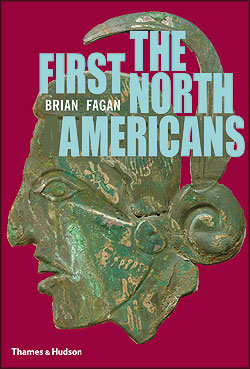
Brian Fagan - The First North Americans

Around 15,000 years tiny bands of people travelled across a narrow band of land between what is now the far eastern end of Russia and Alaska. The land bridge caused by the colder climate at the end of the last Ice Age allowed these hunter-gatherers to arrive in a new world. A vast area without humans, but teaming in animal and plant life.

Brian Fagan's book is a brilliant introduction to the history of the next 15,000 years told through the archaeological evidence that remains to us. The earliest arrivals into the American continents left little remains, we are limited to a few handfuls of their stone tools and little else. But these first Americans rapidly developed an astonishing variety of communities and were able to exploit the varied natural world in many different ways.

The story of the Native American's very much one of change. Often this was gradual, though, as Fagan points out, it could be very rapid. For thousands of years different groups remained as hunter-gatherers. The famous site of Head Smashed In a Native American hunting area in modern Canada where bison were driven off a cliff in their hundreds was used for 7000 years. However the "buffalo jump" here was part of a much larger and more complex community rather than simply being a site for killing animals.

One of the great strengths of this book are the brilliant illustrations. Many of these are black and white photographs as well as line-drawings and maps. However pride of place goes to the stunning colour plates, some of which, such as the images of the Mesa Verde, "Cliff Palace" in Colorado are stunning. I particular liked the images of the Clovis points - spear heads used by some of the very earliest peoples in America. These are shown in full colour in someones hand, helping the reader understand why these pointed stones must have been awesome weapons.

The later depiction of the Native American peoples as savages deliberately hides the very complex and advanced societies that they had developed. The arrival of agriculture initially of maize, spread rapidly through the continent and helped some of the groups develop complex, class societies which in turn produced some of the most fascinating archaeological sites. The communities that built the Hopewell mounds or the enormous earthworks at Poverty Point in Louisiana certainly must have had very complex social structures and organisation. Poverty Point was a tiered earthwork with some 35,000 cubic metres of soil. Fagan estimates that all this material, carried in woven baskets would have taken 1,350 people three years if they worked 70 days a year.

Fagan's book covers an enormous quantity of material, rapidly and thus out of necessity it glosses some details and he admits that it concentrates on the basics rather than reporting every archaeological debate and difference. Aimed at the general public as well as students and academics, this is an accessible introduction, though sometimes it tends towards academic jargon. The word "palimpsest" should, in my opinion, never be used if the author is striving to be accessible. Its use here on the first page of chapter one might well be considered off putting.

Fagan finishes by discussing the horrific impact of European arrival on the populations of the Americas. Here he documents the genocide and disease that destroyed thousands of people and generations of culture, often in a few months.

He also discusses the way that European demand for resources such as fur changed the dynamics of the existing cultures. Here I think he underestimates the way that the European notion of commodity ownership helped destroy hunter-gatherer cultures. Prior to European arrival resources or land were mostly for the use of the community or to solve people's needs. Once European traders arrived, the exchanging of resources such as fur, created a situation were commodities were important for their value in exchange rather than their ability to serve peoples' needs. I've discussed this further in my review of William Cronon's excellent book, Changes in the Land here.

But these are minor points that come at the end of a wonderful examination of the development of many different cultures across North America. I would heartily recommend this to anyone interested in the lives of hunter-gatherer communities and the evolution of the earliest class societies. The pictures and maps are particularly enlightening and Brian Fagan deserves credit for bringing them together.

Related Reviews

Fagan - Floods, Famines & Emperors - El Nino & the Fate of Civilisations
Fagan - The Long Summer: How Climate Changed Civilisation
Mithen - After the Ice: A Global Human History, 20,000 - 5,000 BC

Friday, January 27, 2012

Jules Romains - Verdun

The Battle of Verdun, that took place in early 1916 was one of the most horrific clashes of World War One - well over 700,000 men were killed, wounded or went missing in the battle. It was marked by enormous barrages, the first systematic use of flame throwers and like the Battle of the Somme does, it continues to cast its shadow over subsequent generations of Frenchmen and Germans alike.

Jules Romains' novel Verdun is, at least according to the blurb here, a "lost treasure", first published in 1938 it is an unusual novel. There is almost no narrative structure, save that of the Battles' history itself. Instead chapters are devoted to a few individuals, some soldiers, the occasional person fighting on the "home front", officers and generals and on one sole occasion, the Kaiser himself - the only appearance of the German enemy in the book. I picked it up, expecting that this would be a French version of All Quiet on the Western Front. As a novel it is very different to that powerful story. Yet in an unusual way, despite the occasional lapse in translation or the somewhat overblown dialogue in places, this remains an interesting work, though its lack of narrative makes it hard to follow at times.

The first chapters deal, as many novels of World War One do, with the way that the patriotic glee of the opening days are to be contrasted with the dull horrors of trench warfare.

"Were were those battles for freedom which begin with the soudning of the "charge" and end with cheering and the song of victory? The people of France almost blushed to think that they had ever believed in such things."

Nonetheless, if there was one ambition that remained;

"it was the destruction of war itself; its suppression for ever, its deletion from the pages of history. That, and that alone, must be the object of this war. There should never be another."

Passages like this, and the late reference to France as the great friend of Poland are perhaps a reaction to the coming Second World War. Yet the book itself is less an anti-war novel as a book about the reality of war. So we have the ordinary soldier scrabbling in mud and snow and praying for his life, together with the plump industrial profiteer, getting rich on the shoddy equipment he's selling to the army. Finally, Romains holds real contempt for the generals and politicians , those men who play games with others lives. As one of the soldiers remarks as he's about to return to Verdun;

"War, claims many victims, but very few of them are innocent. For some time now, as I think I've told you already, the spectacle of my fellow-men has filled me with loathing. The trouble is that those who are most to blame are not, as a rule, those who suffer the worst punishment."

Romains however makes this a soldiers war. The home front knows little of the reality of the trenches. The Generals care less, but talk of sacrifice. Only the soldiers understand and they have their "freemasonry of front-line fighters" to keep them going.

As the novel finishes with truck-loads of French soldiers heading for the front and a renewed offensive, we are left with little but despair and hopelessness. This perhaps was the feeling of many of those French people who survived Verdun, and lost friends and family to its horror, as they contemplated renewed European war.

Related Reviews

Tuchman - The Guns of August

Tuesday, January 24, 2012

J. Samuel Walker - Three Mile Island: A Nuclear Crisis in Historical Perspective

For a few brief years following the 1979 incident at the Three Mile Island plant, it was known as the world's worst nuclear accident. The far greater disaster at Chernobyl in 1986 soon rightly took that accolade. Three Mile Island has however gone down in infamy. J. Samuel Walker's account of the event is an attempt both to describe the accident as part of the history of nuclear power and to try to separate the real story from the myths.

In the public perception TMI lead to large releases of radiation into the surrounding atmosphere. While there were some releases both controlled, as the technicians struggled to stabilise the damaged reactor, and uncontrolled. The amounts released were not as great as many thought. Walker's summary of health studies afterwards errs on the side of those that argue there were few, if any humans injured or made sick by the accident in the short or long term. That said, one thing the book does make clear is that at TMI the United States came close to a situation which could have had very severe consequences for the population surrounding the plant.

The clean-up operation after the accident took many years and cost huge amounts of money. Money that by and large came from central government, not the private nuclear industry. But the most important consequences are not as easily quantifiable. Walker documents the dip in public support for further plants - a dip that when exacerbated by the Chernobyl disaster, pretty much screwed the US nuclear industry completely.

In addition the existing nuclear agencies were roundly condemned. Several of these proved lacking in their hour-to-hour handling of the situation. Walker documents the clash of managerial styles between the company running the plant and the national bodies setup to regulate the industry. The was frequent disagreement over interpretation of what was happening in the reactor and this, combined with aggressive media interest, meant representatives frequently contradicted each other and gave differing accounts of what was going on.

One of the ways that this was most felt was in the discussion about whether to evacuate the surrounding population. Evacuation plans were limited and the area contained many schools, hospitals and several prisons. At the height of the crisis when evacuation was on the agenda as a serious option most of those responsible wanted to avoid it, condemning those who supported the call. The factors determining their opposition to evacuation were linked to political and economic consquences as well as the risk of injury during any panic.

Walker notes one such example. A key figure in the Presidential staff assigned to the TMI question, Jessica Matthews, concluded that "evacuation was not advisable", basing her judgement "primarily on the pitfalls and costs of conducting a large-scale evacuation, and secondarily on the harmful effect it would have on the nuclear industry."

With quotes like this, it is not hard to conclude that many of those taking decisions in the immediate wake of the TMI accident were not doing so primarily based on the interests of the population surrounding the reactor complex.

This is not to say that individuals, primarily those technicians at TMI did not work very hard in a potentially fatal situation to avoid serious catastrophe. Walker tries to avoid describing heroics, so we learn few of the names of individuals who clearly risked their lives trying to prevent a core meltdown. However much of the post-accident analysis concluded that it was individual error that was the biggest single factor in the developing problem.

In summary for instance, Walker says that TMI, along with Chernobyl were accidents "due largely to operator errors that exacerbated design flaws or mechanical malfunctions. In both cases, technicians overrode safety systems that could have prevented or mitigated the damage."

However phrasing the problem like this implies that the mistakes lay simply with the technicians. In the case of TMI, Walker also explains early on that once the accident took place it proved very difficult for experts on the ground to understand what was happening. Alarms that represented different problems all had the same sound and banks of flashing warning lights did not help technicians prioritise. Key information such as the level of coolant in the reactor was simply not available. The lack of this piece of information led to one of the key mistakes made as officials turned off cooling mechanisms and precisely the moment they were needed.

As one of the investigations into the accident at TMI later concluded was that those trying to anticipate problems and prevent accidents in nuclear reactors was preoccupied "with the safety of the equipment, resulting in the down-playing of the importance of the human element in nuclear power generation."

Walkers' book is a interesting social history as well as a technical one. He notes for instance that most families did not evacuate themselves, preferring to believe that the accident was not as serious as they imagined, despite some dramatic press reports. But the reasons people gave for not evacuating are interesting in themselves. "[I]n households in which no family members evacuated, 65% cited their conviction that 'whatever happens is in God's hands' as a reason for not leaving their homes." Though the same report also showed that 71% of "respondents" said that they did not evacuate because they were waiting for an evacuation order.

Walker is attempting to give a balanced account of the accident. Despite his sponsorship by the US Nuclear Regulatory Commission he does manage to be nonpartisan in his approach. As a result however those who have positions opposed to, or in favour of nuclear power are likely to read this book to find information that will only bolster their own positions. Those who argue for nuclear power and its safety will argue that from TMI, "lessons have been learnt" and "designs improved" meaning it could not be repeated.

As a convinced opponent of nuclear power, my own conclusions are the opposite. What TMI proves is that nuclear accidents cannot be avoided altogether. When something does go wrong through human error or technical failure the consequences have the potential to be enormous. That is not to say that all reactors will ultimately fail, nor that all accidents will inevitably lead to death and destruction on a vast scale, but that the potential remains in a way that doesn't exist with other forms of power generation.

The more recent tragedy at Fukushima has only underlined the inherent problems of nuclear power. This is a source of power that is not needed either to generate electricity or to combat climate change. The alternatives exist, yet the obsession with nuclear energy from governments around the world remains. At times, Walker's detailed, moment-by-monent account of events at Three Mile Island is both fascinating and nerve-wracking. But it should also give food for thought for those who continue to advocate this extremely dangerous way to boil water.

Related Reviews

Caldicott - Nuclear Power is not the Answer

Sunday, January 22, 2012

Ralph Darlington & Dave Lyddon - Glorious Summer: Class Struggle in Britain 1972

"I was a 22 year old docker, I'd been working in the docks for two years. And I turned up at the World's End massive building site in Chelsea rather sheepishly and knocked on this little wooden door to be greeted by Frank Campbell, one of the IS builders, who said 'Thank God, you're here now'. And I just stood at the door while Frank went inside and shouted 'There's a dockers' picket line, everybody out'. And they all came out..."

1972 was the year when rank-and-file action by workers from the dockers, to the railworkers; from building workers to engineers and most importantly coal miners fought a British government to a standstill and broke the back of their attempts to undermine trade union organisation and attack pay and conditions.

Forty years later, when most British workers are used to unions dominated by their bureacracy, who seem rarely to fight back and often appear to capitulate in the face of governments, stories like that of the docker above may seem impossible. Yet the 1972 strikes were not predicted by anyone. The government was fairly confident that it would be able to push through legislation that curbed union activity and many of the union leaders at the time were wary of a major struggle.

As a year of battle, 1972 developed quickly. The miners took on the Tories early in the year and rapidly learnt new methods of organising and fighting. These were driven by the bottom of the union. Ordinary trade unionists, often shop-stewards, learnt that two things were needed - militant mass action by union members and solidarity. So the miner's strikes of 1972 were not won simply by the strikes, but by mass pickets that encouraged solidarity action and prevented coal being moved. As the lights failed and coal stocks dropped, the cabinet met by candle-lit. Darlington and Lyddon quote an article from that bastion of revolutionary socialism, Management Today which argued that the miner's strike was "unquestionably the most bitterly contested. The determination, not to say ferocity, of the pickets will be remembered for a long time yet. Their tactic of preventing coal moving not just out of the colleries but into the power stations was novel, intelligent and very largely successful."

Other groups of workers quickly learnt that if you want to win, you need solidarity. Fighting alone would lead to defeat, as a high-profile strike by Postal Workers had shown a few years previously. When the dockers came out, later in 1972, and several were imprisoned for breaking the government's shiny new Industrial Relations Act, mass strike action and picketing out of workplaces like the World's End building site mentioned above quickly forced a government turn-around. In all of this, as airports closed, building sites shut down, trawler fleets refused to fish and trains stopped at the mere sight of a union placard, the official leadership of the union movement remained unable to act. As an unofficial general strike grew from the bottom up, the TUC's leaders struggled to stay in charge. In effect they became irrevlevant in the face of rank and file organisation and activity.

The docker mentioned above, Bob Light, is quoted later by the authors. Talking about the five dockers imprisoned in Pentonville and the effective general strike that forced them to be released, he remarks;

"Why is it there are no badges, no mugs? Why is it that Pentonville is the forgotten epic? It is precisely because it doesn't suit the rotten stinking politics of all the reformists who control the labour movement in the country. The lessons of Pentonville are essentially revolutionary."

Glorious Summer is a tremendously important book for trade union militants today. In the wake of the November 2011 strikes, when 2.5 million workers went out in a brilliant display of solidarity and workers' power we need to learn the lessons of the past. The trade union leadership will only fight if pushed from below. Much of this book enables us to understand the dynamics and potential of a workers' movement growing in confidence. In places it is full of detail - of the machinations of the union leadership or the precise natures of government offers. This isn't mere historical information but helps give the reader a sense of the precise situation that workers were fighting in.

Ultimately the Tory government of the early 1970s was left reeling by this mass action. From Saltley Gate to Pentonville, workers had shown they wouldn't take orders from the bosses' party. Further strikes in 1974 brought Edward Heath to the floor and his government was broken at the next election.

Sadly the revolutionary left at the time was too small to shape the struggles and allow them to grow and develop further. The Communist Party by then was too obsessed with making sure that left union leaders weren't damaged by the action. While individual members of the CP (and of groups like the International Socialists) led brave battles, the CP itself proved unable to shape the future.

So the lessons here, as Bob Light says are essentially revolutionary. If we want to bring down the current crop of Tory politicians, we'll have to learn them. Our best hope is that ordinary workers and trade unionists will develop some of the spirit of their parents and grand-parents in the 1970s, and not be held back by opportunistic union leaders.

Related Reviews

Cliff & Gluckstein - Marxism and Trade Union Struggle: The General Strike of 1926
Henderson - Life on the Tracks: Memoirs of a socialist worker

Bookmarks, who published Glorious Summer, have recently brought out a short pamphlet by Pete Jackson, celebrating one of the high-points of 1972 - the Battle of Saltley Gates. There is a commerative website and Jackson's pamphlet Close the Gates can be purchased here.

Tuesday, January 17, 2012

Richard Gott - Britain's Empire: Resistance, Repression and Revolt

If there is one conclusion that can be drawn from Richard Gott's extensive analysis of the resistance to the British Empire, it is that for most of the time those people unfortunate to live on the pink coloured parts of the map, simmered with resentment. Frequently they rebelled, revolted and fought back against British forces. Most of the time they were defeated, sometimes they weren't and on occasion they won stunning victories against the odds.

This view of Empire is far from the benevolent, benign one that has been portrayed by some historians recently. In seeking to justify more recent international interventions some historians have tried to look back into the past to find examples of Imperial benefits. Gott's book shatters those myths.

Some of the stories in here will be familiar. The "Great Rebellion" of the Indian regiments against their officers and rulers that forms the climax to Gott's book has been written about in great detail elsewhere. Gott places this enormous piece of resistance at the end of a long chain of events. The brutal reality of British rule, combined with a number of other setbacks and defeats that helped give the people of India a belief that they could defeat the British.

Other accounts of rebellion though have almost been forgotten and it is a great strength of Gott's book that he brings these back to our attention, rescuing the stories, as well as some of the individuals from oblivion. No doubt the Xhosa people of Cape Colony, who fought the British to a standstill on a number of occasions are remembered and celebrated in that part of the world today, but their names are almost forgotten to those of us who live in the British Isles. Defeat and massacre don't help to justify Imperial adventure. The "self destruction" of the Xhosa, convinced as they were that divine intervention would soon help them rid their country of the British, does not mask the fact that the defeat of their people after half a century of resistance was the opportunity for British representatives to open up new lands to settlers.

The settlers of the British Empire - frequently men and women fleeing persecution, poverty or hunger back home, such as the Scots and Irish form a second, interesting and neglected role in the story of Empire. Frequently these groups who settled down on land stolen from native peoples, themselves found themselves revolting against British domination. Most obviously, the white settlers of Cape Town who fled Britain's rule and setup the Orange Free State. But Gott documents resistance and rebellion by similar groups from Canada to Australia.

This is not to downplay the fight of the aboriginal, native peoples though. In every country Britain annexed or invaded they needed to use military muscle to keep their land. Sometimes this wasn't enough, as in the amazing stories of the defeat of British expeditions to South America. Native people destroyed settlements and fought some of the best regiments back into the sea to keep these particular Europeans out.

Violence and brutality tended to follow as well as precede rebellion. Defeated peoples were destroyed in many cases. The infamous treatment of the people of Tasmania is one example:

"Taking a leaf from the policing model of New South Wales, Colonel Arthur decreed in November 1828 that the Tasmanian Aborigines should be subject to martial law. Arthur claimed he only wanted to punish the Aborigine 'leaders', but the settlers.. aimed more widely. In one case... thirty Aborigines were massacred by convict 'servants' of the Van Diemen's Land Company, who threw the survivors over a cliff. Many Aborigines were killed, and several women were axed to death. Prisoners were shot. Renewed in 1830.... martial law lasted until 1832, effectively breaking Aborigine resistance in Tasmania."

By putting resistance at the heart of the story of the British Empire, Richard Gott has perhaps made one of the clearest statements yet about the reality of British Imperial rule. However the book is not without flaws.

Firstly the sheer scale of the material has meant that much of what Gott has covered is done superficially. This is not helped by the lack of maps (though there are some fantastic images in the text). Many of the places are obscure and maps would have helped. This would also have given a greater sense of the scope of resistance.

Gott attempts to tell the story chronologically, but this means we are presented with a series of very short chapters, that skip around different parts of the Empire. For instance, the story of the Xhosa (chapters 23, 54, 57 and 65) is scattered through the book which makes it hard to understand the very real continuity between different parts of their story. This format also means that you skip around to such an extent that the readers head hurts - the last five chapters of part five for instance, deal with Africa, the Persian Gulf, Mauritius, Seychelles and Indonesia, Nepal and then Ceylon.

My biggest criticism is that Richard Gott offers very little in the way of analysis. Almost nowhere does he attempt to explain the British Empire. What is its driving force? Why is so much money and resources, as well as human life pumped into overseas expansion? This can leave the reader confused. Was the problem with Empire simply bad local management, or the actions of particularly racist or violent individual leaders? Or was there something else? Related to this is the lack of any explanation of the role of racism - or its development as part of the slave trade. The book ends up being a long litany of abuse and resistance, without any real explanation of the other forces that drive these two factors.

Rather oddly the book finishes with the 1857 Indian Rebellion. While the rebellion was an enormous blow to Imperial hopes, it was hardly the end of Empire. Gott skips over the remaining hundred or so years of British Colonial Rule - so there is nothing here about the final defeat of Britain in India, or the Mau Mau rising in Kenya for instance. Despite a final chapter that tries to rapidly fill in the blanks, the book does feel unfinished.

Sadly though, I do have to take issue with Gott's final comments. Rightly he points out that there is an "unhappy legacy" today of Empire and that Britain continues to fight wars in parts of its former Empire today. But then argues that "much of the British population has reverted with-out question to its old position of accepting unthinkingly what is being done in its name in distant parts of the globe."

Considering that in Britain in the last decade that has been marked by an enormous repulsion towards what is being done abroad by the British military at the behest of successive governments, this is a strange conclusion. Two million people protested on one day against the war on Iraq. Even as the wars in Afghanistan and Iraq took place, many hundreds of thousands protested, rallied, petitioned and campaigned to end those wars and bring the forces home. The failure of the anti-war movement to prevent war, should not be taken as an acceptance of what is being done abroad. One of the most popular slogans of the anti-war movement; "Not In My Name" continues to have a resonance today. This statement is as much a rejection of British Imperialism today, as it would have been in the 17th, 18th, 19th or 20th century.

Related Reviews

Newsinger - The Blood Never Dried: A People's History of the British Empire

Monday, January 16, 2012

Neil Gaiman - Neverwhere

Rather like his later novel American Gods, Neil Gaiman's Neverwhere deals with the seedier underbelly of modern society. Fantastic parallel worlds mark both stories - the reality of Gods in the first, living hidden from human view amongst us is similar in many respects to the alternate world that exists beneath the major cities of human civilisation in the second novel.

Neverwhere is set in both Londons. The one we all know, populated by bankers and workers, commuters and schoolchildren is London Above. Here, our reluctant hero Richard Mayhew lives as a fairly successful, if unexciting banker. His fiance is possibly one of the most annoying people in London, yet Richard's engagement to her is part of a seemingly unstoppable treadmill. He will marry her, they'll have children, he'll get promoted and eventually his life will end.

The other London is one that Richard strays into because he takes the time to care for a stranger. Someone who looks dirty and dangerous, someone to ignore and move on. The fact that Richard stops and helps Door while his fiancee continues to her business dinner marks out their diffrences.

From this Richard enters a new fantastic reality - London Below. Here are the forgotten people. The people who sit hungry on street corners, the people who die forgotten and unwanted. The people who live on the edges of society. The homeless, the penniless, the mad. Invisible to London Above, their magical lives have not brought them freedom from the cares of the human world. But they may have a purpose Below.

This other London feels astonishingly familiar. Who hasn't wondered who the Black Frairs were, or which aristocrat sat in Earl's Court? The Shepherds of the Bush are to be feared and forgotten tube stations like British Museum are entries into other worlds. The dirt and squalor, the exagerated violence and the pain of London Below mirrors our own world. Money means nothing here, exchange, barter and personal debts mean everything.

Richard embarks on a quest with the Lady Door. He has rescued her, but lost and scared in this half familiar world he needs her as she needed him. Their quest brings them into contact with the weird and violent. Their bodyguard Hunter, for instance, who killed the Bear beneath Berlin and others is a particularly well drawn character.

This earlier work of Gaiman's is not as fully rounded as American Gods, though it is still a work of brilliance. The idea of a hidden, parallel world to great cities is not particularly new, but the genius here is that it is both strange and familiar. When Richard leaves the London Above for the strangeness of Below, we feel perhaps, the precarious nature of our own existence. Its a powerful metaphor for a world where economic crisis could easily bring unemployment, hunger and homelessness to so many, used to the trappings of London Above.

Related Review

Gaiman - American Gods

Tuesday, January 10, 2012

Rosa Luxemburg - Reform or Revolution

Rosa Luxemburg's short book Reform or Revolution is often overlooked these days, in favour of her more famous, Mass Strike. Written while in her late twenties, Reform or Revolution demonstrates the keeness of Luxemburg's Marxism and the sharpness of her polemic.

The book is a response to a series of articles and an eventual book by Eduard Bernstein. Berstein was an important figure in the German Social Democratic Party (SPD) to which Luxemburg also belonged. Bernstein was arguing for a movement away from the ideas embodied in classical Marxism.

"..hi conception of the march of economic development is incompatible with the Marxist theory of surplus value. Therefore, Bernstein abandons the theory of value and surplus value, and, in this way, the whole economic system of Karl Marx."

In fact, Luxemburg argued that he was breaking with the whole of Marxist thought - thought that was the rock upon which the SPD was built. The SPD had been founded as an avowed revolutionary organisation. It's leading members in the late 19th century had been close to Marx and Engels, but several where now demonstrating a break with that tradition. As the quote above suggests, Bernstein had dropped, or questioned a series of key Marxist ideas. In particular, he was hinting that the revolutionary transformation of society was no longer required because capitalism had the potential to solve its own contradictions.

Famously, she quotes Bernstein "The Final goal, no matter what it is, is nothing; the movement is everything.” Bernstein saw the socialist movement and the workers' organisations, such as the Trade Unions, not as weapons to further the struggle for socialism, but as tools to tame capitalism.

Luxemburg's anger at Bernstein's betrayal of the movement shines through. Yet her writting is never simply polemical. It is a clear restatement of basic Marxist arguments, in part an attempt to educate and win new workers to the revolutionary movement. Her final dismissal of Bernstein emphasises this:

"Not the shadow of an original though! Not a single idea that was not refuted, crushed, reduced into dust, by Marxism several decades ago!"

"Bernstein appear as an unconscious predestined instrument, by means of which the rising working class expresses its momentary weakness, but which, upon closwer inspection, it throws aside contemptusously and with pride."

This is a wonderful piece of polemic. Luxemburg clearly believed that Bernstein and those who rallied around him should be challenged, but she also clearly believed that the problem of reformism, or opportunism as she called it, was simply one of ideology. Defeated by a re-assertion of Marxism, she hoped the reformists would vanish and the SPD would continue along the correct road.

Unfortunately, what wasn't clear to her, was the extent to which reformism had a very real, material base within the SPD. Having made the transition from illegality to legal organisation, the SPD had built an immense organisation. Hundreds of newspapers and workers' clubs, thousands of full-timers. The organisation, as hinted by the quote from Bernstein above, was becoming an end in itself. Revolutionary activity, that challenged the state and the capitalists put all this in jeopardy. As Duncan Hallas once wrote, "they had much more to lose than their chains".

The rot went deep. Luxemburg herself details a number of examples of the way that the party had, in some localities, compromised with the capitalist system. This was, barely two decades after the publication of the book, to come to a head with the complete capitulation of the SPD's leaders to the system when it backed the First World War. In the aftermath of that, Luxemburg and a few other German revolutionaries were left almost alone to try and rebuild revolution organisation in the midst of World War. The lack of an independent, mass revolutionary socialist party was one of the major factors in the failure of the German Revolution that erupted at the end of the First World War.

Reform or Revolution is not an easy read as it contains many contemporary references. Though a decent introduction in the edition I read, by Donny Gluckstein put the work in context and had many useful endnotes. The question she addresses though, remains important. It is the basic arguement about how to challenge capitalism. Today, reformist organisations seem bankrupt. Here in the UK the Labour Party is a shadow of its former self. Yet reformist ideas remain the dominant ones in workers heads. Re-reading Rosa Luxemburg's polemic is a useful tool for all of us as we engage in the debates taking place today in every workplace and college about how to best challenge capitalism. Luxemburg's clear call for revolution speaks to millions today.

Related Reviews

Campbell - A Rebel's Guide to Rosa Luxemburg
Luxemburg - The Mass Strike

Sunday, January 08, 2012

John Molyneux - Will the Revolution be Televised? A Marxist Analysis of the Media

John Molyneux's short book on Anarchism that I reviewed recently is an excellent and fraternal critique of the main threads of Anarchist thought. His book on the media, which came out nearly simultaneously is a very important book, given some of the scandals and issues that arose in 2011, notably the crisis of the Murdoch press following the 'phone hacking scandal.

Molyneux sets out to answer a number of questions that radicals often pose about the media. His starting point though, is the irrationality of the system. The fact that there is poverty in the midst of plenty. Hunger and over consumption co-existing. Billions spent on weaponry, yet death due to absence of simple medicines. Molyneux asks why it is that people tolerate this system? Why do people accept ideas that are manifestly untrue? And consequently, why do people accept this state of affairs.

One answer that is often given, is the media. The media is seen as an all powerful force, disseminating ideas that are favourable to the capitalists and under-mine those of the radicals. The media as a whole serves the status quo. Molyneux sets out to examine the media - who runs it, and in whose interest as well as ask whether it is, indeed all powerful.

The media, be it television, radio or newspapers is demonstrably the tool of the wealthy. Murdoch's empire shows this. As a result, the media tends, to portray a particular view of the world. One in which capitalist ideas are the norm. Molyneux gives several examples, not all of them obvious. Most socialists and radicals are used to the way that even so called "independent" or "non-political" news outlets fail to report even the most enormous protests. When they do so, they often concentrate on the actions of a small minority, or accept, unquestioningly figures from the police for attendance. More subtly though, Molyneux shows how many other aspects of the media's output back up the status quo. Gameshows for instance, encourage the idea of competitiveness. Prizes are awarded to a lucky few for outdoing their opponents.

Molyneux argues that this is very much because of the interests of the system. That the media is not neutral, but is part of a system that protects itself from criticism, and were "common sense" ideas are those of the status quo. Even prestigious outlets, like the BBC, supposedly neutral, rarely allow critical voices to be heard. For them, neutrality lies midway between the left and right of mainstream politics. Yet the mainstream parties of the UK are all pro-capitalist. Neutrality hear gives no voice to socialist or other anti-capitalist ideas.

There is much more to Molyneux's short work. There is a fascinating examination of reality TV, how it has developed and how it again, portrays a particular image of society. Molyneux tries to explain the popularity of these. While I am not sure I entirely agree with his conclusion that "in watching the programmes and, importantly, in discussing them with family, friends, workmates etc, viewers are able to use them as a sounding board by which to judge standards of conduct, norms of behaviour, in times when these are changing rapidly", it is certainly an interesting point.

Molyneux looks at other aspects of culture, perhaps rarely discussed by Marxists. Why are their so few non-white people in Eastenders? A programme set in one of the most ethnically diverse areas of London? Similarly, why are so few of them actual workers, rather than owners of small businesses? His brief examination of the role of advertising in setting the agenda of newspapers is also interesting.

Finally Molyneux argues that rather than the media giving consumers "what they want", they create a market for what they offer. In times when millions of people question the world around them, and more importantly, when they are engaged in collectively changing things, such as during the Egyptian Revolution, Molyneux shows how "what people want" from the media changes dramatically. In fact, his examples of voting patterns and social attitudes from studies of newspaper readers show how even the hold of this media on its dedicated readers is often tenuous and more complex. Not everyone who reads the Daily Express is, it turns out, actually a rabid racist.

I suspect that much of what is in this short book will not be new to those studying the media. But I recommend Molyneux's analysis because it is remarkably clear and cuts through some of the academic jargon that dominates discussion of this topic in academia. He also points the way forward to some interesting articles for further study.

Related Reviews

Molyneux - Anarchism: A Marxist Critique