Saturday, October 29, 2022
Jeff Sparrow - Provocations: New and Selected Writings
Tuesday, October 25, 2022
James D. Fisher - The Enclosure of Knowledge: Books, Power & Agrarian Capitalism in Britain, 1660-1800
A really interesting study of how the development of capitalism saw the consolidation and enclosure of knowledge as well as land as a fundamental part of the process of transformation of power relations in the countryside. Fisher explores this by studying how knowledge became concentrated in the hands of the rising capitalist class in the form of books. Despite its price, this is a accessible book which sheds new light on the process whereby the English peasantry was destroyed in the name of agrarian capitalism.
I reviewed this book for the International Socialism Journal. You can read my review here.
Article on the book by the author.
Monday, October 24, 2022
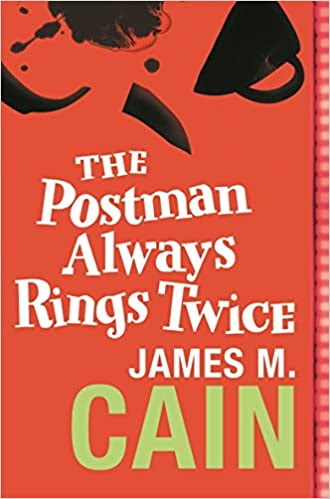
James M. Cain - Postman Always Rings Twice
Apparently James M. Cain hated that his novel was described as "hard-boiled", yet it is difficult to come up with a better adjective. When published in 1934 it caused outrage for its sex and brutal violence, and today it feels no less raw, though we lack the outrage.
Frank Chambers, a young drifter, arrives at a gas station and diner, where he tries to scam the owner out of a meal. The owner, a Greek immigrant called Nick Papadakis runs the place with is beautiful wife Cora. Nick gives Frank a job, and quickly Frank and Cora begin an affair. The pair plan to murder Nick and take over the diner, but Nick survives the attempt without any memories of it taking place. A second attempt is successful and Cora is put on trial for murder. A clever lawyer manages to get the pair off, by playing the insurance companies off against the judge but in the aftermath Cora and Frank fall out. A reconciliation after Cora discovers she is pregnant is abruptly ended as Frank crashes his car, killing Cora and putting Frank on trial for murder. The coincidences have piled up, and the innocent (in this case) Frank is eventually executed - the text of the novel forming his final thoughts before his death.
The novel hits the reader hard. Cain's clipped prose encourages the tension. With the exception of the innocent, and naive, Nick, most of the characters are grotesque - from the murderers to the prosecutors, and the lawyer everyone is out to grab a bigger slice of the pie. Frank and Cora's lawyer is particularly neatly drawn in this regard - he refuses a huge payment as he knows that the case itself has made his career. The ending too is shocking, by depicting the execution of Frank for a crime he didn't commit the reader is tempted to feel he is absolved of his crimes. But he is not, in anyway, an innocent.
The Postman Always Rings Twice is very much about fate. Everyone has two chances here - Nick survives a murder, only to be killed a few weeks later. Frank and Cora avoid the execution block, blackmail but then get their comeuppance. Even the legal system gets its chance for a second try,
The Postman Always Rings Twice is perhaps watched more than it is read. This is a shame as the novel is powerful and the work is itself a lesson in how writers can put a lot into a few words. You can see why the film industry adored it.
Friday, October 21, 2022
Ernest Belfort Bax - German Society at the Close of the Middle Ages
At the end of the 19th century though Bax wrote a trilogy of books about Germany during the Reformation, an attempt to understand the trajectory of German history between then end of feudalism and the rise of capitalism. This first volume is very much a scene setter, describing German society at the time and detailing various events around the time of the early Reformation.
Whatever Bax's faults, he had a detailed knowledge of German history, events and culture. For instance there are several detailed chapters on social and religious revolts and literature of the Reformation. In these he details some relatively unknown events, books and people for an English speaking audience. Of these the revolts section is perhaps most useful, as Bax shows how the Peasant War (which he deals with in a separate volume) arose out of a ferment of rebellion. While some of the events and things he discusses are interesting, Bax's analysis tends to be very dated. He writes, for instance, of the famous peasants' symbol the Bundschuh, an image of a typical peasant's leather that was often placed on banners, that this showed, "The strange and almost totemistic superstition that the mediaeval mind attached to symbolism".
A sense of Bax's overbearing writing style is given by the rest of this sentence, "The strange and almost totemistic superstition that the mediaeval mind attached to symbolism is here evincd by the paramount importance acquired by the question of banner." At times I found myself reading and re-reading sentences in an attempt to grasp the core argument.
Bax rightly argues that a "great man" theory of history cannot explain the Reformation. So he tends to underplay Martin Luther's contribution, placing the Reformation in the context of a period of revolt and religious upheaval. Instead he tends to portray the Reformation more as an economic revolt against the Catholic Church. Indeed he argues that the "end of the Middle Ages" was marked by a enormous decline in the economic conditions of the lower peasantry which contributed to their discontent and revolt. Oddly, at times, Bax comes across almost as an apologist for the old feudal order, writing of how well off the peasantry were. In the second half of the fifteenth century when, Bax says, the "Duke of Saxony wore grey hats which cost him four groschen", a day labourer in the Northern Rhineland could "in addition to his keep earn in a week a quarter of rye, ten pounds of pork, six large cans of milk and two bundles of firewood" and "in the course of five weeks be able to buy six ells of linen, a pair of shoes and a bag for his tools". Perhaps a day labourer could earn this, but was this really true of the whole peasantry and working classes?
Bax argues that the opening of the world market transformed the mediaeval town and "began that evolution of the town whose ultimate outcome was to entirely change the central idea on which the urban organisation was based". For an alleged socialist it seems odd that Bax seems wary of using phrases like "capitalist relations" and he over emphasises the importance of state relations in the town - laws and taxes and so on - rather than the changing system of production as drivers of economic change. Bax sees the period from the end of feudalism to the 18th century in Germany as a "transitional Europe", "slowly but surely [giving] place to the newer order".
Ultimately this is a very old book. First published in 1894 few readers today would take it as the definitive academic history that Bax was writing. His excursions into seemingly unrelated cultural accounts or the in-depth retelling of German folklore tales are characteristic of a very different style of writing.
Nonetheless I found it useful as Bax highlighted some interesting events and revolts that aren't already known. His writing style can be frustrating, but the book itself is relatively light. I'll read the remaining two books for completeness and for his pointers to other events. But I'd be wary of basing any historical conclusions on any of Bax's assertions.
Related Reviews
Roper - Martin Luther: Renegade and Prophet
Hawes - The Shortest History of Germany
Vuillard - The War of the Poor
Engels - The Peasant War in Germany
Cohn - The Pursuit of the Millennium
Thursday, October 20, 2022
Brian Aldiss - Earthworks
But where Harrison's tale was a gripping "noir" detective style commentary on the political argument, Earthworks fails to hold the reader. There are some interesting ideas, Noland's ship encounters a dead body on a gravity harness floating away from the coastline. Searching the body Noland discovers some love letters and becomes infatuated with their female author. He reflects on his time in a punishment work camp, and how he went to live with the travellers, nomadic people who have slipped through society's cracks.
In revenge against the leader who imprisoned then released him, Noland runs the ship aground. It's rather an inexplicable action, as it has to be said, are most of what he does in the rest of the novel. There follows a convoluted series of battles, chases and arguments between various characters until Noland finds, and promptly falls in love with, the author of the love letters. He then becomes entangled in her revolutionary movement.
Little of it makes sense. None of it is worth reading. Earthworks is a footnote to Aldiss' far better work. Read that instead.
Related Reviews
Aldiss - Billion Year Spree
Aldiss - The Interpreter
Aldiss - Non-Stop
Aldiss - Greybeard
Friday, October 14, 2022
John Barton - A History of the Bible: The book and its faiths
also makes an argument: that the Bible does not 'map' directly onto religious faith and practice, whether Jewish or Christian. I will propose that though the Bible - seen as a collection of religious texts - is irreplaceable for many reasons, Christianity is not in essence a scriptural religion, focused on a book seen as a single, holy work. Judaism, similarly, though it greatly reveres the Hebrew Bible, is also not so Bible-centred as is widely thought... [The Bible] is a mêlée of materials, few of which directly address the question of what is to be believed. The history of the Bible is thus the story of the interplay between the religion and the book neither mapping exactly onto the other.
The [historical books] are important as a way of establishing the identity of the people of [ancient] Israel, rather than as archival material: they are national literature. The historical books often contribute to our understanding of the history of the nation through the insight they give into how events and social movements were understood in the time when they were written, rather than by providing reliable information about the history of the time they purport to describe.
introduced a new idea into the interpretation of the Bible: the possibility of criticizing the Church's teaching in the light of what the Bible appeared to be saying - and, in Luther's case, even of criticizing parts of the Bible itself in the light of what he took to be its overall drift. This was a revolutionary idea, which would feed into the premium on independent though that would come to characterize the European Enlightenment. For the first time it opened up a gap between the Bible and the faith which hermeneutical ingenuity could not bridge.
Sunday, October 09, 2022
Melissa Harrison - At Hawthorn Time
At Hawthorn Time is also about change, in particular the way that the agricultural economy is changing. Change is, of course, inevitable and one of the dangers about writing about the countryside is there can be a tendency to suggest that change is recent, and the countryside was exactly the same until very recently. Yet what the book is really about is how the British countryside and its agriculture has been destroyed by external forces, leaving its population high and dry.
At times it reminded me of Alun Howkins' book The Death of Rural England which details how the late 20th and 21st centuries have seen the rural economy squeezed by the overlapping interests of capital and British towns and cities. Harrison's novel is linked together by the story of Jack, a former environmental campaigner who has protested nuclear weapons and road building, but now finds himself tramping along the forgotten (and sometimes vanished) paths and highways of the countryside. Frequently arrested for trespassing he is often dismissed as "mad" or a criminal, yet he is the last of a breed of rural workers whose labour held together the seasonal harvests, ploughing and planting. Without those like him, who knew the land and walked from place to place, agriculture would not have survived. He has been replaced by cheap labour from Eastern Europe, ironically something else about to vanish from the countryside. Jack is very much the essence of the working countryside - but also those part of the countryside that strove to protect and defend it from simply being tied into the profit machine.
Jack's walking brings him to Lodeshill, a place where he has worked over many years, and knows some of its darker history. Lodeshill is where Howard and Kitty live, retirement refugees from the city. Kitty fulfilling a lives ambition, and Howard dragged there against his better judgement. For both of them the countryside forms a backdrop to the final collapse of their marriage, and for both of them its a refuge of sorts - Kitty through her art and Howard through is cynical abstention from village life. The two of them also represent the change coming to Lodeshill as the older economy vanishes. Second homes, the price of land and high rents combine to squeeze out older communities and local labour all but vanishes as young people look to the bright urban life.
The best rural novels are those that reject a bucolic fantasy and place their story in the context of the real countryside. Unemployment, poverty, hard work and class struggle are not alien to the countryside, but just as in towns and cities, they are part of everyday life. What Harrison's novel does however is to make these realities the story itself, the strands of the book drawing different aspects of this reality together through the stories of individual characters.
In Stella Gibbons' dark comedy Cold Comfort Farm she hints at the darkness below the surface of the countryside with her brief mention of "something nasty in the woodshed". Harrison's novel is very different. It wears the darkness openly - we know the unpleasant way the book will end from the first page. But the real darkness addressed by At Hawthorn Time is less what happens to Jack and all the other inhabitants of Lodeshill as individuals. They are all victims of faceless economic change, which they are powerless to resist. The darkness comes from that uncertainty and from what is lost.
When Jack encounters the elderly James, a former ploughman who is now suffering from dementia and has wandered away from home, he reflects on the old man's life, a "unique landscape of memories, parts of it sunlit and open, parts shadowy and unvisited, all of which would soon be... lost". The countryside has always changed, communities, agricultural practices, buildings and crops are never permanent. What Melissa Harrison's wonderful novel does is to remind us of how much has been destroyed and what happens to those who are left behind.
Related Reviews
Harrison - All Among the Barley
Chester - On Gallows Down
Gibbons - Cold Comfort Farm
Sunday, October 02, 2022
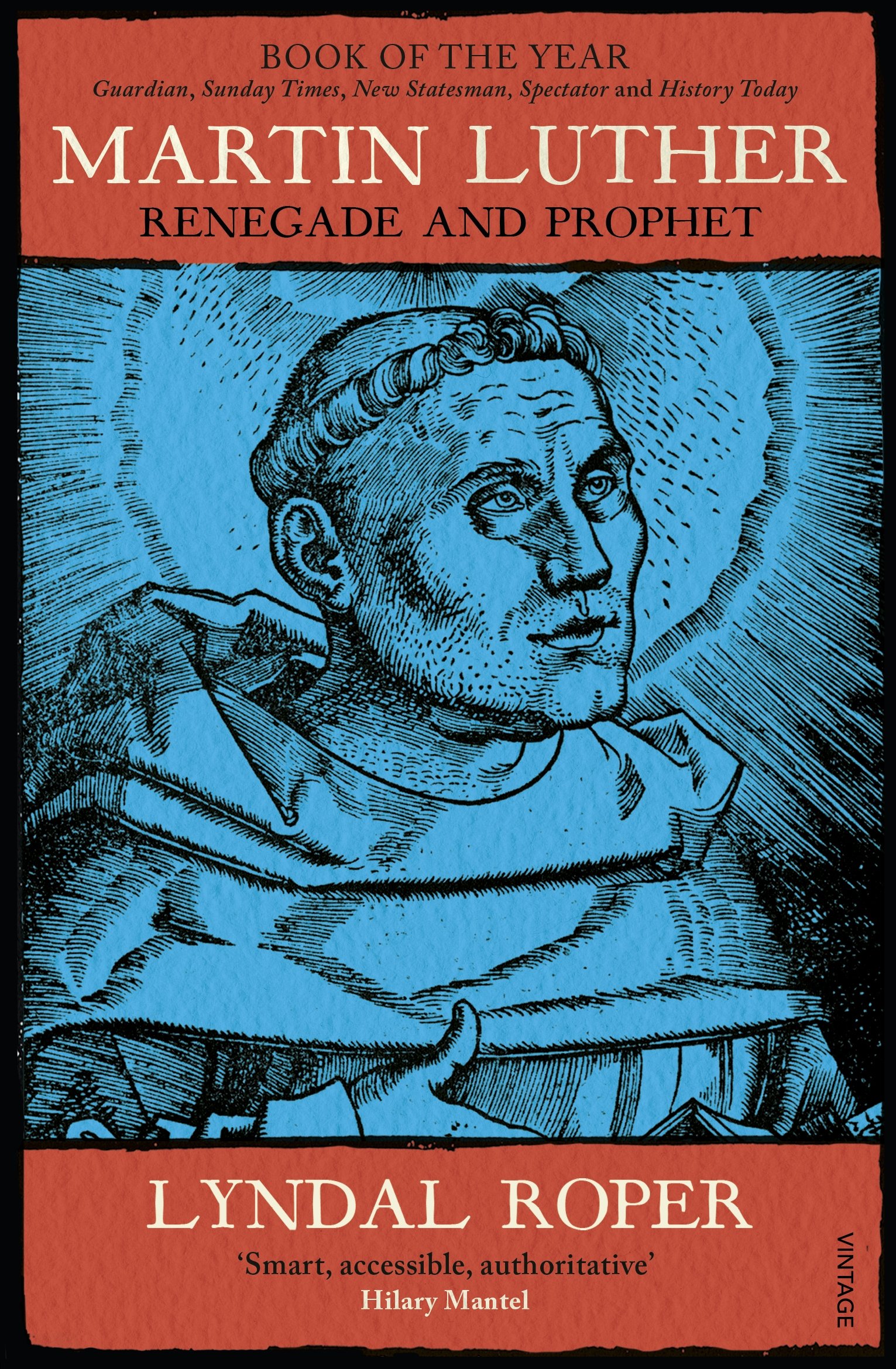
Lyndal Roper - Martin Luther: Renegade and Prophet
It is difficult to know exactly what role the conflict with his father might have played in these struggles, but it does seem that his spiritual troubles stemmed from the relationship he was forging with a paternal God. All the crises cluster around the terror of being confronted directly with God, the Father, who is also God the judge, without any intermediary; whereas the whole purpose of the monastic life as Luther experienced it was to create a security net where the intercessions of Mary, prayers said on one's behalf and exercises to subdue the flesh all cushioned him against God' transcendent power. So if Luther's entry into the monastery was a retreat into a matriarchal world, that retreat was raising spiritual problems of its own.
Luther would have been familiar with this arrangement, for it was what he had grown up with in Mansfeld. He naturally expected power to descend from above, not legitimacy to be conferred from below. This helps explain why his Reformation would be so different from that which would emerge in the south, and why his theology of power appears so reactionary. He simply had no experience of the more democratic values of southern German communes... As conservative as Luther's politics might have been, they were also in tune with the newly emerging political realities of the time; for it was the large territories of the princes that became the mainstays of the Reformation, while the civic communes of southern Germany were entering the twilight of their power.
Yet there was nothing surprising in his stand. It was already prefigured in his conflict with Karlstaft [a figure of the radical Reformation] from the moment that Luther decided to defeat the Wittenberg movement and support the Elector's attempt to make peace with the Diet by slowing the pace of evangelical reform. Luther had already rejected the communal Reformation, powered by popular pressure, which inspired Karlstaft. This was the Reformation that was also popular among the lower townsfolk in Allstedt, Muhlhausen and Frankenhausen, where [revolutionary] Müntzer had his most loyal and zealous supporters.
was not a medieval relic but a development of it. Even more disturbingly, it was not incidental to his theology, a lamentable prejudice taken over from contemporary attitudes. Rather, it was integral to his though; his insistence that the true Christians - that is, the evangelicals - had become the chosen people and had displaced the Jews would become fundamental to Protest identify. It was the central plank of his understanding of the Lutherans' providential role in history, and to secure it the Jews had to be pushed aside, discredited and, if necessary, eliminated.
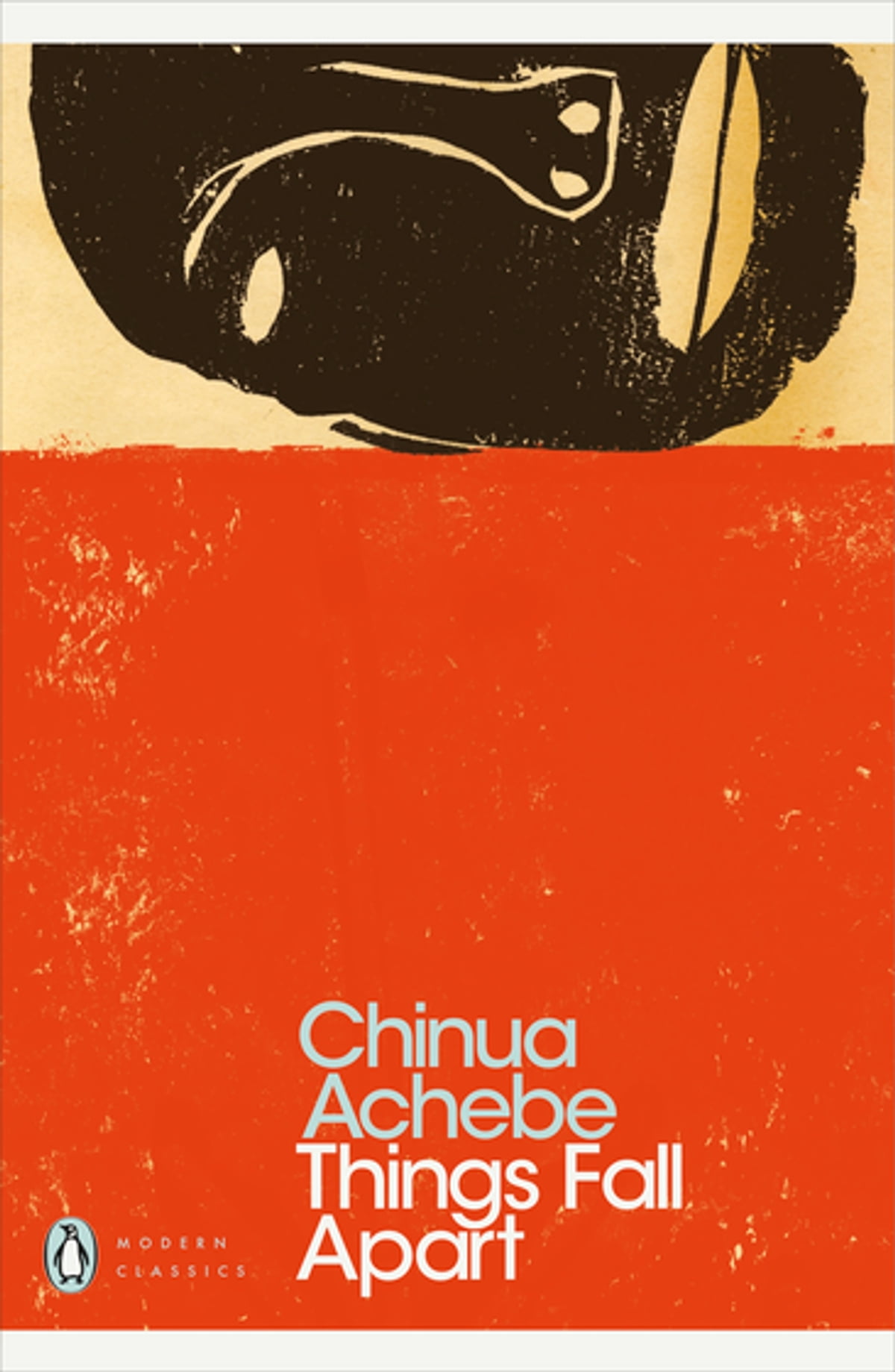
Chinua Achebe - Things Fall Apart
In his absence white missionaries arrive, tempting some of the villagers away from their traditional practises and beliefs, alongside this the serpent voices of the missionaries are further undone by the trading post, that offers new wealth by tying the community into wider capitalist networks. The "lunatic religion" is reinforced by money "flowing into Umuofia" and with this money comes a growing feeling that there might be "method in the overwhelming madness".
But behind the money there's a new white government and with that state comes violence. Government and justice are removed from the hands of the village elders and placed in the hands of people who know nothing of events, an abstract law replacing the complex rules that manage behaviour. When they protest the community and its village elders are collectively punished.
Returning to this transformed world, which has seen his personal hopes and dreams destroyed, and the old order "fall apart", Okonkwo is at first disappointed that his was not the long imagined triumphant return, but this is soon replaced by anger and humiliation at what has happened to his people. His response, in many ways, is a personal redemption even if it is a hopeless gesture against the colonial powers who literarily treat it as a footnote of history.
Achebe's book is not one of violent resistance or retribution, it tells the story of how colonialism was a destructive force - both explicitly through guns and soldiers, and usurped state power, but also through the networks of commerce and religion that shattered the old order in the name of "progress".
Things Fall Apart is not a cheerful novel, nor is it patronising to the pre-colonial communities. These are portrayed as very different to European "society", but with their own internal logic, rationalities, rules and contradictions. This is not a pre-colonial utopia, but nor is it a society that sees systematic oppression and exploitation - that took the arrival of capitalism. This is one of the great novels that explores that transformation.
Related Reviews
Wednesday, September 28, 2022
Monisha Rajesh - Around the World in 80 Trains
Monisha Rajesh's Around the World in 80 Trains promises the reader an account of a 45,000 mile "adventure". Her journey certainly must have been a personal adventure, crossing Canada and the United States and Russia, travelling through South East Asia, exploring China and even taking the train in North Korea and to Tibet. But sadly there's no thrill of a journey for the reader, and unfortunately Rajesh seems to spend most of the time sneering at the trains she and her partner travel on, and the people they meet.
It is hard to put into words exactly why I disliked this book so much. In part it is the framing of the book. Refreshingly Rajesh doesn't pretend to be something she isn't - she criticises those who claim not to be tourists by donning the "traveller" mantel. She rightly points out that once you travel you are a tourist. She also celebrates the randomness of travelling by train, where "no matter how many journeys I took, or how awful the train, each one brought an element of surprise or wonder". But she has strange ideas about why other people travel, "driven by the weather, the prospect of sex or dwindling funds".
Despite being aware of her "privilege" as a relatively well off traveller in some of the poorest parts of the world, she also displays a strange failure to understand the people around here. Writing about a fellow traveller arrested in Bangkok, she comments "the idea of wilfully committing any kind of crime in Southeast Asia never failed to baffle me". The choices made by people who commit crimes are rarely the ones they'd like to make, being closely tied to wealth and poverty. Rajesh just doesn't seem to get it and comes across as tone deaf.
At times Rajesh has interesting insights, at others she comes across as the sort of traveller that she claims she isn't - "Leaving my job, my home and my possessions had quietened the noise in my head. My immediate concerns were were to eat and where to sleep. The less I carried, the less I worried". Must be nice.
At the end I was frustrated and disappointed by this book. I didn't enjoy the authors' attitudes to most of the people she met and her commentary on the places, trains and cultures she saw seemed superficial. Unusually this travel book didn't make me want to travel. Not recommended.
Related Reviews
Theroux – The Old Patagonian Express
Theroux - Riding the Iron Rooster - By Train through China
Theroux - Dark Star Safari
Theroux - The Great Railway Bazaar
Monday, September 26, 2022
Terry Pratchett - Snuff
Saturday, September 24, 2022
Ulrich Mohr - Atlantis
There are some great oddities - not least the ship itself. The captain brought about a load of prams so crew could dress as women pushing children about and lull the enemy into a false sense of security. But suddenly the flags would rise, the hidden batteries open and if the enemy used their wireless to warn the admiralty then gunfire would silence them. Atlantis was very successful in what she did. and at least according to the contributions from enemy captains and prisoners, she was almost unique in that she looked after captured merchant sailors.
Ulrich Mohr, his captain Admiral Bernhard Rogge and others are keen to distance themselves from any link to the Nazi regime. Quite the contrary. Mohr argues that they were sailors first and foremost with little allegiance to the fascists. Me thinks the writers protest too much - they would like to portray their adventure as a purely military event, but there's no doubt they were pleased with their successes and their rewards. At the end Mohr points to the reality of Nazi Germany - with industrialists raking in profits and "party member" getting the wives of the sailors. Yet even the condemnation of industrialists smacks of Nazi propaganda rather than genuine, left, class anger.
That said, this is a startling voyage. Atlantis and her crew were ruthlessly efficient and good at what they did, and there are some fascinating insights. Their over-Winter on the remote, Antarctic, Kerguelen Islands is fascinating. As is their "German" viewpoints on war news. I was struck by a couple of references to discipline, including the punishment of sailors for "homosexual" activity. Of great interest were the German's own fascinating with the colonial sailors on the British ships - Indian and Chinese men - who were swiftly brought into working in the kitchens for the Germans. There's some fascinating commentary on British colonialism here for those that would like to look for it. There certainly is far more mention of the reliance of the British naval effort in World War Two and crews from the colonies in this by the "enemy" than you might find in most similar accounts by British authors.
Overall though this book offers insights into a particularly vicious sea battle whose tactics will not be seen again - though take the authors' political claims with scepticism.
Related Reviews
Rayner - Escort
Woodman - The Real Cruel Sea: The Merchant Navy in the Battle of the Atlantic 1939-1943
Lund & Ludlam - PQ17: Convoy to Hell
Friday, September 16, 2022
Justine Firnhaber-Baker & Dirk Schoenaers - The Routledge History Handbook of Medieval Revolt
Justine Firnhaber-Baker draws out some further details from the economic base when writing on similar issues in her article on the Jacquerie. She discusses the meaning of the nobility and their position in society:
The reason nobles lived in fortresses was because they could physically coerce the peasants into handing over their surplus.. and the reason they could do that was because they were a warrior aristocracy who lived in fortress. This is an oversimplification of the complex and changing situation of the late medieval French nobility, but this nexus of economic, political and military privilege inherent in noblesse seems nonetheless to have been at the heart of the Jacquerie for its rank and file participants.
Physical violence of the sort that might seem more objectionable to us - like murder, arson or even post-mortem mutilation - was perceived as a regular way of speaking, not only for rebels, but also for the elites and government. This may be because these violent actions were, in fact, imitations of judicial procedures: cutting royal officers' bodies into pieces was nothing more than the execution of 'traitors'... burning castles was not so far from the legal abattis demaison which is attested in the urban statues...
Wednesday, September 14, 2022
George Mackay Brown - Greenvoe
* Spoilers*
George Mackay Brown (1921-1996) was Orkney's foremost poet and novelist. By the time he published Greenvoe, his first novel, he was well known for poetry and short stories. Living relatively reclusively in Stromness his novel is soaked through with a sense of Orkney. His fictional community of Greenvoe is on the fictional island of Hellya, it stands in for a myriad of island and remoter communities.
Greenvoe is a small fishing community. It is shot through with the class differences that are usually ignored when novelists write about Scotland. This is not an idyllic village, rather its one where rich and poor live cheek by jowl, jealousies, adulteries and disagreements fester and those higher up the wealth ladder sneer down at those below. At the top of the food chain is the laird in the "big house", his beautiful daughter visits from the Scottish mainland, triggering lust and jealousies. But there are other visitors - including the Asian travelling clothing salesman, who is met with interest, custom and poverty - while offering his own sharp commentary on Greenvoe's inhabitants.
Much of the book deals with these characters in passing, the hard-drinking Tommy who beachcombs for a living, the ferryman Ivan Westray, described as a "ladies man" in the book's blurb but who is much nastier than that, and most interestingly Skarf, a Marxist and failed fisher who is writing a history of the island and whose prose entertains the drinkers in the hotel bar. Skarf is fascinating because through him Brown links the deep history of Orkney with contemporary events. There's continuity between the too.
Despite Skarf's politics, I was most interested by the elderly Mrs Mckee, who is only on the island because of the irresponsible behaviour of her alcoholic son Simon, the local minister. Mrs McKee is drowned in anxiety and sorrows, reliving her past life immersed in her own petty guilts. Through her we learn of the tragic backstory to her son, but her own life - restrained by the limitations of class and wealth.
But these intricately drawn lives, woven together so skilfully by Brown, are town apart in barely a week as the secret "Black Star" project arrives on the island. Like so many Scottish people before them, the community is broken apart and scattered, for the interests of a small minority.
Greenvoe's greatness lies in the portrait of a town in tension with itself, pulled back and forth by the petty ruptures and interests of different individuals, and their own histories, lies and prejudices. Brown demonstrates a clever eye for moralistic shopkeepers and cheating publicans. But none of his characters are innocent, they're all flawed. Their tragedy is that they're victims of circumstances not of their choosing. Skarf understands that.
Tuesday, September 06, 2022
James Hawes - The Shortest History of Germany
In short, Hawes argues that to understand modern German history we have to look into the distant past, and sees the fault lines of Germany society arising out of fundamental divisions that go back to the era of the Roman Empire and Charlemagne. He concludes that "Germany is the sole hope for Europe... it must now be embraced, as what it was always meant to be: a mighty land at the very heart of the West".
Germany, Hawes argues, has always faced two ways: West and East. The western looking side has had a progressive, modern outward looking world view and the East has been the source of chaos and danger. Take the question of Hitler's victory. Hawes rightly points out that Hitler failed to get a majority of votes, but he argues that the key determining factor of this was the religious background that people had, and that was shaped by the historical development of Germany. He then argues that this is rooted in the ancient past:
In many areas within the Roman limes [borders] of 100Ad, Hitler fails to break 35%... The average here overall is well under 40%. Even with the whole state apparatus behind him... Hitler has failed to take the west and south of Germany. In fact, only two constituencies within the bounds of Otto the Great's Empire of 940AD. give Hitler a majority - and they both lie right at its eastern limits, on the western banks of the Elbe.
Correlation is, of course famously not causation. The problem with this argument however, is it basically implies that everyone east of the Elbe is always going to be right-wing. Such geographical explanations are inadequate, but Hawes dishes them out with gusto. Of East Germany he writes, it "didn't become different because of the Russian occupation of 1945-1989; the Russian occupied the place because it had always been different". Surely most readers here would pause and point out that the Russian's occupied Eastern Germany because they arrived from the East.
What Hawes fails to offer the interested reader is any explanation for events. History is, to paraphrase, "just one thing after the other". For Hawes, the Nazis arose because Hitler was able to manipulate people to accept him in the chaos that followed the first World War. But Hitler was able to do this because the chaos had been caused by the left. The new German government after World War On had "no reliable forces of its own" so it had to turn to the "Free Corps" to crush the "red rioters". Yet the revolutionary period that followed World War One was one of mass mobilisations by German working people fighting for jobs, equality and freedom - not a few rioters. Time and again Hawes blames the Communists for wanting to overthrow the "new democracy" despite that new democracy being vicious towards ordinary people as it tried to save capitalism from itself.
Hawes argues that Hitler was successful because the Nazis deliberately copied "the street fighting style and the modern-seeming politicking of the new, Lenin-inspired left". In fact, at times, it seems that Hawes' real targets are the left. Completely incorrectly he writes that "Hitler's ideas were closer to Lenin's than to any traditional European conservatism", neatly ignoring the rabid antisemitism and racism at the core of Hitler's ideas and his stated counter-revolutionary agenda. Hawes doesn't mention how the first victims of the Nazis were the left, and especially the Communist left, despite them allegedly being so "close" in ideas. In fact Hawes' characterisation of the left and the far-right is shockingly incorrect:
Both Lenin and Hitler appealed to perverted versions of that great 19th-century liberal ideology (as seen in Hegel, Marx and Darwin): the idea of progress-through-struggle-to-utopia.
Hawes' argument that Marxists believe in "progress-through-struggle-to-utopia" doesn't stand up to scrutiny, whether in the work of Marx, Lenin or German socialist thinkers like Rosa Luxemburg. It is, of course a feature of Stalinism and Second International Marxism, though Hawes only sees continuity from Lenin's era to Stalin when he should see a break and seems to celebrate the entirely pro-war Second International. But Hawes' generalisations are also worrying. He presents Hegel as "the root of all evil?" but neglects to discuss some very dangerous thinkers who were real influences on the far right - figures like Schopenhauer, Nietzsche and Spengler.
This might all be of historical curiosity, but this approach mars Hawes' discussions of post-war politics. The problem is that Hawes' instinctive conservatism cannot really explain the dynamics of German history. He doesn't really offer any explanation of why the German economy tanked in the 1920s, and he seems to have no sympathy with the ordinary Germans that rebelled in vast numbers against the capitalist destruction of their jobs and livelihoods. Because he sees the Russian Revolution as a bad thing, he cannot understand its influence on a generation of radicals, even after the Stalinist counter-revolution. Indeed he can only see continuity and similarity between the right wing in German and the interests of Stalin's Soviet Union.
A book of this length is always going to take some short cuts. But Hawes fails to offer any real in-depth explanation of key events, relying on superficial generalisations. His concluding remarks about the AfD, UKIP, Brexit and Britain and Germany, feel like a crude attempt to shoehorn contemporary political prejudices into a book length framework that doesn't really work. His hope that Germany and Europe will get a "vision of a land treated as, and working as, the very heart of the West" is misplaced precisely because it ignores the real economic and political forces that shape the terrain that German politics takes place on. The current economic crisis will place new strains and stresses on the German people, and progressives will need more nuanced historical accounts and clearer politics if they are to avoid history repeating itself.
Related Reviews
Kershaw - To Hell and Back: Europe 1914-1949
Browning - The Origins of the Final Solution
Paxton - The Anatomy of Fascism
Mazower - Hitler's Empire
Charles Platt - Garbage World
Garbage World is very much a novel of two parts. First published in 1967 around the time when ecological awareness was beginning to become a mainstream political concept, the book deals with a solar system wide society that has a rubbish problem. The waste and rubbish of human production is dumped on an asteroid which is inhabited by humans who were originally there to manage the waste, but have evolved into an autonomous group of humans who view other "clean" humans with distaste. These villagers scavenge the rubbish as its dumped on their asteroid, eating thrown away food and collecting the best bits of the rubbish. Those who get the best collections of rubbish rise higher in the ranks of their society. Its a sort of cargo cult of humans living on garbage.
But the asteroid is becoming unstable and needs to be managed. A survey team arrives to warn the inhabitants but there are hidden motives. Gaylord, a younger, more impressionable anthropologist on the survey becomes pulled into Garbage World's society. Despite his almost pathological hatred of dirt he gradually gets pulled into life, including beginning a relationship with the daughter of the village head. Gaylord, to use more modern parlance, goes rogue and joins in with an act of rebellion against the outsiders.
The first half of the book works relatively well. Its a fairly amusing commentary on the attitudes of a throwaway society, perhaps mostly targeted at the consumer rich society in the United States of the 1950s and 1960s. Platt is rather humorous, though much of the humour is rather scatological. We are encouraged to laugh at the student people who revel in dirt and rubbish, as well as the overly clean, prim and proper Earthers. Of course this is spoof, so it shouldn't be taken too literarily, but I did wonder whether there was an element of the author trying to portray less technological advanced people as behaving like this.
The second half of the novel is less satisfying. It becomes a rather tame adventure story where Gaylord, his new partner and the villagers try to escape the destruction of their society. At the end everyone engages in an orgy of dirt and sex. So the book begins with a interesting premise but abandons it to engage in a rather putrid adventure. No doubt there are some that were titillated by this odd combination of dirt and sex but it did little for me. Garbage World is an interesting footnote of 1960s science fiction, but it's not a classic.
Thursday, September 01, 2022
Corinne Fowler - Green Unpleasant Land
For her unflinching portrayal of the reality of the English countryside, Fowler has received plenty of criticism. In a hostile article the Daily Mail quoted the former, right-wing, Tory cabinet minister Peter Lilley as saying, "Arguably, it is she who has insulted her country by her book whose very title — Green Unpleasant Land — tells us what she thinks of her fellow citizens." Typically the Daily Mail headline claims that "gardening has its roots in racial injustice". It is a click-bait title designed to trigger the sort of apoplectic rage that the Mail's core readership excel in. It is also grossly unfair for Fowler's book is nuanced and detailed about the reality of the English countryside, gardening and its portrayal in literature. In fact Green Unpleasant Land is a remarkably interesting study of the English countryside, its history and the forces that shaped (and continue to shape) the landscape many of us, including Fowler, continue to enjoy.
The Drax wall is a useful entry point to Fowler's argument. She notes that it "provides a fitting metaphor for the link between empire overseas and enclosure at home". Far from being a idyllic place, the countryside, Fowler argues, was (is) a space of intense struggle over ownership and access. She notes the various class struggles against enclosure or for economic improvements and points out that this continues today. But despite this history, the image of a beautiful pastoral idyll continues. She says:
Industrialised farming and escalating environmental destruction ought to have made naïve visions of the countryside hard to sustain. Yet they have been sustained, and a succession of social histories, personal memoirs and political manifestos have criticised the continuing pastoral view.
In contrast she points to a whole number of books and studies that have demonstrated the exact opposite (including, full disclosure, one of my own books). In particular she looks at the close links between colonialism, racism and the countryside - which manifest both through economic issues such as land ownership and exclusion, to more overt racism directed to Black visitors. She argues that there has been a "collective amnesia about the role of empire", highlighting, for example W.G.Hoskins' classic work The Making of the English Landscape, which "makes no mention of empire".
Fowler dismisses "common misapprehensions about rural England: firstly, that it has nothing to do with colonialism and, secondly, that Black British and Asian British authors are disconnected from English rurality." She systematically examines the way that writers who have written about the countryside, or set novels within it, consider questions of colonialism and racism. There are some fascinating examples. In Walter Scott's 1814 novel Waverley, the Highlands are seen as populated by people compared by Scott to "natives of Africa and America, India and the Orient". Charlotte Brontë repeatedly hints at the "colonial connotations of Wuthering Heights". Descriptions of the moors frequently link the dirty, poverty stricken people to black faced "savages".
Yet the colonial linkage to the countryside is not just in fiction. Fowler shows how the nature of Empire shaped the countryside too. Drax's wall is one example. The profits from slavery allowed a new landowning bourgeoise to transform the landscape. The enclosures of land and the destruction of common rights, leading to the forcible destruction of the peasantry are part of a process where the primitive accumulation of wealth overseas helped kick start the evolution of capitalism back home. That's the economic context, but there were other examples. Slaves were brought back to England from overseas, sometimes to be black servants, a particularly appalling fashion. There were also black workers, traders, gardeners and escaped slaves in the countryside. The history opf the English countryside is far blacker than the Daily Mail would like.
The global transportation of plants as transformed gardens and farms in Europe. Fowler points out the role of slaves themselves in helping select and transport these plants for botanists, farmers and gardeners to enjoy. The knowledge and labour of enslaved black people and indigenous communities was essential to choosing the plants as well as providing the food to continue with slavery. Gardening may not have had its original roots in racial injustice as the Daily Mail claims Fowler says, but it was fundamentally shaped by slavery, colonialism and imperialism.
Fowler's book is subtitled Creative Responses to Rural England's Colonial Connections. These creative responses include the poetry, novels and essays of black writers whom Fowler examines in depth. The breadth of her coverage of these is remarkable and I found it impossible not to add to my list of books to read as a result. But Fowler also adds her own creativity to the discussion by responding to the themes and arguments in the book with a short story and some poetry of her own. I found these particularly insightful, and it the fact the book brings together the non-fiction and fictional form was both unusual and thought-provoking. I particularly enjoyed the poem about Kings Heath park in Birmingham which I know well. Her poem Green Unpleasant Land is about the response to Danny Boyle's London 2012 Olympic opening ceremony. In the opening chapter of the book Fowler examines the knee-jerk response to Boyle's placing of black people in the countryside and in the poem she has a raging commentator declare:
If you're still listening, here's my message:
to all you pc hand-wringers out there:
Jerusalem will never get built
if you corrupt our heritage
The erroneous belief that the English countryside is untainted by corruption, violence, racism, colonialism or class struggle is a deep-seated one. As Fowler points out, "they" have to keep reinventing it. Why? I think it serves two purposes. By removing the real history of the countryside, it becomes a continuous reservoir that the ruling class can draw upon to challenge progressive ideas. But it also offers something to individuals - escapism, hope, a challenge to the alienation of work and urban areas. We're sold a dream of Jerusalem outside the city, because without that dream, the reality is overcrowded housing, lack of jobs, poverty and polluted streets. Corinne Fowler's Green Unpleasant Land is a challenge to that narrative. It is readable, entertaining and honest, and deserves a wide readership if we are to really build Jerusalem.
Related Reviews
Howkins - The Death of Rural England
Groves - Sharpen the Sickle
Rackham - The History of the Countryside
Poskett - Horizons: A Global History of Science
Horn - Joseph Arch
Wednesday, August 31, 2022
David G. Hartwell & Patrick N. Hayden - 21st Century Science Fiction
This collection of short stories and novellas is based, with a single exception, on authors who came to prominence in the 21st century. As such its contents are frequently far in time, and subject, from predecessors of the 1960s and 1970s. However thematically in some cases that distance is not so far. There are 34 stories in the collection, and it is gratifying to see that many of these authors are not white, male and North American or European. The genre is much more diverse than it was, though there is still progress to be made.
In terms of subjects I found my appetite for something different sated quickly with the first story in the book Vandana Singh's Infinities which follows a Muslim mathematician on the quest to understand the infinite. Set in India at at time of pogrom and inter-religious strife it carefully links these issues with wider subjects such as love and solidarity. It was clever, moving and an excellent opening chapter. A similar, post-colonial tale was Tobias S. Buckell's Toy Planes, a brilliantly tight story of a few thousand words that deals with the first trip to space by a Caribbean spaceplane. The final words spoken by the black astronaut, "We're coming up to" felt like a declaration of intent by the author as much as the character. The story itself felt very much like a statement against the dominant forms of the genre.
Some of these themes are touched on in another interesting story by David Moles, Finisterra. Here the main characters deal with poachers hunting massive animals in the atmosphere of a gas giant, yet killing the largest of these threatens a poor community of "Savages. Refugees. Drug farmers". The themes of hunting, poaching and extinction are close to the surface, even if the story turns into a fairly standard, albeit very well written and paced, adventure story.
Several of the stories, including the aforementioned Toy Planes are very short, sometimes less than 1000 words. Several much longer novellas are included like Finisterra. These tended to not be as good as the others. I'm not a great fan of Peter Watt's novels, and while his novella The Island here was more accessible, it lacked a certain clarity on what was happening. Some of the other stories, such as Charles Stross' Rogue Farm, which deals with what happens when robotic AIs become autonomous, felt like call backs to an earlier generation of novels. That's not to say it wasn't fun - I've always liked Stross' writing. But their themes felt liked updated Asimov ideas - though far better written. Another example of this was the fascinating The Calculus Plague by Marissa Lingen which looks at how ideas might be spread virus like. People might be taught maths through contact with others, but how would capitalism actually use such technology. Lingen's story is a sobering and humorous take on that question. John Scalzi's Tale of the Wicked is a classic Asimov robot story, though the characters are more human.
There are well over thirty stories in this fine collection, all of a fine standard and my personal predilections are unlikely to be the same as other readers. Several of the stories, including Vandana Singh's were very good indeed and I particularly liked Cory Doctorow's Chicken Little an updating and riffing on a classic novel Space Merchants. David D. Levine's Tk'tk'tk stood out too - the account of a human salesman trapped on an alien planet, desperate for that last big sale to enable him to go home. Paolo Bacigalupi's Windup Girl made waves recently for a post-climate crisis world dominated by massive corporations profiteering from genetic information. His story The Gambler collected here is a fine return to similar themes. For sheer flamboyance I loved Paul Cornell's One of Our Bastards is Missing. Its a great style that reminded me of George MacDonald Fraser though Cornell's hero is no coward. I also enjoyed and was moved by Mary Rickert's Bread and Bombs, which rang true as we watch the war in Ukraine and remember the wars in Iraq and Afghanistan and the treatment of those fleeing conflict.
However my favourite in the whole collection was Jo Walton's Escape to Other Worlds with Science Fiction, which takes the trope of a world where the Nazis won, and twists it around. It is very reminiscent of a certain book by Phillip K. Dick, but done with style and a new little twist.
Many of these stories take up the question of artificial intelligence and what it means to be human / alive. I felt this preoccupation reflects less the technological advances of our era, and more a feeling of anxiety at the state of the world. Science fiction hasn't always been the best at dealing with such issues - preferring to offer escapism rather than explanation. This fine collection shows that this is changing and that the future of the genre is in safe hands. If you love science fiction, and particularly the short story form, I'd recommend this.
Related Reviews