Tuesday, May 31, 2022

Hal Draper - Karl Marx's Theory of Revolution Volume 4: Critique of Other Socialisms

The ideas of Marx and Engels grew out of concrete circumstances, but they also evolved and developed in response to events and in engagement with other ideas. The fourth volume of Hal Draper's epic Karl Marx's Theory of Revolution looks at "other socialisms". As such Draper's book is a study of how Marx and Engels understood other socialists and how they developed their critiques. Draper looks at several concepts in turn - Utopian socialism, State Socialism (both left and bourgeois versions) and Anarchism. It is striking how this volume uses the politics developed in the early volumes as stepping off points to critique these different socialisms. In particular Draper shows how Marx's understanding of the state is both a differentiation that highlights the problems of the other socialist models and a strategic discussion. As Draper writes about Marx's critique of Anarchism:

Anarchists often repeated Marxist formulations (or approximations) that the state was the "executive committee" of the ruling class, and so forth, but the content of their state theory was just the reverse of Marx's. Their insistence that the abolition of the state had to be the firs tact of the revolution was the product of pure dogma, simply an unhistorical view of the relation between the state and social order. Many socialists (including Marx and Engels, as we have seen) had struggled with this question in the early days of the movement, so it had always been a well-known view before it became hardened into anarchist theory.

But this mistaken approach led the Anarchists into dead-ends and in some cases, led them into reactionary alliances. Draper notes that in 1877, "Engels emphasized how the anarchists' political abstentionism had reduced them even in Italy to a tiny sect" precisely because the logic of their position on the state was to abstain from immediately struggle in favour of a point in the future when they would abolish the state and everything would be sorted out. 
While the book does discuss other socialisms, much of the book focuses on Anarchism and in particular the debates and struggles between Marxists and the followers of Bakunin's "reformist politics" in the First International. Draper follows his usual model of exploring ideas in depth, backing up arguments with copious and rigorous quotes from the works of Marx, Engels and their contempories. It is quite a shock them to see his expose of Bakunin's ideas and Bakunin's activity. In particular there is an unpleasant, but completely necessary, discussion of Bakunin's antisemitism which makes for difficult reading. Draper shows how this arises out of Bakunin's complete lack of concrete politics and his dismissal of the masses as the agent of social change. Time and space precludes a detailed discussion of Bakunin's failed politics and how it essentially becomes a utopian movement of top down change.

All this life, Bakunin sought a shortcuts to effective power: by convincing a suitable czar, emperor, king or other autocrat to declare the People's Revolution from above, and impose the Rule of Anarchy (or Whatever) through the convenience of an already established despotism.

If any young anarchists are reading this and find it a difficult pill to swallow it is worth them digging out the source material from Draper on Bakunin's secret societies, hidden within secret societies, which postulate rule by an enlightened despot or individual rather than a society governed from below by the "associated producers".

Crucially though, Draper returns to the question of the state. He points out that the end game for Marx was, of course, a society without classes and without the state (the state is an instrument of class rule and the disappearance of classes would lead to the disappearance, dying out, or withering away of the state). In this Marx was the same as the best of the anarchists, and indeed Draper quotes from the International's circular of 1872, "all socialists see anarchy as the following programme". Draper continues though:

This revelation assumes ignorance of the real history of antistatism in the socialist movement, that is, of the fact that anarchism developed out of a reservoir of antistatism, but that antistatism is not congruent with anarchism. 

Marxism as a concrete framework for understanding the world and changing it, sees the workers' state as a transitional stage (a subject discussed in detail in Draper's third volume) toward a stateless and classless society. The abstract approach of many anarchists towards the state and their abstention from the movement, was for Marx, a limitation and a utopianism. 

But this utopianism wasn't restricted just to the anarchist movement. In a fascinating chapter Draper looks at the case of the French General Boulanger, a reactionary "protofascist" whom, in the late 1880s, received brief, mass support from the lower-classes and drew a number of socialists towards him, who were "looking to take a free ride into power on the coattails of the populat demagogue". Draper shows how Engels engaged in a fight against this, as one of the advocates of this sorry politics was Marx's son-in-law, Paul Lafargue. Lafargue essential wanted to hide his principles to avoid cutting himself off from the masses, "To combat Boulangism, Boulanger should not be attacked" said Lafargue. In response Engels asserted the importance of the "formation of a party separate from and opposed to all bourgeois parties". He emphasised that there are no short cuts to workers' power.

The chapter on Boulanger is fascinating and I had not been aware of the arguments, but it forms a useful summary of the approach of Marx and Engels to concrete problems and the use of their method. Draper's discussion is a very readable account and deserves study. He concludes the section, and the book:

To our ears, Engels' discussions regarding Boulanger have a bitter echo; they reverberate with many of the themes that crippled the socialist and Communist movements before Hitler's conquest of power. The political letters written by Engels on this now obscure episode in the life of the [French] Third Republic - an episode dim in the history books, and letters which few have paid attention to - are more germane to the tragic history of socialism in our day than several tons of marxological works.

It's a fine summary that demonstrates the importance of Hal Draper's own work and this magnificent series in particular.

Related Reviews

Draper - Karl Marx's Theory of Revolution Volume 1: State & Bureaucracy
Draper - Karl Marx's Theory of Revolution Volume 2: The Politics of Social Classes

Draper - Karl Marx's Theory of Revolution Volume 3: The 'Dictatorship of the Proletariat'

Friday, May 27, 2022

Chris Hadfield - The Apollo Murders

***Spoilers***

Sometimes it's better to start a review by coming right out with your own opinion. This is certainly one of those cases. This is a terrible novel. Rather fascinatingly it is terrible on a number of levels. Firstly there's the technical level. The author, Chris Hadfield, is an remarkably experienced astronaut. This means he has a detailed knowledge of everything to do with space science - from orbits to living in space. He also knows a lot about the history of Apollo. Tragically for the reader Hadfield feels the need to tell us, in great detail, all about these things. From going to the toilet, to the experience of launch. It all helps to pack out 460 pages and the reader's feeling of being overwhelmed.

Hadfield is one of those novelists who likes to tell the reader things - makes of watches, types of aircraft, technical detail. If you like being drowned in such info, you'll love this book.

The second terrible thing about this book is the plot. There are some holes that would easily allow a Saturn V rocket to launch through it (the Saturn V rocket was 363 feet tall, launched 13 times and took 24 people to the moon BTW). The plot holes exist to hold together a completely creaky tale of the Cold War in space, set around a fictional military only mission to the moon Apollo 18. In this timeline, an extra Saturn V is taking another crew to the moon and they are going to intercept the Soviets who are doing BAD THINGS. 

The Apollo crew, who have had a last minute personnel change due to an accident to one of the spacemen, has to disable a Soviet spy satellite. A little stop-off before they go to the moon. One of the Soviets kills an American and GETS ON THE APOLLO just as it heads to the moon. Its so ridiculous it made me laugh out loud. 

This means there's KGB, Whitehouse and Kremlin talks, a typically square jawed US astronaut (who just happens to actually be Russian) and a female Soviet crewmember. In possibly the most ridiculous bit of the novel, the US decide to allow the Soviet to land on the moon, in borrowed kit, without training and that's just because the US has to find out what a Soviet rover is doing. The characters are wooden, the women in particular are one dimensional and the Soviet characters are clichés. 

If my summary sounds implausible, that's because it is utterly unbelievable. You can't suspend disbelief for this one, and I only read it to the end because I figured it was a great cosmic joke. Really, there are better novels about Apollo 18 out there (the whole concept is a cliché by now anyway). I remember really enjoying James Michener's Space, for instance. Unless you're obsessed with Chris Hadfield's work, I really wouldn't bother with this one.


Monday, May 23, 2022

Chinedu Chukwudinma - A Rebel's Guide to Walter Rodney

Today Walter Rodney is perhaps best known for his book How Europe Underdeveloped Africa. But as Chinedu Chukwudinma shows in the latest of the Rebel's Guide series, Rodney's importance is much greater than that single work. Rodney was assassinated for his revolutionary activity at the tragically youthful age of 38. Yet in those years he developed into an important historian, Marxist revolutionary, journalist and activist. His ideas remain crucially relevant today and it is excellent to learn that his work is receiving a revival in the aftermath of Black Lives Matter.

Chukwudinma argues that it is Rodney's revolutionary activity that must be rescued. He points out that he is well known for How Europe Underdeveloped Africa, and his historical work, but "fewer still remember the revolutionary struggle he led before his death in Guyana". Rodney's own political trajectory is fascinating. He was born during the Second World War in Guyana, his parents an activist part of the nationalist People's Progressive Party "attracted to the PPP's anti-colonial rhetoric". A brilliant student Rodney arrived in London in 1963 where he was immediately confronted with racism at SOAS. He found the British left dogmatic and sectarian, but personally developed in a study group led by the Marxist CLR James. Returning to Africa, and then going back to work in the West Indies, Rodney quickly became associated with radical groups and activism. His expulsion from Jamaica by the government was the spark for "Rodney Riots" in the summer of 1968, when hundreds chanted "Black Power". The important of these riots, "went beyond demands for [Rodney's] reinstatement. It lay in the poverty and political exclusion of Jamaicans and the rise of black consciousness among the young". Chukwudinma charts how Rodney's engagement with local radicals and anti-colonial activists saw him develop his ideas further. He writes:

In Jamaica, Rodney criticised the ruling class for flaunting the myth of a harmonious multiracial Jamaican society. He despised its national motto - "Out of Many, One People"-for obscuring the fact that a small multiracial elite ruled over an African majority. For Rodney, the elite feared above all the prospect of Jamaicans organising politically around their African identity. Therefore, many of his speeches [at the time] emphasised the need for blacks to reconnect with their African heritage". 

Within all of this Rodney was grappling with the question of the agency for revolutionary change. He admired Che Guevara's writing on guerrilla struggles, but was sceptical about its potential for Jamaica. He "celebrated" workers' strikes but saw the working class as "only one of the revolutionary classes". It was a wider engagement with African nationalist and anti-colonial movements that developed Rodney's thinking on this crucial political question. Back in Tanzania Rodney believed that "peasant Ujamaa villages" formed an alternative. These cooperative farms were created and supported by the state and were an attempt to break out of the limits imposed by the production of cash crops for western markets. Rodney argued these sort of cooperatives could form "the basis of a socialist society that avoided capitalism", if they were modernised and helped from without. Essentially he was arguing that Tanzania could make a socialist transformation without workers' revolution.

But the experience of the Tanzanian state and its failure to drive forward to socialism. Instead the state essentially forced the cooperatives to do their bidding, driving up production in the interests of the capitalist economy. Rodney saw in this echoes of the Stalinist regimes. Instead Rodney began to see the growing working class as an alternative, recognising in in rank and file strikes the real power of workers and their ability to stop the profits of capitalism. As Chukwudinma says, Rodney understood that the Tanzanian working class "was small but its strategic position in the economy gave it great power". 

Returning to Guyana in the mid 1970s Rodney flourished as a radical thinker and revolutionary. He began a "transformation into a full-time organiser of the working people." Chukwudinma tells the crucial story of the Guyana rebellion of 1979 and the role of Walter Rodney. It is worth emphasising the importance of this period, which will be almost unknown to most western activists. Yet Chukwudinma draws out lessons of general importance to socialists everywhere, as well as exploring the specific political questions for post-colonial Africa. Rodney helped made the Working Peoples' Alliance, into a mass organisation committed to workers' self-emancipation. Rodney wrote, "The revolution is made by ordinary people, not by angels, it's made by people from all walks of life, and more particularly by the working class who are in the majority."

The state murder of Walter Rodney arose out of the threat he posed to the capitalist class. In the aftermath the WPA gradually broke with revolutionary socialism in favour of electoralism. There's no doubt that this process was made easier by the loss of Rodney.

While I've focused here on Rodney's development as a revolutionary thinker, it must be made clear that Chukwudinma's book is a brilliant exposition of Rodney's theoretical thinking. There's an excellent chapter on his most famous work on the underdevelopment of Africa, as well as a detailed exploration of Rodney's thoughts on the close links between capitalism, colonialism and the construction of racism. Rodney's theoretical development on this arose from his detailed study of African history. As Chukwudinma explains:

Racism between Guyanese African and Indian workers was not a matter of natural prejudice or cultural difference. In fact, this divide originated in the colonial planation society which brought Africans as slaves and then Indians as indentured workers. As a Marxist, Rodney regarded racism in Guyana as the consequence of the white planter class's divide and rule strategy to control labour after the abolition of slavery in 1838. He gained that insight from his analysis of Guyanese history, whereby he recognised the material conditions for the existence of racism under capitalism.

Having begun this book knowing little of Walter Rodney's life and work, I finished it wanting to know a great deal more about this important revolutionary thinker and activist. Chinedu Chukwudinma's book is an excellent addition to the brilliant Rebel's Guide series and I heartedly recommend it to activists who are fighting the legacy of colonialism, racism and capitalism today.

Related Reviews

Rodney - The Russian Revolution: A View from the Third World
Newsinger - A Rebel's Guide to Orwell
Prasad - A Rebel's Guide to Martin Luther King
Hamilton - A Rebel's Guide to Malcolm X
Mitchell - A Rebel's Guide to James Connolly
Brown - A Rebel's Guide to Eleanor Marx
Campbell - A Rebel's Guide to Rosa Luxemburg
Orr - Sexism and the System; A Rebel's Guide to Women's Liberation
Choonara - A Rebel's Guide to Trotsky
Bambery - A Rebel's Guide to Gramsci
Birchall - A Rebel's Guide to Lenin
Gonzalez - A Rebel's Guide to Marx

Tuesday, May 17, 2022

Alastair Reynolds - Slow Bullets

Slow Bullets opens with a vast interstellar conflict, but quickly focuses down on a small group. Scur, a conscript, is hoping to survive to the end of the war - which seems to be imminent, but she suddenly finds herself the prisoner of a notorious war criminal. After torture she's left for dead... and wakes up on a massive interstellar transport vessel. Waking up it appears that something is very wrong- Scur doesn't know why she's on the ship and the ship itself seems to be malfunctioning.

As Scur tries to work out what is happening, the rest of the sleepers on the ship wake up and factions form. It becomes clear that they've travelled a long way in time and space and something's happened to humanity.

This short novella is a bit of a locked room mystery. The reader works out along with Scur what has happened - its quite a revelation. But Scur's motivation is very personal and one of the fun things about the book is that the way she uses the shipboard factions to manipulate things in her own interests.

It is not the best of Reynold's stories, and quite separate to the larger Revelation Space series. But its a decent enough read and fans of Reynold's galaxy spanning books will enjoy this narrowing down of perspective.

Sunday, May 15, 2022

Riley Black - The Last Days of the Dinosaurs

The odd thing about dinosaurs is that they are defined by their absence. As children we learn about these enormous creatures that no longer exists, and perhaps our fascination with them stems from their extinction. Like mythical dragons they do not exist, but at the same time dinosaurs are not dragons - they did once roam the Earth, and then they were gone. 

But the strange thing is that while dinosaurs are known by extinction, we discuss the actual extinction very little. What usually matters for enthusiasts is dinosaur life. Museums don't have dioramas depicting mass death - we see replica dinosaur standing in landscapes. But the manner of extinction does matter, not least because we are living through an era of extinction ourselves. So Riley Black's book is unique because it looks precisely at the end of the dinosaurs - the moment of transition from Cretaceous to Paleocene. What exactly happened when that asteroid hit? 

While this is a book seeped in science Black tells the story as a narrative. She begins with a typical dinosaur diorama in Hell's Creek (now in Montana) reconstructed from fossil evidence. In an opening chapter we follow a Triceratops which dies of old age, and see how scavenging animals wait patiently for a Tyrannosaurus rex to break open the tough armoured hide so they can feast too. It is a scene drawn from Black's own experiences in Yellowstone Park watching birds wait for a grizzly to open up a dead bison. 

Each chapter tells similar stories, introducing the reader to a variety of dinosaurs and animals, following them through the extinction, then exploring what Hell Creek looked like a day, a month, a year, one thousand years and one hundred thousand years after impact. It is a sobering read. I was struck by how quickly extinction took place - most of the dinosaurs on Earth were dead in the 24 hours after impact, killed by a infra-red pulse that raised temperatures so high that they simply could not survive. I was also struck by how lucky humans are - the evolutionary space created by the extinction gave mammals the space to evolve. But had events taken slight different turns - asteroid impact at a slightly different angle - dinosaurs might have survived. Or indeed the impact been so great that only bacteria survived and life began, so to speak, again. We would not be here.

It is a grim story, that Black tells well. In parts it is a horror story, "there is no dawn on the first day of the Paleocene" writes Black. We can imagine the suffering and pain that billions of creatures felt in the previous 24 hours, and we can imagine just how difficult life will be for the survivors. This is not the gradual dying off of previous "extinctions" or even that accelerated extinction that we're seeing today. This was a light going out.

While Black's book did make me draw connections with today, oddly they weren't just about extinction. What I was repeatedly struck by was the way their descriptions of dinosaur ecology made me think about ecological relationships today. Black makes you think what a herd of massive dinosaurs does to the environment around them as they stomp through:

When ever-hungry Edmontosaurus and Ankylosaurus mowed down plants with their mouths, they shaped what would become of the forest. Young, juicy plants were always the best delicacy, so these dinosaurs often cropped off young plants before the could take hold. These megaherbivores kept the meadows and open ground clear, just as Triceratops did when they'd rub their horns against trees to the point of toppling some over. Soil  was packed, seeds were scattered ,carcasses were left behind to nourish the soil... And vast quantities of dung... Dinosaurs did not merely inhabit the world as if it were a ready-made diorama. Dinosaurs literally made the world their own.

What is true of dinosaurs is also true of the world today. Species make their own nature, shape their own ecology which in turn shapes them. Similarly, Black shows how evolution fits the context in which it takes place. There is no preordained path, rather "each evolutionary happenstance opened up new possibilities, biodiversity generating itself through interaction". Not all the animals that survived made it. Not all the lineages developed and not all the ecological niches were filled.

While fresh, readable and packed with information this is a book that is rooted in contemporary science. I read each "narrative" chapter and then the corresponding section of the appendix where Black tells us precisely what bit of science backs up the descriptions she's made, and indeed the places were she has had to extrapolate or make educated guesses. I suggest that if you read it you do likewise.

This remarkably accessible book is well worth a read. Riley Black's Last Days of the Dinosaurs is very likely to be my science book of the year, and I hope that others grab hold of it. While the central events of the story are 66 million years ago, the connections I made were very contemporary. Highly recommended.

Related Reviews

Kolbert - The Sixth Extinction: An Unnatural History
Gould - Wonderful Life: The Burgess Shale and the Nature of History
Fortey - Survivors: The Animals and Plants that Time has Left Behind
Fortey - Trilobite! Eyewitness to Evolution

Ward - The Call of Distant Mammoths: Why the Ice Age Mammals Disappeared
Tudge - The Secret Life of Birds
Maddox - Reading the Rocks
Cadbury - The Dinosaur Hunters

Wednesday, May 04, 2022

Hal Draper - Karl Marx's Theory of Revolution Volume 3: The 'Dictatorship of the Proletariat'

The third volume of Hal Draper's work on Karl Marx's Theory of Revolution is a different beast to the first two. Those were broad, but detailed works, taking up Marx's big themes - classes and the state - and showing how Marx's ideas developed and were applied differently at various points in his life. Book three starts from a specific, but important, concept of Marx's and explores how it was understood, how it was attacked and what it really meant. In other words this book is different because it moves from the broad picture to a zoom in on a very narrow aspect of Marx and Engels' thought.

The 'Dictatorship of the Proletariat' is a phrase that is oft repeated and usually misunderstood. Frequently in fact it is deliberately misunderstood, guided in part by some on the left who have been keen to misuse it. Draper identifies fifteen loci or occurrences of the phrase in the works of Marx and Engels. Of these, only eight were specific usages by Marx, and several of those were in works not intended for publication. Draper notes two distinct periods of the phrase's usage - the aftermath of the 1848 revolutions and during and following the Paris Commune of 1871.

The timing is important because they correspond with Marx and Engels thinking through the revolutionary process and the sort of change that could bring in a socialist society. If readers haven't read the first two volumes they will miss some key insights that underpin Draper's argument. In particular the concept of a workers' state as a transition to a stateless Communism. 

Draper quotes Engels on this very point:

in order to arrive at this [disappearance of the state - Draper] and the other, far more important ends of the social revolution of the future, the proletarian class will first have to possess itself of the organised political force of the State and with this aid stamp out the resistance of the Capitalist class and re-organise society. This is stated already in the Communist Manifesto.

The 'Dictatorship of the Proletariat' then is Marx and Engels term for this period when the newly triumphant workers' state uses its power to defend itself from attackers. Lenin famously used these concepts in State and Revolution on the eve of the workers' seizure of power in Russia in 1917 to understand the process the movement was embarking upon. Even in Marx and Engels' time the lessons of counter-revolution were obvious, hence the timing of their use of the phrase. Russia after 1917 also demonstrates to a new generation that the capitalists will waste little energy in trying to destroy any fledgling workers' power.

So why does the phrase Dictatorship of the Proletariat get such hostility? Clearly it is because of the modern meaning of dictatorship. Though it is also clear that the nature of Stalinist Russia and the Eastern bloc after 1945 have helped create the idea that socialism is synonymous with dictatorship, or single person rule. Draper begins then, with an overview of how the meaning of dictatorship has changed. He shows how, in language that would have been familiar to Marx and Engels, in ancient times dictatorship meant a brief, transitory period. He quotes R.M. MacIver (not a Marxist) who explained that: 

The original Marxist doctrine of the 'dictatorship of the people' [sic] had in it something akin to the Roman idea. It was to be a temporary and exceptional form of government to prepare the way for the inauguration of a new dictatorless - in fact, stateless - order.

Of course, the nuances of this are immaterial to those who want to paint socialism as a top down, dictatorial repressive regime. It is also immaterial to those who to argue that societies like these stood in the tradition of Marx and Engels, when exactly the opposite was true. 

Draper then takes us through a detailed examination of everyone who has critiqued Marx and Engels on these points, and to emphasis his point, he critiques those that Marx opposed but was lumped together with. In particular he shows how Marx was repeatedly tarred by with the brush of the French socialist Louis Blanqui, whose revolutionary strategy emphasised action by small groups of heroic individuals substituting for the masses. Draper shows how Marx's politics were exactly the opposite of Blanqui, and indeed demonstrates conclusively that Marx had no contact with him, and could not be said to have been influenced, or worked in a secret organisation with Blanqui. Casual readers may well find themselves frustrated by these sections as Draper deploys his encyclopaedic knowledge of Marx's life and work to prove an accusation false. Indeed its a similar method to the earlier books were Draper proved some aspect of Marx's theoretical work. But here it feels abstract and over the top.

I lauded the first two volumes of Hal Draper's Marx's Theory of Revolution. I am less enthused by this volume because it focuses on an important aspect of Marx's thought, but is too focused on the minutiae. The sections, for instance, on the Paris Commune are excellent and it would have been more useful and illustrative to have expanded these. As usual though the book sparks with Draper's wit and knowledge and there is much to be had. But reader beware this is very much a book in a series, those jumping in at volume III will find themselves rudderless and unprepared.


Related Reviews

Draper - Karl Marx's Theory of Revolution Volume 1: State & Bureaucracy
Draper - Karl Marx's Theory of Revolution Volume 2: The Politics of Social Classes

Tuesday, May 03, 2022

Marco Polo - The Travels

Marco Polo's Travels wasn't actually the book I expected. It isn't the travel account I'd expected it to be, rather its a description of people and places. Nor do you find out much about what happened to Marco Polo himself, beyond a brief overview at the start and some potted references. However, despite the repetition ("the people here are all idolaters, using paper money and subject to the Great Khan") and the comments that mark it out as an oral account ("you must know..."), as well as the nagging suspicion that Marco Polo didn't actually go to all these places (his description of a Giraffe is unlike any I've ever seen) there is a lot here of interest.

Firstly, particularly in the sections on what we would now call the Middle East and China, there are some fascinating accounts of different cultural norms. Polo is particularly interested in religion-noting about almost every place he visits how many people are Muslim, Jewish, Christian or "idolaters". He notes the tensions and conflicts between the faiths, which usually seem to arise from the ruler's personal interests. But he also notes that some places are remarkably tolerant when compared to modern times.

The Tartars do not care what god is worshipped in their territories. So long as all their subjects are loyal and obedient to the Khan and accordingly pay the tribute... you may do as you please about your soul. They object to your speaking ill of their souls or intermeddling with their practices. But concerning God and your own soul do what you will, whether you be Jew or page, Saracen or Christian, who live among the Tartars. 

Also of interest are Polo's comments on marriage in the different cultures he visits. On occasion, I suspect Polo is simply writing for an audience with salacious interests. In the province of Pem, he tells us, "when a woman's husband leaves her to go on a journey of more than twenty days, then, as soon as he has left, she takes another husband... and the men, wherever they go, take wives in the same way". While he clearly exaggerates at times, its also clear that many local rulers take hundreds of wives. Polo never says what the women think of this, and glosses over how they are treated - though is clear women are often simply taken from their families and communities by a local lord for sex.

Its difficult to know what to conclude about The Travels. Is it a travelogue? If so its clearly untrue, exaggerated or unclear in places. Nor is it history, though some of it clearly can be attested to by other records. It perhaps is of greatest interest to those looking for what's there in passing, rather than detailed accounts - the general treatment by Polo of relations between men and women, his lack of racism - while faithfully recording the colour of peoples' skin and his clear desire to tell his readers (and listeners) all the marvellous things he has seen. 

My edition is a 1982 Penguin, based on a 1958 translation by R.E.Latham. It would benefit perhaps, from a more modern translation, and a more detailed commentary.

Tuesday, April 26, 2022

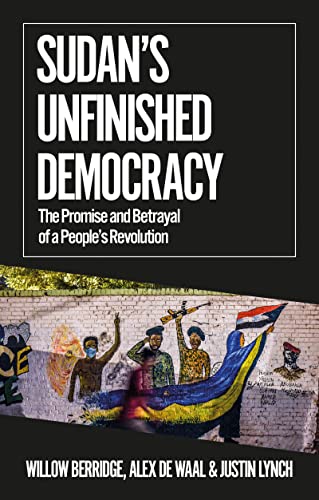
Berridge, Lynch, Makawi & De Waal - Sudan's Unfinished Democracy: The Promise & Betrayal of a People's Revolution

The Sudanese Revolution began at the end of December 2018 as a cost of living crisis and growing economic problems saw street protests that developed into demands for the President Omar al-Bashir to step down. There have been many twists and turns in the revolution since then, including violent repression by the military regime that stepped in after Bashir's fall in 2019. The revolution has been marked by mass protests and strikes and, significantly, the growth of democratic revolutionary organisational bodies - known as resistance committees - that have taken on the task of organising the movement. The revolutionary process, in my opinion, has not ended - in recent weeks we have seen the re-emergence of mass protests - and the Sudanese Revolution could well become a significant working class revolutionary event of the 21st century.

Sudan's Unfinished Democracy is perhaps the first book length treatment of the Sudanese Revolution. It's authors are activists, journalists and academics with an extensive acquaintance with Sudanese politics. It is, for any reservations that I will express, undoubtedly an important work that ought to be read by anyone trying to understand events in Sudan. 

Recent Sudanese politics have been dominated by the 30 year rule of Omar al-Bashir. Bashir was a ruthless President, whose policies led to the mass killings in Darfur, and the departure of Southern Sudan from the north. A great strength of this book is to guide the reader through the myriad of individuals and overlapping political interests that form the backdrop to Bashir's reign. This also helps understand some of the military and paramilitary forces and organisations that continue to shape Sudanese politics. Usefully the authors root this recent history in the wider context of colonial rule.

The other strength of the book is its exploration of the background to the organisations that formed the backbone of the revolutionary movement. In this we must be slightly careful. Groups like the Sudanese Professionals Association (SPA) have deep roots in the country's politics, though their role in kickstarting the revolution was minimal. Activists and groups within the SPA however had played an important role in keeping anti-government protest alive, even if their immediate role in the December 2018 revolution was small. The authors argue that the SPA is a complex assemblage, "a mapping of the revolutionary associations would look like a tangled yarn ball", but it was key to the development of further revolutionary groups and particularly the resistance committees. Of these, the authors write: "Personal ties made them work: individuals' networks were used to bring protestors on to the streets when called, and to support them on march days".

The SPA was, out of necessity, secret. In fact the authors argue it made a virtue out of its anonymity and lack of leaders, "a faceless organisation". But this caused problems. When the revolution overthrew Bashir, the SPA was called in to negotiate with the government, but had no clear politics and no clear leadership with whom the military could negotiate. The lack of leaders and the lack of clear politics meant that the military was able to out manoeuvre the SPA, "the longer the talks went on the weaker the civilians became". 

A key moment in the revolution was the establishment of a self-organised mass protest sit-in outside the Sudanese military headquarters. This involved hundreds of thousands and likely, in its participation, democracy and self-organisation, surpassed the achievements of Tahrir Square during the Egyptian Revolution. The sit-in is a touchstone for the authors who see in it not just a revolutionary protest movement but an alternative model of Sudanese society. As such, the author's argue the sit-in posed an enormous threat to military rule. Its democracy, they say, was a direct challenge to 30 years of Sudanese government. The involvement of minority groups from different regions of Sudan and women in central roles had to end. Over time the military delayed negotiations and eroded the sit-in, helping to undermine the revolution's main strength. Eventually they were to unleash brutal force against it, breaking up the protest with killing and rape. There is no doubt that the sit-in was important and a massive challenge to the military's political framework, and could not be tolerated beyond the first months of the revolution.

But I think the focus on the sit-in misses more important revolutionary dynamics. The attack on the sit-in takes place after a general strike, a strike called by the SPA to try and drive negotiations forward (the slogan was for "full victory" to the revolution). It was a military response not just to the sit-in, but also to the growing power of the revolution as expressed by the mass strikes. This was the army's attempt to break the stalemate, just as the general strike had been the SPA's attempt. A follow up strike was quickly called off as the military entered negotiations and the SPA signed an agreement for Civilian and Military power-sharing in August 2019. This was a disaster and set the scene for the military coup that followed.

All of these twists and turns are described well by the authors and readers trying to get to grips with the politics of the Sudanese Revolution should study them. But I think that the framework used by the authors is inadequate. One particular gripe I have is that there seems to be a downplaying of workers' strikes in this account of the revolution. This means that the authors' do not see an alternative power to the military within the revolution. For them, the revolution is the sit-in. Of this they write:

This was a moment of Utopian revolution in Sudan, an inspiring promise that a different world was possible. For a few weeks, in one place, the fog of politics cleared enough for a remarkable congregation of Sudanese to create a space for a festival of a popular republic. It was euphoric: a generation’s worth of ideals and aspirations released in an explosion of pride, protest and patriotism. It was a moment and a place where everything that divided Sudanese citizens was set aside, when citizenship and participation took on a heightened sense... The sit-in coalesced around an egalitarian system of solidarity that stood in stark contradiction to the hierarchies and deal-making that still dominated the world outside its barricades. Anyone with human feelings was inspired. There was a democratic Sudan and it lasted 53 days - between the challenge to a dictator and a massacre. 

The destruction of the sit-in, for the authors, was the end of the revolution. But that's inadequate - the revolution is not yet over. The question is where is the power to take it forward by challenging the military and offering a vision of a new way of organising Sudanese society. This has to be about the coming together of popular democracy from below, in the form of the resistance committees AND the power of workers at the point of production. 

The authors' repeatedly dismiss revolutionary socialist politics, though they tend to associate this with the politics of Communist Parties. As such I think they miss the insights that the Russian Revolution might offer. There, for instance, the strength of workers' councils and Soviets during the period of Dual Power in 1917, was enough to break rank and file soldiers from the generals. A similar dynamic was seen as the start of the Sudanese Revolution, but the failure to develop this alternative power within society meant that the military could regroup.

The military spent the period after the fall of Bashir consolidating its power over the Sudanese state. The authors' of Sudan's Unfinished Democracy emphasise the power of non-violence to bring down the dictator, but offer no roadmap for going forward with this. But that's because the strategy they advocate cannot challenge the power of the state. In particular their neglect of workers' struggles means they cannot envisage this power developing, hence the pessimistic conclusions quoted above. The question for revolutionaries in Sudan today is not just how they can win, but where the revolution is going. Is it simply trying to achieve the sort of pro-market democracy that Western powers would like? Or is it going in the direction of a more radical reshaping of society from the ground up?

The Sudanese Revolution has not ended, though its next direction is not yet clear. But one thing we can say is that the last three years has seen enormous bravery and élan on the part of ordinary Sudanese people. For all my criticisms of their book, the authors' of Sudan's Unfinished Democracy certainly understand and celebrate this. Which is why it is a book that can help us all understand what is happening in this unfinished revolution.

Related Reviews

Ayeb & Bush - Food Insecurity & Revolution in the Middle East & North Africa
Alexander & Bassiouny - Bread, Freedom, Social Justice: Workers & the Egyptian Revolution
El-Mahdi & Marfleet - Egypt: The Moment of Change
Ziegler - Omdurman

Tuesday, April 19, 2022

Hal Draper - Karl Marx's Theory of Revolution Volume 2: The Politics of Social Classes

Having read the first volume of Hal Draper's Karl Marx's Theory of Revolution, I immediately started out on the second. Partly this was out of sheer joy! Draper is a treat to read, combining clarity with humour and, above all, a cleverly structured argument. The first volume dealt with the theory of the State. The second is much more broad, looking at the Politics of Social Classes, which means, in part examining what Marx meant by class and, indeed, politics. The volume opens with a discussion of what Marx meant by revolution. Draper points out that the word has become a "mere synonym for change". But Marx understood that revolution was a fundamental transformation, a struggle of class against class, for a new order.

Social revolution means that the new class in power does not limit itself to change within the framework of the old social system, but tends to put its new state power into basic conflict with the former ruling strata. And the conflict must be resolved more or less quickly in favour of the new or the old; the new political power must proceed to revolutionise the socioeconomic foundation, or else it will be destroyed by the rooted power of the latter. IN either case, by revolution or counterrevolution, congruence will eventually be re-established between the political and socioeconomic foundation.

Here the reader will of course think back to Draper's first volume on the state and Marx's explanation of the state protecting the interests of the ruling class and the status quo, and indeed they might look forward to the core politics of the second which deals with the Dictatorship of the Proletariat, which deals with how a workers' state can protect itself as it emerges and faces the challenges from the old order. Draper emphasises the transformative nature of revoution for Marx. These are words that ought to be read by many who see "revolutionary" change being simply about electing radical politicians to bring radical policies from above. Draper:

From Marx's standpoint, what made his theory revolutionary was that it looked to a literal overturning: not simply an overthrow, the deposition of established power, but a turning-over of the social corpus itself, as "the lowest stratum of our present society" stirs, heaves up, with "the whole superincumbent strata of official society being sprung into the air," as the Manifesto pictured it vividly. This is the revolution; the revolution is not he adoption of a certain social schema. It was only the revolution of the exploited majority that could do this, in Marx's view; therefore the revolution from below had to be a proletarian revolution, and the proletarian ascendency to power had to be a revolution from below.

Developing this thesis through the volume (and honestly I could have quoted page after page of Draper in this review) the author takes us through Marx's concepts of class and his explanation of various classes - from the proletariat, to specifics of the working class, the bourgeoise, as well as groups like intellectuals. The chapter on the latter has plenty of entertaining quotes that can be used against academic Marxists who feel that their ivory tower places them above the struggle itself. I won't do them, but readers (especially academic Marxists) ought to read them. I must also highlight the appendix on beards and hair, "Marxism and Pilosity" for those readers craving these insights.

There is much here of practical interest to the socialist activist. For instance there is an insightful discussion of Marx's thoughts on the trade unions and how socialists should relate to them. There's a massive discussion of the peasantry and chapters on two groups - intellectuals and the lumpen proletariat - whose roles have been endlessly dissected by Marxists. Draper presents Marx's thoughts with clarity. 

But Draper constantly returns to his central theme - the revolutionary project at the core of Marx's ideas:

Only a movement of the immense majority, in its own interests, could be a movement of self-emancipation. This moves out of the sphere of charity versus self-help, to become a basic determinant of the nature of socialism.

Draper illustrates this with a deep discussion of Marx and Engels' thoughts on the 1848 revolution, in particular their discussion of what has come to be termed "permanent revolution". There is a linguistic discussion too - for those who've struggled with the meaning of "permanent" in this context. But it's Draper's discussion of the contradictory and cowardly role of the German bourgeoisie in 1848/9 that is so useful in this context. It is simultaneously a clear discussion of Marx's ideas and a brilliant application of the Marxist method itself. 

Reading Draper is an immersion in Marx and Engels' thought that shows how Marxism developed over time, responding to the actuality of revolution, and the tasks and challenges the movement faced. The sections on 1848 in this volume are particularly useful showing how their thought changes and then, once they have understood that the bourgeoise is not going to play its early role, how they seize this idea themselves to arm the workers' movement. As with volume one, and I suspect volume three, this comes highly recommended.

Related Reviews

Draper - Karl Marx's Theory of Revolution Volume 1: State & Bureaucracy

Saturday, April 16, 2022

Alastair Reynolds - Inhibitor Phase

The latest of Alastair Reynolds' Revelation Space novels is much less of a galaxy spanning story than some of his other works. Here we are closely focused on the story of Miguel de Ruyter. At the beginning he is the head of a small human colony, hiding deep inside a remote planet. An alien technology, the Wolves, has destroyed most of humanity's galactic civilisation, just as they previously destroyed other galactic societies. Their motivation is unknown and humans survive in isolated pockets. Ruyter has worked to protect his small group hoping that somehow they can survive long enough for the Wolves to be defeated.

His vigil is interrupted by the arrival of a humanoid, Glass, who comes to pull Miguel back into the galactic war that he had deliberately forgotten. Glass turns out to be a conjoiner, an augmented human who needs Miguel because his long dead brother has the key to a super-weapon that can defeat the Wolves. Gradually Miguel learns who he is as, together with Glass, they travel the galaxy finding allies and equipment to get the secrets they need.

It's a complex novel, but brilliantly constructed. The pace is well crafted with the reader learning Miguel's real history interspersed with a growing realisation with what that history meant. I also liked the way that Miguel's feud with Glass is set out, his frustration at her behaviour dragging him away from home, combined by their mutual need to stand together brings a nice counterpoint to the wider story. 

Fans of Reynolds' will find many concepts and species return in Inhibitor Phase, though things may have developed further. While there is a slight tendency for deus ex machina on the part of the author I tend to think that the reader is very much along for the ride in such a wide ranging story. Just hang on is my advice.

Related Reviews

Reynolds - Revenger
Reynolds - Zima Blue
Reynolds - Galactic North
Reynolds - Terminal World
Reynolds - Redemption Ark
Reynolds - House of Suns
Reynolds - Blue Remembered Earth
Reynolds - The Prefect
Reynolds - Pushing Ice
Reynolds - Century Rain

Monday, April 11, 2022

Pat Devine - Democracy and Economic Planning

The question of how a society that rationally uses resources in the interest of the "associated producers" is one that is being asked with increased urgency given the ecological crisis that humanity faces. For revolutionary socialists the answer has always been "democratic planning" of the economy. But how this might work is a subject of intense debate. Pat Devine's book Democracy and Economic Planning has been mentioned by a number of Marxist writers in this context and his proposal of "negotiated coordination" is a clear and logical response to those who argue that economies cannot work with out some for of market, or profit motive.

Devine's argument is clear:

The case for planning is that it enables the conscious shaping of economic activity, in accordance with individually and collectively determined needs, and it overcomes the instability that is an endemic empirical characteristic of market-based economies. So far, neither historical experience nor the state of theory gives any reasons to suppose that market-based economies can be managed or regulated effectively enough to achieve these objectives.

Devine opens the book by exploring how and why capitalist and "statist" economies fail to deliver what people and the environment need. Devine classes the former USSR and Eastern European economies as "statist" rather than my preferred term of "State Capitalist" though its clear that there is some overlap. However Devine certainly doesn't see these societies as socialist arguing that like the capitalist countries they failed to deliver for ordinary people. First published in 1989 the book bears the hallmarks of being written in the period when the State Capitalist regimes collapsed and people were urgently looking for other models. As such his demolition of the "third way" of "Market Socialism" as practised in Yugoslavia is very useful. 

For many people "planning" brings to mind the top-down, "command" economies of Eastern Europe. Devine shows why this model doesn't work, and argues that instead "what is needed is a form of democratic planning combining centrally taken decisions where necessary with decentralised decision-making wherever possible." In arguing against the free-market (i,e. a system were economic decisions are based on maximising profit of companies etc) Devine makes it clear he doesn't reject "market-exchange".  For such a system to work would require the conscious transformation of those engaged in the planning, at every level in society. As Devine says:

Participation in the detailed construction of the social interest, taking account of the interests of all involved, is a central part of the process through which people cease to be objects, to be manipulated by administrative command or economic incentives, and become self-activating subjects who do what they do because they think it is right... narrow self-interest gives way to a broader self-interest, in which people's own interests are redefined to include the interest of others.

It is this aspect to the vision of a democratic planned economy which means that bourgeois economists cannot comprehend it working, because they cannot imagine people at every level of society being part of a collectively organised and decided rational approach to the economy. While a national framework of what is needed would need to be agreed - crucially not by an unelected and unaccountable group - it would be done through a process of debate, discussion and information input from all levels and sectors of society. Such a "broad allocation of resources" would "reflect social priorities":

The result would be a pattern of specific claims on resources, that is, a distribution of purchasing power or demand, that had been shaped by overall social priorities and yet reflected group and individual preferences. Demand would be from government and functional social bodies for social consumption and investment, from government bodies, but channelled through negotiated coordination bodies and production units, for major economic investment; from production units for minor new investment, as agreed by their negotiated coordination bodies and from individuals and households for personal consumption.

In other words, demand is set by individuals and "production units" and planned for by continuous negotiation by different sections of the economies. Democratic decision making is done through a network of nation, regional and local bodies which are "democratically elected in a context of political party pluralism... vested with ultimate political power". Devine proposes a relatively straightforward set of structures that could negotiate and debate decisions about national or regional frameworks while other, more localised bodies, work out details and respond to needs. He argues that these debates might reflect the interests of different political parties - pointing out that actually they would be political issues - and this undermines the idea that party politics would disappear in a "communist" society.

Devine's book is a detailed and convincing argument. It is not without fault. Firstly the book suffers from a dry academic style and is not as accessible as it ought to be. Secondly, and certainly more importantly, Devine has no real model for how such a society might come about - making a few hand wavy arguments about it being the result of struggles that place the improved democratisation of society at their heart. This is disappointing, and perhaps reflects the authors own rejection of what he calls the "fundamentalist" Marxist movement (i.e. the non-Stalinist, classical tradition). Perhaps Devine did not, or does not, see revolution as possible, but the classical Marxist tradition sees such institutions that could form the basis of a democratic planned economy as arising out of the struggle itself. This is the biggest gap in the book, and while it might make the book more palatable for some audiences for those of us struggling for a more rational society, its a major ommission.

Pat Devine's book has much food for thought, but his arguments become utopian as they are abstracted from the revolutionary movements that could make them real. Nonetheless there are stimulating and profound insights into what is wrong and what could be right.   


Wednesday, April 06, 2022

Prosper-Olivier Lissagaray - History of the Paris Commune

Prosper-Olivier Lissagaray was a participant in the revolutionary Paris Commune of 1871. He is popularly supposed to have been "the last man on the barricades" and while not a leading figure in the revolution, he was very much at its heart as a fighter. Escaping France he went into exile in London where he began work on his History of the Paris Commune, drawing on contemporary reports, personal experiences and the recollections of exiles. Working with Karl Marx the book was translated into English by Marx's daughter Eleanor, with whom Lissagaray became engaged. 

The book then is remarkable in the sense that it is an eyewitness account of a revolution, and has close links to two of the worlds' great revolutionaries. But what of the book itself? The book begins with the Franco-Prussian War of 1870 which gave birth to the Commune, but events are probably hard to follow for the reader who knows little of that period of French history. Writing in the aftermath of the Commune, when details were fresh, but political battles were being waged over the interpretation of events, Lissagaray gives a vast amount of detail about figures from the French left. Those unaccustomed to this might find it easier to read an introductory account first before delving into Lissagaray.

But readers should delve into this book. Despite the difficulties with detail, its a fascinating and impassioned account of revolution. Lissagaray is enthusiastic about the people who made the revolution and critical of those elected to lead it, whom he says spent too much time talking and not enough deciding. Clearly there were mistakes made during the Commune's brief lifetime and Lissagaray is open about them. But he always begins from the revolution itself, "for the tenth time since 1789 the workmen put France upon the right track". Lissagaray also devotes two chapters to the short-lived Communes outside of Paris, that are rarely discussed in books about 1871. These lasted barely a few days, their short lifetimes being in part due to the lack of industrial development and hence sizeable proletariat outside Paris, the weaknesses of the left and the failure of the Commune to make it clear to the wider country what it was doing. 

These failures know doubt helped condemn the Commune, though not as much as the failure by the revolution to immediately take on the military force of the old government at Versailles. As Lissagaray says the French bourgeoisie "seeing this Paris capable of engendering a new world, her heart swelled with the best blood of France, had but one thought - to bleed Paris." And bleed it they did. 

The brutal assault on Paris which Lissagaray played a role in resisting was followed by the most violent and bestial repression. Lissagaray quotes official figures that suggest that 17,000 people were summarily executed in the "bloody week" following the storming of the city. Thousands more died, were deported, tortured and imprisoned in the most sickening of conditions. Much of the final part of Lissagaray's book is an account of these tragedies and the violence of the French government. No doubt this is in part a contribution to the political debates taking place, but also an political act to drum up support for the exiles and prisoners. 

The ruling class wanted to drown Paris in blood to teach the workers' a lesson. Never again should they threaten the rightful place of the bourgeois class. But despite the massacre, and contrary to the hopes of capitalists everywhere, the Paris Commune remains an inspirational moment in working class history, from which we even the greatest revolutionaries could learn. Despite some accessibility issues, Lissagaray's book is a superb history that all radicals should read.

Related Reviews

Abidor - Voices of the Paris Commune
Marx - The Civil War in France
Lenin - The State and Revolution
Merriman - Massacre: The Life & Death of the Paris Commune of 1871
Gluckstein - The Paris Commune - A Revolution in Democracy

Monday, April 04, 2022

V.I.Lenin - The State and Revolution

Lenin's State and Revolution is a remarkable work. It is likely the only book of Marxist theory that was written during a revolution that deals with the fundamental political questions of that revolution. It was written while Lenin was in temporary exile in Finland having fled a temporary burst of anti-Bolshevik reaction on the part of the Provisional Government in the late Summer of 1917. It bears the hallmark of intense engagement with Marx's writing on the State and the pressure of revolutionary organising.

As the title suggests the key question of the book is the state and Lenin looks at Marx's writings on two revolutionary moments - the 1848 revolution and the Paris Commune to understand the tasks of the revolutionary movement in 1917. My Penguin edition has a sneering introduction by the historian Robert Service who mocks Lenin's politics and writing in State and Revolution. Service claims that no one would have read and understood S&R in 1917 as it required an engagement with classical Marxist texts that few would have even heard about. What Service doesn't comprehend is that Lenin is clearly writing the book in order to clarify his own ideas, in order to win them within the Bolshevik party. 

As such Lenin repeatedly tackles the key question of the role of the state from different directions. He begins with Marx and Engels assertion that the state is the "product of the irreconcilability of class contradictions" and "arises where, when and to the extent that class contradictions objectively cannot be reconciled". This leads him into a critique those in the Russian Revolution who think that classes can be reconciled by the state itself, and in turn to Karl Kautsky's "distortion of Marxism" which denies that "the state is an organ of class rule." 

Lenin's discussions on the Paris Commune cannot be reduced simply to understanding the role of the state and emphasising Marx's argument that the state must be smashed. He also explores it fo context on what a workers' state must do - i.e. be "not a parliamentary but a working institution", tackling the parliamentarians who would get elected but leave the real business of the state to others, "behind the scenes" without accountability or control. Lenin writes:

The Commune replaces the venal and rotten parliamentarianism of bourgeois society with institutions in which freedom of opinion and discussion do not degenerate into deception, for the parliamentarians themselves have to work, have to execute their own laws, have to test their results in real life and to answer directly to their electors. Representative institutions remain, but parliamentarianism does not exist here as a special system, as the division of labour between the legislative and the executive, as a privileged position for the deputies. We cannot imagine democracy, even proletarian democracy, without representative institutions, be we can and must imagine democracy without parliamentarianism if our criticisms of bourgeois society are not mere empty words for us, if the aspiration to overthrow the rule of the bourgeoisie is our serious and sincere desire.

Since the state is a antagonistic institution of class rule, the workers' state is the same. Suppressing the old ruling class and the capitalists, in the interest of the majority of society (workers and peasants in the case of Russia). Here Lenin argues for the "Dictatorship of the Proletariat" - the idea that in the aftermath of revolution, the reality of the socialist state is one that oppresses the counter-revolutionary minority - the old capitalist class. This concept is one that Service finds particularly repugnant. But for Marx, and Lenin, the state must whither away alongside the class antagonisms themselves. Only then can people live and become "accustomed to observing the elementary rules of social intercourse... without compulsion, without subordination, without the special apparatus for compulsion which is called the state."

Lenin's polemic, at it's heart, is a powerful working through of the Marxist theory of the state written in the midst of revolution. It is easy to bemoan what is missing - the chapters on the "Russian experience" of 1905 and 1917 were never written and one can only imagine how they might have been useful to generations of revolutionaries since 1917. But don't let this prevent you reading it - there is so much here that can guide us today. Recently I read an interview with two Sudanese socialists grappling with the same concepts that were posed to Lenin in 1917 by the actuality of revolution. In their interview they both quoted liberally from State and Revolution. No greater tribute to this work can be made.

Related Reviews

Lenin - The Proletarian Revolution and the Renegade Kautsky
Lenin - Will the Bolsheviks Maintain Power?
Lenin - The Agrarian Programme of Social-Democracy in the First Russian Revolution 1905-1907

Marx - The Civil War in France


Sunday, April 03, 2022

Nicholas Monsarrat - The Ship that Died of Shame

The Ship that Died of Shame is a collection of stories by popular author Nicholas Monsarrat who famously wrote sea based novels that often reflected his experiences on anti-submarine ships in the North Atlantic during WWII. These stories are somewhat different, seemingly being a relatively random selection of topics, but I was struck that many of them reflected the post-war experience of men whose life highlight had been their wartime experiences and were unable to deal with civilian reality. The titular story is exactly that - two men shared a close, if occasionally uncomfortable, bond at sea in World War II on a fast launch used to defend the Channel. A few years after the war's end, the captain is looking at the dregs of a drink in a dive bar frequented by former naval personal recounting the same stories, when his former officer finds him out. He's found their old ship, and would he like to do a bit of lucrative smuggling. 

Some of the other stories are remarkably short, designed perhaps for magazines rather than book collections. They are often wry, poking fun at the wealthy such as the account of a tax exiled film star who can't set foot in Britain for fear of a large government bill. The most interesting story is Licensed to Kill is set in South Africa when a former commando meets an old comrade who goes by the nike-name Murderer Martin. You can imagine it doesn't go well.

I'm a big fan of Monsarrat's novels and personal reminisces of life at sea. But this collection doesn't quite hit the sport. The stories felt dated, rather than timeless like his class The Cruel Sea. But there is a sense of loss at the heart of many of them, which perhaps tells the reader much about the 1950s.

Related Reviews

Monsarrat - Three Corvettes
Monsarrat - The Cruel Sea

Thursday, March 31, 2022

Mitchell Abidor - Voices of the Paris Commune

In March 1871 the workers of Paris seized control of their city and declared the Paris Commune. It was an event that through its radical, democratic organisation directly challenged capitalist society, likely prevented a return of the French monarchy and transformed how revolutionaries understood state power and the nature of a workers' state. Writing for the fortieth anniversary, Lenin wrote that the "cause of the Commune is the social revolution, the cause of the complete political and economic emancipation of the toilers. It is the cause of the proletariat of the whole world. And in this sense it is immortal.

Remarkably we have many accounts of the Paris Commune, from participants, observers and supporters and its opponents. Mitchell Abidor's short volume contains such "voices" in an attempt to give a flavour of events. Unfortunately while I found the collection interesting it was hampered, in my view, by an emphasis on the legacy of the Commune and some of the internecine debates within the revolution. A large chunk is devoted to the debates among the elected leadership about the Committee for Public Safety, which a section of delegates saw as a massive concession to undemocratic and authoritarian practice. The discussion takes a form of reprints from the Commune's journal and as such is difficult for non-experts to follow unless they have a grounding in the debates. I felt this needed far more from the editor to explain context and personalities. 

The second part of the booklet reports extensively from the inquiry into the Commune and as such focuses on the legacy of the Commune and the activity of the participants. Again this skews things towards internal debates (which are of course important) such as what to do with hostages etc. Disappointingly most of the respondents discuss the failings of the Commune and its leadership - not seizing the bank, not marching on Versailles. This has the effect of making the Commune feel dry and top down - I'd have welcomed more quotes that gave a sense of the revolutionary zeal at the bottom of society. There is also a surprising level of cynicism, or perhaps disappointment, from more than a few voices as they look back on events. Perhaps that's a reflection of the appalling counter-revolutionary violence inflicted on the Commune in its final weeks, violence that had the effect of bringing together the different factions in the defence of the revolution. As one member of the Commune, J. Martelet, is quoted here as saying, "We found ourselves side by side during the terrible Bloody Week, majority and minority, fighting with the same ardor until the final day of the fight, defending together with the same faith the rights of the working people."

Related Reviews

Merriman - Massacre: The Life & Death of the Paris Commune of 1871
Gluckstein - The Paris Commune - A Revolution in Democracy
Marx – The Civil War In France
Greene - Communist Insurgent: Blanqui's Politics of Revolution
Jaurès - A Socialist History of the French Revolution

Saturday, March 26, 2022

Andreas Malm & the Zetkin Collective - White Skin, Black Fuel

As regular readers of this blog will be aware I think that Andreas Malm, even where I disagree with key points of his argument, is one of the most stimulating Marxist authors on environmental politics. So it was with eager anticipation that I looked forward to this new publication "one the dangers of fossil fascism" that Malm has co-authored with the network the Zetkin Collective, a group of scholars and activists "working on the political ecology of the far right".

The book does multiple things. It opens with a study of the far-right and fascist movements and looks at their "anti-climate politics" and asks "what would it mean to live in a oworld both hotter and further to the right" than it is today. It argues that the far-right's fixation with anti-climate views is closely tied to its anti-immigration perspective and the way that developing capitalism associated technology (and particularly fossil fuel technologies) with white supremacy. The authors argue in the introduction:

[The book] traces lineages of resurfacing ideas and contends that white skin and black fuel have been coupled for long time - indeed, machines powered by fossil fuels were infused with racism from the very first moment of their global deployment. The European incubator for skin and fuel was an empire... It is out contention that one cannot understand recent developments [of the far right] or their possible continuation and aggravation, without such a longer view.

Much of the first part of White Skin, Black Fuel is a study of the reality of far-right politics. This links various aspects of conspiracy theory (white replacement) and Islamic takeover, with wider hatreds of immigrants and Muslims with anti-scientific and views that can only be described as pro-fossil fuel industry on climate change. The discussion of the specifics of these ideas are detailed and for anti-fascist readers they are at times depressing - detailing the extent to which they have become mainstream. Shockingly the growth of the far right and the mainstreaming of their arguments around climate and immigration have pulled the centre left towards them. The authors note, for instance, that in Denmark, the social democrats "came close to another line of reasoning: in a warming world, it is even more imperative to patrol borders and send people home" as a result of the growth of the far-right.

Quite why the far-right deny climate change is superficially difficult to explain. Climate denial goes deep into their core politics, and there is a particular animosity to wind turbines. Indeed the authors note that there is a "striking similaritiy to the hatred of minarets, mosques and calls to prayers". However its not just climate denial and dislike of renewable energy. The book shows how there is a general "defence of fossil capital" by the far-right. Part of the explanation for this lies, the authors contend, in the way that fascism in the 1920s and 1930s evolved out of a modernist view that celebrated technology and the speed of cars and aircraft. It need not detain us here, but there are some fascinating sections on how the Mussolini and Hitler regime courted and enjoyed the automobile and aircraft industries. We should mention Henry Ford in passing too. Bringing it back to the modern day, and discussing the Hungarian government, the book comments:

The climate policies of one of the most notorious far-right governments in Europe were.. primarily geared to fossil capital in general. They were as yet rarely couched in terms of denial, but rather hidden in official indifference to the issue, paired with the all-consuming passion.

Similar ideas are exhibited by far-right politicians in Poland and Germany. For the Hungarian government, electoral success meant "protecting the car industry, resisting emissions cuts, ignoring climate change, vilifying Muslims and Jews and eventually falling in line with denial: the early twenty-first century European far right in power."

Part of the reason behind far-right denial is the way that they articulate liberal climate policies as being about attacking ordinary people: an excuse for taxes, or taking away the person freedom to drive a car. In my opinion, and shared I think by the authors, the need to articulate the frustrations of the disenfranchised middle class by fascists and the far-right means they can use green politics (as pushed by the mainstream) as an attack on ordinary people and, in turn, give them something to rail against.

The consequences of such an approach are horrific:

most of the forces we have inspected have associated the struggle against climate change with black and other non white people - it's for them, not us: 'Let them drown' is here not a faint, undefined propensity: it is the policy. The choice of apocalypse - the real threat to the world is their presence among us - aggravates it further. But the far right would scarcely be able to advance this message if it did not have a wider indifference to work on and, as it were, mobilise. We can reformulate this as a a general hypothesis: the anti-climate politics of the far right is now a phenomenon of such rank that it must stand on the shoulders of a much wider and broader set of relations of the kind that we normally refer to as 'racism'.

Essentially, as the far right see the world, white people are good, intelligent, technologically developed and black people are backward and primitive. This racism dovetails with a capitalist fossil fuel worldview that suggests that the world can be remade in the interests of white people and that black people are a barrier to this. They explore the evolution of this world view through a fascinating discussion of the centrality of steam to the colonial project particularly of Britain.

The authors' conclude:

The far right tends to cultivate a 'producerist' notion of white people as generators of wealth and non-whites as parasites: it works hand in glove with unswerving loyalty to the productive forces (literally) in question.... the relation between the contemporary far right, energy, climate and nature cannot be understood in abstraction from the history of modern racism and how it has related to these things. And steam was only just the beginning.

There's a final, fascinating, discussion on why fascism is on the rise today. The authors point out that classical Marxism understands fascism as a reaction to revolutionary force or potentiality. But this is not "actual" today. They suggest that it is precisely the weakness of revolutionary politics that opens the door to fascism by not being able to articulate an alternative to the chaos of capitalism. Its an interesting argument which I will have to think further on. But it does seem to fit some reality. The world of 21st century capitalism feels out of control - war in Ukraine, climate crisis, economic disaster. Few movements are articulating a progressive alternative. In the face of this chaos, fascism is offering people to blame and giving a confidence to sections of society feeling the blows of capital. White Skin, Black Fuel offers few cheering moments, but its analysis will help arm those trying to understand the far-right in order to offer an alternative.

Related Reviews

Sparrow - Fascists Among Us: Online hate and the Christchurch Massacre
Hultgren - Border Walls Gone Green: Nature & Anti-Immigrant Politics in America
Wendling - Alt Right: From 4chan to the White House
Paxton - The Anatomy of Fascism
Guerin - Fascism and Big Business

Reviews of works by Andreas Malm

Malm - The Progress of This Storm: Nature & Society in a Warming World
Malm - Corona, Climate, Chronic Emergency: War Communism in the 21st Century
Malm - Fossil Capital: The Rise of Steam Power and the Roots of Global Warming
Malm - How to Blow Up a Pipeline

Friday, March 25, 2022

Chris Harman - Revolution in the 21st Century

Reading Chris Harman's Revolution in the 21st Century for a second time nearly 15 years after it was first published I am struck by how much has changed, and how much has remained the same. The book was written in a decade when the anti-capitalist and anti-war movements swept the world, and mass uprisings shook many parts of the world, including Bolivia, which Harman devotes some pages too. A few years later the Arab Spring exploded, and much of those events fit exactly the dynamics described in this short book. 

Sadly Harman died just before the Middle Eastern revolutions. But his book serves as a guide to those events and much more. In barely 130 pages he shows the revolutionary dynamic of the working class engaged in its relentless battle with capital, the role of reformism and the importance of revolutionary organisation. He touches on wider debates - capitalism and ecological disaster, democratic planning, State Capitalism and so much more. If the world Harman described in 2007 has changed - its done so for the worse. The concentration of wealth is worse, inequality higher, war and environmental destruction growing. But Harman paints a vision of an alternative and a strategy for getting there. A handbook for fighting Capitalism in 2022 and beyond.

My 2007 review is here.

Related Reviews

Harman - Marxism and History
Harman - The Fire Last Time: 1968 and After
Harman - Class Struggles in Eastern Europe 1945-83
Harman - Selected Writings
Harman - Zombie Capitalism: Global Crisis & The Relevance of Marx
Choonara & Kimber - Arguments for Revolution