In the early 1970s, Walter Rodney wrote How Europe Underdeveloped Africa. His argument was that Europe had underdeveloped Africa in the interests of their own developing capitalist economies. Patnaik and Moyo's short book is a further development of this thesis. In particular though they argue that neoliberalism continues to make the Global South's agriculture subservient to the interests of the developed world.
The way that neoliberalism has opened up the economies of the developing world to the interests of capital is nothing new. From an agrarian point of view, neoliberalism has two major impacts - the removal of "price support mechanisms" that have helped peasants sell their goods in the face of cheaper commodities from other countries and secondly, a "sustained attack on peasant-owned or occupied land in the name of 'development'."
The case of India will help us understand what happens. After independence, the Indian agrarian economy "was protected for nearly 40 years and output of foodgrains per head slowly climbed back to 183kg per head by the early 1990s." Output per head had peaked at 200kg around 1900 and fallen to 136kg in 1946. But India was opened up to neoliberalism in 1991 and since then, the gain of the last forty years has been "wiped out". Consequences are shocking:
"No mass peasant suicides owing to debt took place before 1991 in India. Since 1996 as global primary prices fell and under the WTO discipline, protection has been virtually removed; indebtedness-driven farmer suicides started from 1998. Total recorded farmer suicides between 1998 and Dec 2008 were 198,000; specifically debt-driven suicides have claimed over 60,000 peasant lives over the last decade.
Neoliberalism has, in the interests of big capital, reconstructed the agrarian economies of countries like India. The authors argue that this is in order to fuel the continued accumulation of capital in the developed world.
"The entire thrust for free trade in agriculture, as promoted by the Bretton Woods institutions and through the WTO has as its primary aim the re-opening of the lands of the global South to meet the increasing demands of the North."
Controversially though, Utsa Patnaik in his opening essay argues that this is not new. Rather than an agricultural revolution in Europe fuelling the birth of capitalism, he says that agriculture proved inadequate to the task. While Enclosure and the Clearances laid the basis for the industrial workforce to enter the factories, it could not feed them.
"In 18th century England there may well have been a revolution in the social relations of production, but the resulting capitalistically organised agriculture showed little success in meeting the challenge of industrialisation from the point of view of raising the productivity of land and labour to the extent required."
Patnaik's detailed figures seem to show that yields in Europe did not grow enough to feed the industrial workforce and that these economies were then dependent on colonies for their cheap foodstuffs as well as markets. Africa, Asia and South America were thus refashioned in the interest of the needs of the developed world. This is part of a wider argument with those, such as Henry Bernstein, whom Paitnaik believes suggest that development of capitalism in poorer countries no longer requires the surpluses from domestic agriculture. On the contrary, Paitnaik suggests that it was never domestic agriculture that brought about capitalist transformation, rather a global exchange that relied on the higher yields obtained in colonial countries to fuel industrialisation, which in turn left the rest of the world underdeveloped.
Today the authors argue, little has changed. The reaction to the 2007/2008 food crisis was a "new scramble for land in Africa" to feed a price bubble in food and biofuels. Neoliberalism and the food crisis has also created a speculative bubble in land prices further impoverising and driving more peasants from the land. A process that Moyo refers to as a resuscitation of the land commodification agenda. Today, as Paitnaik argues,
"corporate subjugation of peasant production is nothing by the imperialist domination of our peasantry for the purpose of export production and it pauperises the peasantry and the labourers."
Contemporary land grabs and the dispossession of peasants from their lands are merely the latest stage in a process that began in England in the 17th century. But the peasantry of the Global South has "nowhere to go".
What is the alternative? Both authors argue that what is primarily needed is a break from the neoliberal agenda. This much is obvious and their book provides ample evidence for why this is necessary. Less clear is a longer term strategy. The ability of the state to subsidise sections of the economy and offer reforms is a key strategy. For instance, Moyo concludes that what is needed are:
"New regional integration strategies based on holistic agrarian reforms and aimed at collectively reversing the decline of domestic food production and food consumption, including protection from external shocks and dependency are crucial. These have to counter current market based functional regionalism by building a popular regional industrial policy framework that systematically reverses the current opening up of the region."
But this seems only to offer a more friendly version of capitalism on a localised level. While blunting the neoliberal axe may be a good thing, the problem for the people of the Global South as well as their counterparts in the North is an economic system that places them secondary to the pursuit of profit. While food sovereignty is a worthy aim, in and of itself it cannot protect the poorest sections of society against a system geared on the pursuit for profit. Ultimately capitalism, whether the neoliberal system, or more localised is built on exploitation.
State lead intervention to assist and develop the agrarian economy is needed. But what is more urgently needed is a movement from below that can challenge capitalism, in the North and the South and begin to create an agricultural system based on providing for need not profit.
Related Reading
Bernstein - Class Dynamics of Agrarian Change
Friday, August 23, 2013
Larry Niven - Ringworld Engineers

*Spoilers Alert*
While engaging in my own writing tasks I recently decided to re-read Larry Niven's Ringworld series in its entirity. I've reviewed a couple of these previously (back in 2006 for Ringworld and 2007 for the finale here).
The Ringworld Engineers is the second of Larry Niven's book about this enormous alien ring that orbits a far off planet. Readers of the first (and by far the best) of the series will know that when humans Louis Wu and Teela Brown arrive, along with the Kzin Speaker to Animals and the Puppeteer, civilisation on the Ringworld is in decline. Across millions of square miles a previously high tech civilisation has fallen apart. Ringworld Engineers begins the telling the story of how the "fall" happened and who is responsible. In particular, we learn that the Ringworld itself is under threat of destruction as its moving out of its orbit and threatens to brush against the sun.
One of the reasons Ringworld worked so well was precisely because the collapse of civilisation gave the whole novel a sense of mystery. The reader doesn't know who built it or how. The hook that hangs the second novel together is whether Louis Wu and the others can save the Ringworld, while risking the lives of billions of billions.
Niven's writing has matured by the time he penned Engineers. Though in this one, as with the sequels, he begins a somewhat awkward fascination with inter-species sex. This apparently develops as a way that the Ringworld's myriad of different, but linked species, can prove their friendliness. It makes for some odd encounters and slightly eye-brow raising sequences.
On the subject of sex, one of the improvements over the first novel, is that Niven is much better at writing about female characters. The only two women in Ringworld described at any length are basically there to show of Louis Wu's sexual prowess and intelligence. One of them indeed was specifically a prostitute employed on a spaceship (who turns out to be a liar too) the other was the lucky Teela Brown who appears to only be able to survive with a male companion. I never quite knew how tongue in cheek Niven was when he wrote that Teela took up with a walking cliche at the end of the first book. That said, both these novels are of their time. SF these days rarely have quite such obvious sexist limitations as the 1970s. Though sadly things haven't changed rnough.
Engineers is a fast paced novel. Not quite as sharp as the first, it has none of the flabbiness that the remainder of the series has and the ending ties the story into Niven's wider Known Space universe. There are some brilliant set piece scenes too. For instance Chemee's (as Speaker to Animals is renamed) attempt to prove himself as a proper Kzin by capturing an enormous Battleship; Louis Wu's exploration of a city whose families via against each other for limited resources and knowledge. It's an echo of medieval Bologna whose inhabitants erected towers to outgun and impress each other. Wu arrives with the secret to repairing their broken technology and upsets the whole power structure.
The fallen Ringworld civilisation gives a great backdrop to this story, indeed the Big Dumb Object of the title is the best thing about this series.
Related Reviews
Niven - Crashlander
Niven - Ringworld
Niven - Ringworld's Children
Tuesday, August 20, 2013
Mike Davis - Late Victorian Holocausts: El Niño Famines and the Making of the Third World
Ever so often you come across a book which profoundly shakes you. Mike Davis' Late Victorian Holocausts is one of those. On every page there is a fact or figure that makes the reader rage with anger; every chapter is a ringing denouncement of capitalism and colonialism. It should be required reading for all those politicians, journalists and armchair generals who profuse to know what to do about the "Third World".In the late Victorian era, a period stretching from roughly 1876 to 1900, a series of droughts and famines hit large areas of the world. Various studies, both contemporary and more recent, paint a truly appalling picture of the resultant deaths. A study by the medical journal The Lancet in the immediate aftermath suggested that 19 million Indian people died during the 1896-1902 famine. The totals from all the events, allowing for the variance of scientific debate suggest between 31.7 and 61.3 million died.
Mike Davis argues that these were not merely environmental disasters. Changing weather patterns were caused by the complicated ENSO changes of air-pressure and ocean temperatures. The El Niño effects certainly could be associated with dramatic changes in rainfall, or wind patterns that brought crop failure or flooding to large areas. In late Victorian times politicians and apologists for colonial policies made much of the supposed links between these weather patterns and regular famines. But Mike Davis argues that the economic policies and the particular nature of colonialism (specifically in the British Empire) made, in places as diverse as Brazil, India, the Philippines, Korea, Africa and China, the famines far worse. As Davis suggests, of the victims:
They died in the golden age of Liberal Capitalism; indeed many were murdered... by the theological application of the sacred principles of Smith, Bentham and Mill.I've written elsewhere about the Irish Potato Famine and the way that British rulers application of the principles of Free Trade condemned thousands to starvation while grain was shipped out to be sold at a profit. What Davis describes is a similar process on an enormous scale:
Although crop failures and water shortages were of epic proportion.. there were almost always surpluses elsewhere in the nation or empire that could have potentially rescued drought victims.It is worth repeating this simple fact. That (with the possible exception of Ethiopia in 1899) Davis argues that there was almost always enough food or other supplies that could have helped the starving peasants. The people didn't just starve - sometimes they sold their children into slavery in the hope they would survive, or killed strangers and committed cannibalism, or ate tree bark and mud. But their deaths, or many of their deaths, could have been avoided.
Take the official report on the Bombay famine of 1899-1902, which concluded that "supplies of food were at all time sufficient and it cannot be too frequently repeated that severe privation was chiefly due to the dearth of employment in agriculture." In neighbouring Berar, commissioners said that "the famine was one of high prices rather than a scarcity of food."
The problem was that the hungry couldn't afford to eat. It was rarely that there wasn't food. For instance Davis argues that the problem in the case of India was that the British had transformed the old social relations. Under British rule, profit was king, but so was private land. The British destroyed the old economic relations that gave peasants access to communal land and resources like wells. They broke up the old social obligations that meant Chinese rulers stockpiled grain for famine outbreaks. They scrapped the requirements to build or maintain flood defences or dams, because they were considered native, and not valid scientifically. All these facts helped make famine far worse when it arrived. Indeed some of the most shocking descriptions here are when Davis contrasts the way that before colonialism, societies in India, Africa or China dealt far better with drought than under the Imperial era.
![]() |
| Indian Famine Victims 1877 |
And the vast infrastructure that the Empire builders created, the roads and rail-roads didn't serve to bring food to the hungry, it took it to where the profits were to be made. In the 1870-80 famine, according to official reports, In Bombay and Madras Deccan, "the population decreased more rapidly where the districts were served by railways than where there were no railways." It was easier to take the food away with trains. Davis also writes on how modern industry failed the hungry:
The newly constructed railroads, lauded as institutional safeguards against famine, were instead used by merchants to ship grain inventories from outlying drought-stricken districts to central depots for hoarding (as well as protection from rioters). Likewise the telegraph ensured that price hikes were coordinated in a thousand towns at once, regardless of local supply trends.This is not a happy book. When Mike Davis describes the vast celebrations for Queen Victoria's Jubilee that involved enormous feasts at a time of vast hunger, most readers will feel sick. I certainly did. But the really sad thing is that nothing has changed. Capitalism's distortion of agriculture through the creation of cash crops and the domination of large multinationals leaves millions still in a precarious place, and as Mike Davis suggests, all the evidence is that global warming will make El Niños worse in the future.
Anyone interested in the confluence of the environment and the economy and the impact upon human beings should read this book. But so should anyone who wants counter-arguments to those who suggest that Empire was a good thing for the majority of people in the world.
Related Reading
Davis - Planet of Slums
Davis - The Monster at Our Door
Woodham-Smith - The Great Hunger; Ireland 1845-9
Bello - The Food Wars
Magdoff & Tokar - Agriculture and Food in Crisis
Sunday, August 11, 2013
Kent Flannery & Joyce Marcus - The Creation of Inequality
Subtitled How Our Prehistoric Ancestors set the Stage for Monarchy, Slavery and Empire this is a very important, and extremely well researched book that traces the development of human society from egalitarian hunter-gatherers to class divided, unequal societies like monarchies.
The authors argue that the first human societies where ones dominated by generosity, sharing and altruism. These societies also hand numerous internal checks to try and protect that egalitarian nature. For instance, both Eskimo and !Kung people have been shown to have used marked hunting arrows to determine who killed an animal. But the !Kung mixed up these arrows so no one really knew who had been the successful hunter. These two societies, and many other hunter-gatherer communities used ridicule and humour to downplay success and prevent anyone gaining a position above others. While successful hunters were cherished, they were expected to downplay their skills and share the fruits of their victories.
Flannery and Marcus have tried not to use studies of contemporary hunter-gatherers. Understanding that almost all of these groups are now changed by their contact with globalised capitalism, the authors instead have looked at records from the earliest encounters with hunter-gatherers. They then attempt to look at historical evidence for similar behaviour in the past. In fact, the greatest strength of this book is its rigorous attempt to find evidence for all aspects of the author's theories at different stages of human history and in different places.
As hunter-gatherers developed technology and skills, their social organisation developed as well. With the development of clan based societies, it was possible for inequality to appear. At first this was simply the difference between someone who had skills or experience over those who didn't. But with the rise of agriculture, the ability to store surplus food meant that "Big Men" could arise who could give others food. In time, some of these people, or even whole lineages could crystallise out into a wider class.
The authors then explore how these early unequal societies might become monarchies or other types of stratified groups, discussing how groups learn from each other, destroy each other, or even revert back to different social organisations.
This is a very important book, and I encourage everyone who has an interest in early human societies to read it. This review deliberately doesn't do the book, or the authors justice as I have written a more detailed and lengthier review for elsewhere.
My extended review of this book for the International Socialism Journal 140 can be read here.
Related Reviews
Lee - The !Kung San: Men, Women & Work in a Foraging Society
Stringer - Homo Britannicus
Leacock - Myths of Male Dominance
Engels - Origin of the Family, Private Property and the State
The authors argue that the first human societies where ones dominated by generosity, sharing and altruism. These societies also hand numerous internal checks to try and protect that egalitarian nature. For instance, both Eskimo and !Kung people have been shown to have used marked hunting arrows to determine who killed an animal. But the !Kung mixed up these arrows so no one really knew who had been the successful hunter. These two societies, and many other hunter-gatherer communities used ridicule and humour to downplay success and prevent anyone gaining a position above others. While successful hunters were cherished, they were expected to downplay their skills and share the fruits of their victories.
Flannery and Marcus have tried not to use studies of contemporary hunter-gatherers. Understanding that almost all of these groups are now changed by their contact with globalised capitalism, the authors instead have looked at records from the earliest encounters with hunter-gatherers. They then attempt to look at historical evidence for similar behaviour in the past. In fact, the greatest strength of this book is its rigorous attempt to find evidence for all aspects of the author's theories at different stages of human history and in different places.
As hunter-gatherers developed technology and skills, their social organisation developed as well. With the development of clan based societies, it was possible for inequality to appear. At first this was simply the difference between someone who had skills or experience over those who didn't. But with the rise of agriculture, the ability to store surplus food meant that "Big Men" could arise who could give others food. In time, some of these people, or even whole lineages could crystallise out into a wider class.
The authors then explore how these early unequal societies might become monarchies or other types of stratified groups, discussing how groups learn from each other, destroy each other, or even revert back to different social organisations.
This is a very important book, and I encourage everyone who has an interest in early human societies to read it. This review deliberately doesn't do the book, or the authors justice as I have written a more detailed and lengthier review for elsewhere.
My extended review of this book for the International Socialism Journal 140 can be read here.
Related Reviews
Lee - The !Kung San: Men, Women & Work in a Foraging Society
Stringer - Homo Britannicus
Leacock - Myths of Male Dominance
Engels - Origin of the Family, Private Property and the State
Friday, August 09, 2013
Brian Richardson (ed) - Say It Loud! Marxism and the Fight Against Racism
This collection of essays is an extremely important contribution to our understanding of racism, and a powerful tool for those trying to learn how best to fight racism and fascism today. The authors are all activists in the socialist and anti-racist movements in the UK and the essays are clear and easily readable. The book also has some powerful and inspiring photos of the history of British anti-racists struggles.
It would not be possible to cover all the different essays in this review. Instead I intend to concentrate on a few of them, but this is not to diminish the importance of the others. For those interested in finding out more, Socialist Worker has published some extracts, but I encourage readers to purchase the book, read it and discuss it further.
In his opening essay, journalist Ken Olende, examines the roots of racism. Marxists do not argue that racism is natural, instead the origins of racism can be located at a particular point in the development of capitalism. The mid-Atlantic slave trade of the 17th century onwards. After briefly demonstrating that "scientifically, race is a meaningless concept", Olende points out that before mid-Atlantic slave trade, there had been no systematic belief that people with darker skins were somehow inferior to white Europeans.
But racism arose as part of the need by the capitalists to justify slavery. It had enormous consequences for them. As the American Marxist Hubert Harrison wrote in 1911:
The introduction of racism against black people, firstly by the slave owning plantocracy and then by the wider capitalist class was not automatic. White people in Britain, as well as elsewhere were often at the forefront of struggles to protect escaped slaves, or indeed the emerging abolitionist movement. Olende also shows how the struggles of the slaves themselves were also crucial to ending slavery.
But since slavery ended racism has continued. This is because it plays a specific role in capitalist society. In particular it divides the working class. In her brilliant essay on How do we fight Racism today? Esme Choonara points out that studies have shown that were racism exists, both black and white workers suffer. This contradicts those who believe that white people benefit from racism. She quotes a study by sociologist Al Syzmanski who looked at the position of black and white workers in 50 states of America. He
Racism, and racist rhetoric continues to develop. A number of essays in this book, in particular the very useful study of the development of Islamophobia by Talat Ahmed, look at how this has taken place in recent years. In 21st century Britain, racism is aimed at many different groups of people, but at its sharpest point, racist language and discrimination is used against the whole Muslim population in an attempt to divide and rule. Ahmed argues that this is a result of 30 years of demonisation of the Islamic world, by an imperialist system that needs to justify its actions around the globe. She traces the development of this rhetoric, from the Salman Rushdie affair in Britain, through the First Gulf War and more recently the aftermath of 9/11.
This is not to say that things have simply got worse. In fact in Britain, as several authors point out, mass anti-racist and anti-fascist movements have at times held back and defeated the growth of wider racist forces. Weyman Bennett's article on the way that socialists have worked with wider forces to break Nazi organisations in the 1970s and 1990s in the UK is very important. Hassan Mahamdallie looks in detail at the way the Family of murdered teenager Stephen Lawrence helped create a mass campaign that challenged racism in British society, particularly inside the police force. Editor Brian Richardson looks at the sad outcomes to this, as successive governments, particularly Labour ones undermined and blunted the work of that movement.
The final essay in this book by Esme Choonara is a reiteration of the importance of Marxism to struggles against racism today. She argues that racism originates within capitalism and is constantly renewed by it. She also points out how any understanding based on hierarchies of oppression, or notions that all white people are oppressors can only weaken the struggle against oppression. For instance, she quotes Guardian columnist Ally Fogg who, writing about the oppression of women "suggests that maybe we should stop saying that women are underpaid by 20 percent in the workforce and consider instead that men are 20 percent overpaid."
Such arguments will do nothing to unify a working class movement in the face of sexism. Similar arguments that suggest that white workers benefit from racism do not help create unity. Nor do they advance a wider critique of capitalism which uses oppression to divide those who have the power to challenge a system of exploitation and profit.
One of the themes of this book is that when ordinary people get together, as they did in the 17th century, or in the abolition movements, or in the struggles in the United States in the 1960s, or more recently in the UK, they can both challenge racism and radically transform people's ideas. Having a core of activists who understand the roots of racism and the way to defeat the system that breeds it, can make an enormous difference. This excellent book is a powerful weapon in bringing that about.
Related Reviews
Fryer - Staying Power: The History of Black People in Britain
Snowden - Before Color Prejudice: The Ancient View of Blacks
Aspden - The Hounding of David Oluwale
Paxton - The Anatomy of Fascism
Hirsch - In the Shadow of Enoch Powell
It would not be possible to cover all the different essays in this review. Instead I intend to concentrate on a few of them, but this is not to diminish the importance of the others. For those interested in finding out more, Socialist Worker has published some extracts, but I encourage readers to purchase the book, read it and discuss it further.
In his opening essay, journalist Ken Olende, examines the roots of racism. Marxists do not argue that racism is natural, instead the origins of racism can be located at a particular point in the development of capitalism. The mid-Atlantic slave trade of the 17th century onwards. After briefly demonstrating that "scientifically, race is a meaningless concept", Olende points out that before mid-Atlantic slave trade, there had been no systematic belief that people with darker skins were somehow inferior to white Europeans.
But racism arose as part of the need by the capitalists to justify slavery. It had enormous consequences for them. As the American Marxist Hubert Harrison wrote in 1911:
to the credit of our common human nature, it was found necessary to reconcile the public mind to the system of slavery. This was effected by building up the belief that the slaves were not really human: that they belonged to a different order of beings... One broad, general implication of this belief seems to be the denial of social, political and economic justice to all people not white.Racism did not arise out of a great ruling class conspiracy. it was linked to wider social struggles, in particular, Olende argues, the joint struggles between black and white people at the bottom of American society in the 17th century. He writes that the:
Planter's fears of solidarity among the lower classes were a key factor that encouraged them to aggressively push a racist agenda. They were obsessed with effective exploitation. Race only became an issue where it complement their needs.
The introduction of racism against black people, firstly by the slave owning plantocracy and then by the wider capitalist class was not automatic. White people in Britain, as well as elsewhere were often at the forefront of struggles to protect escaped slaves, or indeed the emerging abolitionist movement. Olende also shows how the struggles of the slaves themselves were also crucial to ending slavery.
But since slavery ended racism has continued. This is because it plays a specific role in capitalist society. In particular it divides the working class. In her brilliant essay on How do we fight Racism today? Esme Choonara points out that studies have shown that were racism exists, both black and white workers suffer. This contradicts those who believe that white people benefit from racism. She quotes a study by sociologist Al Syzmanski who looked at the position of black and white workers in 50 states of America. He
found that 'the higher the black earnings relative to white, the higher white earnings relative to whites elsewhere in the US'. He concluded that "white workers appear to actually lose economically from racial discrimination.Racism however is not static. After Slavery, it was consolidated through Empire, when Britain and other countries needed to justify their actions in the rest of the world. The rhetoric changed - instead of talking about sub-human people who could be enslaved, the populations of India or elsewhere were described as uneducated, unable to build civilisation and in need of European technology, intelligence and skills to develop. Instead their countries were pillaged in the interests of capitalism.
Racism, and racist rhetoric continues to develop. A number of essays in this book, in particular the very useful study of the development of Islamophobia by Talat Ahmed, look at how this has taken place in recent years. In 21st century Britain, racism is aimed at many different groups of people, but at its sharpest point, racist language and discrimination is used against the whole Muslim population in an attempt to divide and rule. Ahmed argues that this is a result of 30 years of demonisation of the Islamic world, by an imperialist system that needs to justify its actions around the globe. She traces the development of this rhetoric, from the Salman Rushdie affair in Britain, through the First Gulf War and more recently the aftermath of 9/11.
This is not to say that things have simply got worse. In fact in Britain, as several authors point out, mass anti-racist and anti-fascist movements have at times held back and defeated the growth of wider racist forces. Weyman Bennett's article on the way that socialists have worked with wider forces to break Nazi organisations in the 1970s and 1990s in the UK is very important. Hassan Mahamdallie looks in detail at the way the Family of murdered teenager Stephen Lawrence helped create a mass campaign that challenged racism in British society, particularly inside the police force. Editor Brian Richardson looks at the sad outcomes to this, as successive governments, particularly Labour ones undermined and blunted the work of that movement.
The final essay in this book by Esme Choonara is a reiteration of the importance of Marxism to struggles against racism today. She argues that racism originates within capitalism and is constantly renewed by it. She also points out how any understanding based on hierarchies of oppression, or notions that all white people are oppressors can only weaken the struggle against oppression. For instance, she quotes Guardian columnist Ally Fogg who, writing about the oppression of women "suggests that maybe we should stop saying that women are underpaid by 20 percent in the workforce and consider instead that men are 20 percent overpaid."
Such arguments will do nothing to unify a working class movement in the face of sexism. Similar arguments that suggest that white workers benefit from racism do not help create unity. Nor do they advance a wider critique of capitalism which uses oppression to divide those who have the power to challenge a system of exploitation and profit.
One of the themes of this book is that when ordinary people get together, as they did in the 17th century, or in the abolition movements, or in the struggles in the United States in the 1960s, or more recently in the UK, they can both challenge racism and radically transform people's ideas. Having a core of activists who understand the roots of racism and the way to defeat the system that breeds it, can make an enormous difference. This excellent book is a powerful weapon in bringing that about.
Related Reviews
Fryer - Staying Power: The History of Black People in Britain
Snowden - Before Color Prejudice: The Ancient View of Blacks
Aspden - The Hounding of David Oluwale
Paxton - The Anatomy of Fascism
Hirsch - In the Shadow of Enoch Powell
Tuesday, August 06, 2013
Roger Moorhouse - Berlin at War: Life & Death in Hitler's Capital, 1939-1945
Moorhouse does not accept that the majority of ordinary Germans were complicit, or even supportive of the Nazi regime and its actions. Berlin, he argues, was not a city whose population was a "indoctrinated mass of Nazified automata, sleepwalking into catastrophe... Berlin was a city where minorities of active Nazis and active anti-Nazis flanked an ambivalent majority, who were often simply motivated by self-preservation, ambition and fear."
Berlin was not a strong city for the Nazis, even though it was their capital. It had never returned more than a third of its votes for the fascists and had a long history of left wing activism. Additionally:
the city was the natural home of the nation's elite and attracted a large number of intellectuals, lawyers and politicians, many of whom opposed the Nazi regime. Their opposition was in part political, but it was primarily based on higher ideals; on a fundamental objection to the regime's habit of riding roughshod over established legal and moral principles. As a result of these factors, Berlin gained a deserved reputation as a hotbed of resistance against the Nazi regime, with as many as 12,000 individuals involved in organised opposition.
Whether or not the presence of the "elite" helped create an anti-Nazi opposition during the war is debatable. Certainly the inspiring parts of this book are the accounts of the resistance that took place (on however small a scale) and those Berliners who protected or tried to protect Jews through the war. It is noticeable that for the most part it was not intellectuals and lawyers who did this, but working people (often from a left wing background). I was particularly struck by the story of a factory worker who caught the eye of a Jew she worked with and dropped her ID card near the woman at the end of her shift. Having an "Aryan's" ID card saved the woman's life, yet her saviour never once spoke or interacted with her. There are plenty of similar stories, though the horrific parts of the book deal in large part with those Jews who couldn't be saved.
Resistance took place on many levels. Indeed, the scale of the repression against those who spoke out meant that acts of resistance sometimes seem very minor, but involved enormous bravery. One example were the "Swing Kids" who danced to banned music in side rooms and toilets in music halls and fought the Hitler Youth who tried to stop them.
Moorhouse does describe one example of mass resistance, a protest by hundreds of non-Jewish women, whose Jewish husbands had been rounded up from their workplaces during the Nazis' Fabrik-Aktion. Their protests led to these men being released and even a couple being returned from Auschwitz. This is the only example of mass resistance that is known. But hundreds of people were involved in other acts. Moorhouse quotes a figure of 5-7000 for the number of Jews who went underground, each of them required the co-operation of an average of seven Germans to survive.
Some of the most fascinating parts of this book though, are the accounts of the lives of ordinary Berliners. In particular I was struck by how little enthusiasm the majority had for the war, their shock at the invasion of the Soviet Union and the way that air-raids took them completely by surprise. Even those who hated the Nazis seemed to believe the propaganda that the war would never reach them. For those who have read accounts of the Blitz or the German Occupation of France there are many parallels; the hunt for food, the stresses of rationing, the rumours and the hope that peace was around the corner.
Ian Kershaw's recent book The End looked in detail at the reasons that Germany kept fighting until the end. Its an excellent book which I reviewed here. Roger Moorhouse however looks at what kept the ordinary German going until the end of the war - how they survived and what they endured, as well as what some of them did to try and fight the Nazis. It's a powerful read, with some amazing photographs and I recommend it.
Related Reviews
Kershaw - The End
Calder - The People's War: Britain 1939 - 1945
Sereny - Albert Speer: His Battle with the Truth
Cobb - Resistance: The French fight against the Nazis
Gildea - Marianne in Chains: Daily Life in the Heart of France during the German Occupation
Friday, August 02, 2013
Kim Stanley Robinson - 2312
So I have to admit that I am a bit disappointed by 2312. It is different to much of KSR's former works. Less explicitly about revolution for instance, when compared to Icehenge or the Mars Trilogy. While the future solar system that KSR imagines in 2312 is fascinating and well thought out, the story doesn't hold the different imagined worlds together well and some bits of the plot are frankly, illogical.
Lets look at the good bits. For most people (certainly those off planet Earth) life is post-scarcity. On Earth, most of the population lives in a post-capitalist world, thought quite how this works is not really explained much. Earth itself is badly damaged by global warming. The methane hydrates are on the verge of melting and having already experienced major sea level rise, the population of the planet faces future rises.
Out in space things are better. Venus and Mars are in the process of being terraformed. Humans have footholds on the major moons and asteroids, utilising solar polar lasered in from Mercury and "vulcan" asteroids. The post-scarcity economy means that technology is utilised to hollow out the solar systems bodies which are used to create self contained environments packed full of Earth's plants and animals. Some might be complete oceanic eco-systems, others African savannahs filled with lions and their prey.
Into this mix KSR throws a convoluted plot centred on a minor revolt by artificial intelligence and the solar system spanning investigation to work out what is going on. The reader could benefit from some clearer pointers, not least because there is SO much to the novel. Why do SF writers feel they need to produce 600 page blockbusters these days? 2312 would have benefited by being edited down by 200 pages. My other complaint is that KSR's hero, Swan, is so unlikeable that I kept hoping she would die and leave the author spending more time describing his ecological aware future. In addition, the AI's seem anything by intelligent, and the plot is very shallow for such a long book.
Frankly I wouldn't bother with this unless you are a KSR fan, and stick to his earlier work, or re-read the Culture novels.
Related Reviews
Robinson - Years of Rice and Salt
Robinson - Icehenge
Robinson - Shaman
Thursday, August 01, 2013
G.E. & K.R. Fussell – The English Countryman: From Tudor Times to the Victorian Age
English rural life has been much
romanticised over the years. One of the strengths of G.E and K.R. Fussell's 1955 book The English Countryman is that it doesn't romanticise the lives of those who laboured their
lives in the fields of England. The shepherd for instance, idealised
in the words of the authors “as if the season were always spring or
summer, and his work little more than watching the gambols of the
young lambs in the sunshine.”
Reality was very
different. The Fussells point out that “this is all very nice, but
it takes no note of wild work in the winter snow; living with the
ewes when they were lambing in the cold early months of the year; of
the long hours of sheep dipping, tarring and attending to feet
against the rot; of the hours spent in changing fold hurdles; the
dusty, often itchy, work of shearing.” Nor does it allow for the
loneliness of the worker far from companionship.
Life was no better
for those who worked from home. The ploughman in early Stuart times
who began work at 4am, and retired to bed fourteen hours later.
While trying to
portray the reality of country life, the Fussells also capture the
great changes that have taken place over the four centuries that
their work covers. The new ploughs and other equipment or crop
rotations. Particularly important in this period was the introduction
of clover and turnips to rejuvenate the soil, allowing uninterrupted
growth of food (for man and beast).
There is also the
social change. Here the Fussells bring a useful over-view to the
great agricultural transformation that took place as England moved
from feudalism to capitalism. Under the former, tenant farmers were
expected to pay tithes for almost everything. The authors explain how
in the 1650s:
...there were tithes of hay and corn and the tithe lambs were taken on St. Mark's Day. The tenth or seventh calf was taken when it was due and if not a tithe calf then a shoulder when the calf was killed. A halfpenny had to be paid at Martlemas (11th November) if it was weaned and if it was sold the tenth penny. The wool was tithed when it was sheared either by the tod or by the pound. Pigs were tithed when they were ready to eat “for odds the Vicar gave or took a halfpenny on pigs. He took up the tithe eggs on the Wednesday before Easter, two eggs for every hen or duck, three eggs for every cock or drake. Twopence must be paid for every communicant at Easter...
The list continues
for fruits collected, vegetables grown and honey sold. This was in
addition to labour that the rural peasants were expected to give to
their lord. Capitalism introduced wage labour, though in many cases
it seems that farm workers were then exploited far more.
Working for a wage
meant only being paid for days worked. Unwanted workers were left
frequently to starve. The market which seemed to offer much to those
with land and capital also brought the crisis of boom and slump,
hitting the countryside hard, but most particularly those without
land, or capital.
Sadly this history
of the lives of the English Countrymen contains little on their own
struggles for social justice. The Tolpuddle Martyrs get a passing
mention, but little is said of other rural struggles like Captain Swing or other examples of rural insurrection. Certainly nothing
on resistance to Enclosure. In fact, the image we get from the
authors is closer to the idealised history they set out to deny:
The farmer's men carried on as the farmer did. His lot was hard and his reward was minute, but love of the work was ingrained in both and one could not have kept going without the other.
In their brief
discussion of the English Civil War they deny that the majority of
the rural population was bothered at all, referring to the “hundreds
of other villages all over the country that were equally placid
because armed activity was sporadic and localized at different times
during the campaign. Unrest there must have been, though many rustic
people took no part in the fighting at all except when they tried to
protect their own goods from one army of the other.”
This is to deny the
throwing down of fences and opening up of enclosed lands that took
place on a large scale, and was, at least initially, supported by
Cromwell himself. Or those movements, such as the Diggers, who wanted
to transform rural social relations.
Monday, July 29, 2013
Tom Reiss – The Black Count: Napoleon's Rival, and the real Count of Monte Cristo – General Alexandre Dumas.
Almost nobody will know however that
the stories that inspired the often unbelievable, adventures The Three Musketeers or The Count of Monte Cristo was
the life of Alexandre Dumas' father, Alex.
Here for instance, is a near
contemporary account of the General who, at thirty-five, commanded
three armies and was the toast of Revolutionary France, yet five
years later was to die, ignored and dismissed by Napoleon's
post-revolutionary regime.
“During the conquest of Italy... he
went forward to observe enemy movements with about twenty dragoons
detached as scouts.... Seeing how few men stood in their way, the
Austrian cavalry charged vigorously; Dumas's escorting troops were
defeated before Dumas could reach them.... Seeing the danger, General
Dumas rushed alone to the bridgehead and held back a squadron of
enemy cavalry for several minutes, forcing them to retreat.
Surrounded by some twenty Austrians he killed three and wounded
eight.”
General Dumas was an expert swordsman,
an educated and clever man, brave and dedicated to his troops, who in
turn lionised him. However, what makes Dumas so interesting is that
he was black. The son of a French count who had gone to Haiti and
married a slave.
General Dumas arrived back in
pre-revolutionary France as a young man and as debts assailed him and
his family, he joined the army. Not as an officer as his social
position would have permitted, but as a private. His skills, loyalty
and politics soon led him to rise upwards.
General Dumas was, according to the
1797 report, “every but of deserving of admiration as those of a
native of the Old World. Indeed, who has a greater right to public
respect than the man of color fighting for freedom after having
experienced all the horrors of slavery? To equal the most celebrated
warriors he need only keep in mind all the evils he has suffered.”
This was not hyperbole. Dumas' was his
father's favourite son. His brothers and his mother were sold back into
slavery by his father when he returned to France to claim his estate.
But the General's rise in the ranks was
as much to do with the changing revolutionary world as his skills
with sword and men. As Reiss explains, it was Revolutionary France,
long before the Civil Rights movement, long before William
Wilberforce that granted equality and freedom to everyone within its
Empire. The abolition of slavery as part of the 1789 revolution
helped inspire revolution and revolt by slaves across France's
dominions, as well as inspire millions of other “slaves”. Within
France the equality was real. Black people were treated the same by
the revolutionary state in a way that would not be seen again until
the 20th century. Reiss points out that this is particularly
remarkable given that France's economy depended very much on the
wealth generated by the slave plantations of Saint-Domingue.
Sadly, it was this that helped led to
General Dumas' fall from grace. After leaving the Egyptian campaign,
Dumas was captured and spent two years in an Italian prison, nearly
dying from the deprivation. This story is the model for his son's
Count of Monte Cristo. But, Dumas arrived back to a very different
France. Napoleon's regime certainly wasn't concerned with equality.
Black people faced discrimination and the return of slavery. Dumas
however, never seems to have lost his ideals, those shared by
millions during the revolution.
What makes Tom Reiss' book such fascinating reading is not simply his rediscovery of a forgotten figure of history, but the way that General Dumas' life is linked to the wider world. The rise of the French Revolution lifts the General up. He shares its ideals and aspirations and is prepared to die for them. His fall from grace and his forgotten story is a reflection of the degeneration of the Revolution. This is a wonderful well told story that should be read widely to remember that once "Liberty, Equality, Fraternity" was something that millions of people were ready to fight for.
Tuesday, July 23, 2013
Bruce Neuburger - Lettuce Wars: Ten Years of Work and Struggle in the Fields of California
So here are the stories of the forgotten men and women, often working illegally who struggled to give others a voice and to improve their lot. Despite the remoteness of the fields and the language barriers, these struggles were not in isolation. People like Neuburger were heavily influenced by wider radical ideas - the struggle against the war in Vietnam, the women's liberation movements, and revolutionary socialist ideas. Some of the fascinating parts of the book are Neuburger's accounts of his involvement with the "coffee shops", setup to relate to soldiers heading to Vietnam.
But these radical ideas were not just those of the socialist left that Neuburger was part of. They had currency amongst much wider sections of the agricultural workers and their organisations. Neuburger mentions wearing a Chairman Mao badge and being asked by all his "crew" in the fields if they could have one too. A even clearer understanding of the world is demonstrated by a stunning photo of evicted families living in tents in 1972, one of which has posted a sign, "La Posada - My Lai. Same enemy - US bosses and guns".
Neuburger explains how the bosses in the fields knew exactly how to turn people against each other, using faster workers to encourage slower ones, or encouraging harder work by offering bonuses if certain amounts of vegetables were cut or boxed in an hour. They also used racial divisions to divide people - on a couple of occasions, Neuburger is offered promotion because of his white skin.
Neuburger's experience in the fields and working with these labourers transformed his wider understanding of the world, and developing his Marxism in a way that just reading books alone can never do:
Rather than seeing farmworkers as isolated from mainstream middle class life, I began to regard the urban middle class as isolated in the big cities, cut off from the reality of those who supplied their food. And because the conditions in which the farmworkers labored and lived had more in common with billions of oppressed people in communities around the world,, I felt the situation in the fields more closely reflected the broad reality of the world than the privileged world I'd come from. I also began to feel in a very personal way how different social realities affect our consciousness, giving form to Marx's observation that 'social being determines social consciousness'.
The "conditions" that the author refers to are horrific. Overcrowded, dirty dormitories, rundown housing with no hot water to clean off the mud from the fields, no toilets in the fields, lack of holiday pay or overtime. It is these conditions that the workers organise against and the struggle which Neuburger involves himself in.
There was a long history of union organising by workers in the fields. But the union was not perfect. Inspired by wider struggles of the 1960s and early 1970s and led by the charismatic and confident Cesar Chavez the union made important and rapid gains. But as time went forward the union itself became less confident to challenge the farm bosses. Its bureaucracy began to look both to the Democrats as a potential ally, and to the benefits accrued from deals made with the bosses themselves. As this happened strikes began to be more of a threat than a central part of the workers tactics. Rank and file activists, particularly those who were communist or socialist like Bruce Neuburger were targeted and forced out.
To those of us in the European union movement, the level of violence in US class struggles is always shocking. But so is the violence deployed against the left during the 1970s, as Chavez sought to strengthen his hold on the union. "Chavez", Neuburger writes, "used anti-communism as an internal bond. It also served to cement ties with the Democrats and the establishment in general. I think this, in part, explains his fanatical, out of proportion preoccupation with leftists in the union." A not unfamiliar situation for those of us in certain British unions today.
Even more shocking was the racism that the union used against immigrants, arguing that attacking migrants and illegal immigrants would protect its members' jobs; despite them coming from similar backgrounds. Neuburger relates that:
For those of us today organising to strengthen radical trade unionism and socialist organisation, there is a certain inspiration in Neuburger's descriptions of his early attempts to produce radical newspapers and literature. His satisfaction at seeing the paper passed from hand to hand, or read aloud. As well has his early naivety when the paper upsets the union bureaucracy. For those organising today, in the fields, or in call centres there is still much to learn here.
In his epilogue, Bruce Neuburger returns to the fields. He finds there are more than two million year-round and seasonal workers in the US, including 100,000 children. One in ten of them is a US citizen. Today, US capital relies very much on the cheap labour it can get from Mexico and Latin America. Neuburger points out though that the difference is that it is not just agriculture, but other industries too. Conditions are better in some ways - portable toilets seem more common - but overcrowded homes and the threat of the immigration police remain. Interestingly pay seems far worse than in the 1980s.
So today the struggles for justice by some of the poorest and most exploited workers in America continue. But Neuburger's book demonstrates beyond doubt that when those workers do organise they can make real gains, holding immense power in an industry which makes enormous profits from their labour. While some socialist readers may consider Neuburger's Maoist politics incorrect it is hardly a distraction from one other lesson - that a network of socialists, arguing socialist ideas can make a crucial difference to workers' struggles. As such, this book is recommended to everyone trying to organise to change the world today.
There was a long history of union organising by workers in the fields. But the union was not perfect. Inspired by wider struggles of the 1960s and early 1970s and led by the charismatic and confident Cesar Chavez the union made important and rapid gains. But as time went forward the union itself became less confident to challenge the farm bosses. Its bureaucracy began to look both to the Democrats as a potential ally, and to the benefits accrued from deals made with the bosses themselves. As this happened strikes began to be more of a threat than a central part of the workers tactics. Rank and file activists, particularly those who were communist or socialist like Bruce Neuburger were targeted and forced out.
To those of us in the European union movement, the level of violence in US class struggles is always shocking. But so is the violence deployed against the left during the 1970s, as Chavez sought to strengthen his hold on the union. "Chavez", Neuburger writes, "used anti-communism as an internal bond. It also served to cement ties with the Democrats and the establishment in general. I think this, in part, explains his fanatical, out of proportion preoccupation with leftists in the union." A not unfamiliar situation for those of us in certain British unions today.
Even more shocking was the racism that the union used against immigrants, arguing that attacking migrants and illegal immigrants would protect its members' jobs; despite them coming from similar backgrounds. Neuburger relates that:
the union set up tents along the border to stop workers coming across the border, to prevent them from breaking the strike. There were rumours about union actions on the border, not very pretty ones.To Neuburger's credit he and other left-wingers argue against this capitulation to divide and rule, but are themselves further isolated and eventually defeated by the union bureaucracy. Sadly, Neuburger understood even then that what was needed more was the militancy of the left to fight the bosses, rather than the support of the Democratic Party.
For those of us today organising to strengthen radical trade unionism and socialist organisation, there is a certain inspiration in Neuburger's descriptions of his early attempts to produce radical newspapers and literature. His satisfaction at seeing the paper passed from hand to hand, or read aloud. As well has his early naivety when the paper upsets the union bureaucracy. For those organising today, in the fields, or in call centres there is still much to learn here.
In his epilogue, Bruce Neuburger returns to the fields. He finds there are more than two million year-round and seasonal workers in the US, including 100,000 children. One in ten of them is a US citizen. Today, US capital relies very much on the cheap labour it can get from Mexico and Latin America. Neuburger points out though that the difference is that it is not just agriculture, but other industries too. Conditions are better in some ways - portable toilets seem more common - but overcrowded homes and the threat of the immigration police remain. Interestingly pay seems far worse than in the 1980s.
So today the struggles for justice by some of the poorest and most exploited workers in America continue. But Neuburger's book demonstrates beyond doubt that when those workers do organise they can make real gains, holding immense power in an industry which makes enormous profits from their labour. While some socialist readers may consider Neuburger's Maoist politics incorrect it is hardly a distraction from one other lesson - that a network of socialists, arguing socialist ideas can make a crucial difference to workers' struggles. As such, this book is recommended to everyone trying to organise to change the world today.
Sunday, July 21, 2013
Neil Smith - Uneven Development: Nature, Capital, and the Production of Space
Neil Smith's Uneven Development is a classic work of Marxist geography that deserves to be read by everyone trying to understand the way that capitalism shapes, and reshapes the natural world. Smith's central thesis is that capitalism has transformed the natural world, but it has also transformed our "social relation with nature" in unprecedented ways.
Smith's analysis draws heavily on Marx. Like John Bellamy Foster in Marx's Ecology Smith emphasises the dialectical interaction between humans and nature, and develops the concept of metabolism. Describing the work of the Marxist, Alfred Schmidt, he writes:
"The concrete form taken by this metabolism may change historically... In the pre-bourgeois era, 'man is as yoked to his natural existence as to his body,' and there there is an 'original... abstract identity of man with nature.' With the emergence of bourgeois conditions of production, this identity changes into its equally abstract opposite; the radical divorce of labor from its objective natural conditions."
Smith argues that rather than thinking of human society dominating nature, we must consider the "much more complex process of the production of nature". Smith writes:
Smith then takes his explanation of the production of nature into a discussion of the production of space. In earlier societies he argues, there was no differentiation of "space" from matter, force or power. There was a "unity of nature... space, substance and meaning were one".
But our concepts of space change historically, the "spatial form of the capitalist city, for example, is quite different from the feudal city". Under capitalism, space becomes a commodity, and this is not restricted to the creation of "physical space", but "the production of space also implies the production of the meaning, concepts and consciousness of space which are inseparably linked to its physical production." Rather neatly Smith explains that in "Euclidean terms" the height of an apartment in a block of flats might be equivalent to the height of a tree, but the "distance between floors of the tenement can also be measured in terms of social rank and class, whereas the height of the tree cannot". Or, consider how under feudalism the serfs were tied to the land, so a definition of class relations also included a definition of the absolute space of the peasants work.
Smith analyses the development of capitalism in the later part of the book. He places particular emphasis on the way that capitalism is founded upon the division between town and country, industry and agriculture. This doesn't begin with capitalism, but is inherited from the developing capitalist relationships under feudalism. The separation of town and country becomes the foundation for capitalism.
In turn, capitalism reshapes the world "after its own image". This doesn't simply mean that capitalism reshapes nature in its image and for its interests, but "the dynamism of geographical space is equally an expression of the image of capital." The tendency of capital to centralise and create monopolies, the tendency for the system to leap upon areas where new markets are to be found, or new profits to be made, creates an unequal, uneven capitalist space. Capitalism creates unevenness within itself, and this is reflected in the unevenness of the system around the world, but also in social inequalities - rich and poor, cheap and expensive housing. And, in a powerful comment, Smith points out that uneven development of capitalism is at the heart of imperialism - "uneven development, thy name is war" he writes.
Abolishing this inequality is not simply a social struggle, Smith argues, but a "geographical project". This might sound strange to those of us thinking of geography as a school subject about rivers and mountains, but Smith is putting across the idea that capitalism is a system that shapes and creates space on an enormous scale, and it can only be challenged on that scale.
In the afterword to the third edition, published a few years before his death. Smith points out that unevenness has only got worse since the book was first published. "The pay of CEOs in 1982 in the US was 42 times that of wage workers.... it has risen to an astonishing ratio of 364:1". Unusually for an academic, Smith doesn't abandon his belief that things can be changed, concluding that it "may not be too optimistic to begin again to encourage a revolutionary imaginary".
While this is not an easy book, and covers some complex and difficult ideas, it is an important one, and Neil Smith deserves reading to do just what his conclusion suggests, encourage a revolutionary vision.
Related Reviews
Foster - Marx's Ecology
Malm - The Progress of this Storm
Burkett - Marx and Nature
Smith's analysis draws heavily on Marx. Like John Bellamy Foster in Marx's Ecology Smith emphasises the dialectical interaction between humans and nature, and develops the concept of metabolism. Describing the work of the Marxist, Alfred Schmidt, he writes:
"The concrete form taken by this metabolism may change historically... In the pre-bourgeois era, 'man is as yoked to his natural existence as to his body,' and there there is an 'original... abstract identity of man with nature.' With the emergence of bourgeois conditions of production, this identity changes into its equally abstract opposite; the radical divorce of labor from its objective natural conditions."
Smith argues that rather than thinking of human society dominating nature, we must consider the "much more complex process of the production of nature". Smith writes:
Where capitalism is unique is that for the first time human beings produce nature at a world scale. Hence Marx's brilliant observation, over 120 years ago, that 'the nature that preceded human history... today no longer exists anywhere (except perhaps on a few Australian coral islands of recent origin)'.Smith has, however, a sense of the alternative to this. That in the process of struggling against capitalism, the working class has the potential to "truly define human nature". The working class itself is unnatural, a product of capitalism. The victory of that struggle would bring a "historically unique opportunity for human beings to become the willing social subjects not the natural subjects of their own history."
Smith then takes his explanation of the production of nature into a discussion of the production of space. In earlier societies he argues, there was no differentiation of "space" from matter, force or power. There was a "unity of nature... space, substance and meaning were one".
But our concepts of space change historically, the "spatial form of the capitalist city, for example, is quite different from the feudal city". Under capitalism, space becomes a commodity, and this is not restricted to the creation of "physical space", but "the production of space also implies the production of the meaning, concepts and consciousness of space which are inseparably linked to its physical production." Rather neatly Smith explains that in "Euclidean terms" the height of an apartment in a block of flats might be equivalent to the height of a tree, but the "distance between floors of the tenement can also be measured in terms of social rank and class, whereas the height of the tree cannot". Or, consider how under feudalism the serfs were tied to the land, so a definition of class relations also included a definition of the absolute space of the peasants work.
Smith analyses the development of capitalism in the later part of the book. He places particular emphasis on the way that capitalism is founded upon the division between town and country, industry and agriculture. This doesn't begin with capitalism, but is inherited from the developing capitalist relationships under feudalism. The separation of town and country becomes the foundation for capitalism.
In turn, capitalism reshapes the world "after its own image". This doesn't simply mean that capitalism reshapes nature in its image and for its interests, but "the dynamism of geographical space is equally an expression of the image of capital." The tendency of capital to centralise and create monopolies, the tendency for the system to leap upon areas where new markets are to be found, or new profits to be made, creates an unequal, uneven capitalist space. Capitalism creates unevenness within itself, and this is reflected in the unevenness of the system around the world, but also in social inequalities - rich and poor, cheap and expensive housing. And, in a powerful comment, Smith points out that uneven development of capitalism is at the heart of imperialism - "uneven development, thy name is war" he writes.
Abolishing this inequality is not simply a social struggle, Smith argues, but a "geographical project". This might sound strange to those of us thinking of geography as a school subject about rivers and mountains, but Smith is putting across the idea that capitalism is a system that shapes and creates space on an enormous scale, and it can only be challenged on that scale.
In the afterword to the third edition, published a few years before his death. Smith points out that unevenness has only got worse since the book was first published. "The pay of CEOs in 1982 in the US was 42 times that of wage workers.... it has risen to an astonishing ratio of 364:1". Unusually for an academic, Smith doesn't abandon his belief that things can be changed, concluding that it "may not be too optimistic to begin again to encourage a revolutionary imaginary".
While this is not an easy book, and covers some complex and difficult ideas, it is an important one, and Neil Smith deserves reading to do just what his conclusion suggests, encourage a revolutionary vision.
Related Reviews
Foster - Marx's Ecology
Malm - The Progress of this Storm
Burkett - Marx and Nature
Friday, July 19, 2013
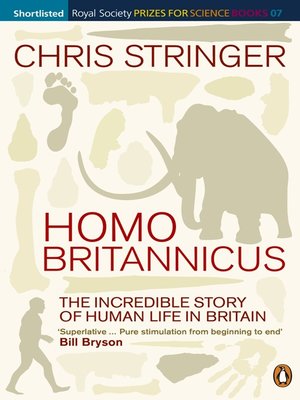
Chris Stringer - Homo Britannicus: The Incredible Story of Human Life in Britain
Chris Stringer's Homo Britannicus is a short, popular introduction to the history of humans living in the region that we now know as the British Isles. Anyone silly enough to infer from the title that this is a history that gives justification to the lunatics of the far right who believe that being British means tracing your ancestry back to some far distinct British caveman, will be disappointed. Instead what Stringer does is to present the evidence that humans in Britain have come and gone over an immense period of time, stretching back to well before the most recent Ice Age. In addition, the geography of Britain has changed substantially - not just from changing sea levels, but also through the erosion of a chalk ridge that connected south east England to north western France.Human history goes back a long way, and Stringer takes us through the complex and often conflicting scientific evidence for our earliest history. The timescale is enormous. We have clear evidence that early species of humans were using stone tools in Africa more than two million years back. Even in British sites, evidence such as the "vole clock" place the tool use at one site as long ago as 700,000 years.
The "vole clock" is one of the fascinating examples of the archaeological process that Stringer uses to illustrate how scientists know so much about the ancient past. Here, the different species of voles, known to have evolved or gone extinct at specific points in the past, are used to date contemporary human remains. Much of the book is based on the work of the Ancient Human Occupation of Britain (AHOB) project. Indeed the last section is a series of descriptions of those involved in the project, and how they came to work in this career. It is notable that only one of the AHOB scientists is a woman, reflecting a wider problem of female under-representation in science.
Stringer tells us the story of human history (as well as that of our cousins such as the Neanderthals) but he also tells us about the voyage of discovery that science has also gone through. From early scientists trying to explain the presence of hippo bones in England or linking the age of the Earth to Noah's flood, Stringer shows us not just what we know, but how we know it.
For anyone wanting an entertaining introduction to our early history, as well as insights into the work of archaeologists, there probably isn't a better book. While the section on climate change at the end felt a little like a polemic shoe-horned in, it doesn't detract too much from a more general discussion on the position of humans in a wider natural world. It's also the first work of anthropology that I have ever read, which begins with the description of ancient women and children eating warm, moist hippo brains.
The paperback has some wonderful illustrations, but if possible you might want to try and get the hard-back which has even more photographs and diagrams.
Related Reviews
Stringer - The Origin of our Species
Subscribe to:
Posts (Atom)